Opinion - (2026) Volume 16, Issue 2
Received: 28-Feb-2026, Manuscript No. jccr-26-191261;
Editor assigned: 02-Mar-2026, Pre QC No. P-191261;
Reviewed: 16-Mar-2026, QC No. Q-191261;
Revised: 23-Mar-2026, Manuscript No. R-191261;
Published:
30-Mar-2026
, DOI: 10.37421-2165-7920.2026.16.1712
Citation: Bennett, Olivia. ”Atypical Multiple Sclerosis in Young Adults: Challenges and Management.” J Clin Case Rep 16 (2026):1712.
Copyright: © 2026 Bennett O. This is an open-access article distributed under the terms of the Creative Commons Attribution License, which permits unrestricted use, distribution and reproduction in any medium, provided the original author and source are credited.
This case report highlights a rare presentation of atypical multiple sclerosis (MS) in a young adult, characterized by unusual neurological deficits and imaging findings that initially posed diagnostic challenges. The patient presented with symptoms not typically seen in classic MS, requiring extensive differential diagnosis and advanced neuroimaging techniques. The case underscores the importance of considering atypical MS phenotypes in young individuals with unexplained neurological symptoms, emphasizing the need for a high index of suspicion and comprehensive diagnostic workup [1].
Advanced MRI techniques, including diffusion tensor imaging (DTI) and susceptibility-weighted imaging (SWI), played a crucial role in the diagnosis of this atypical MS case. These modalities provided insights into white matter microstructural integrity and the presence of microhemorrhages, respectively, which were key in differentiating MS from other neurological conditions. The findings underscore the evolving role of neuroimaging in the accurate and timely diagnosis of complex neurological disorders [2].
The management of atypical MS requires a multidisciplinary approach, involving neurologists, radiologists, and rehabilitation specialists. Early initiation of disease-modifying therapies (DMTs) is crucial to slow disease progression and improve long-term outcomes, even in cases with unusual presentations. This case highlights the importance of personalized treatment strategies tailored to the individual patient's disease phenotype and symptom profile [3].
Genetic factors may contribute to the susceptibility and phenotypic variability of MS. While MS is generally considered a complex autoimmune disease, certain genetic predispositions could influence the presentation of atypical forms. Further research into the genetic underpinnings of atypical MS phenotypes is warranted to improve risk prediction and potentially guide targeted therapeutic interventions [4].
The initial presentation of MS in young adults can be highly variable, and some individuals develop atypical forms that deviate from the classic relapsing-remitting pattern. These atypical presentations may include Marburg variant, tumefactive MS, or forms with extensive brainstem or spinal cord involvement, posing diagnostic and management challenges. Understanding these variations is critical for prompt diagnosis and effective treatment [5].
Differential diagnosis of atypical MS in young adults is crucial to exclude other neuroinflammatory, infectious, or neoplastic conditions that can mimic MS symptoms. This involves a thorough clinical assessment, detailed neuroimaging, cerebrospinal fluid analysis, and, in some cases, evoked potentials. A systematic approach ensures that the correct diagnosis is reached, leading to appropriate management [6].
The prognosis for young adults with atypical MS can vary significantly. While some may experience a more aggressive disease course, others can achieve good long-term outcomes with early and appropriate treatment. Close monitoring and regular follow-up are essential to assess disease activity, treatment response, and potential long-term complications [7].
Patient education and support are vital components in managing atypical MS. Understanding the disease, its potential trajectory, and available treatment options empowers young adults to actively participate in their care. Support groups and mental health services can also play a significant role in addressing the psychological impact of living with a chronic neurological condition [8].
Emerging therapies for MS, including novel immunomodulatory agents and remyelination strategies, hold promise for improving outcomes, particularly in atypical forms of the disease. Continued research and clinical trials are essential to explore the efficacy and safety of these new treatments for diverse MS phenotypes [9].
The neurological deficits observed in atypical MS can be complex and may involve a combination of sensory, motor, visual, and cognitive impairments. Comprehensive neurological examination and functional assessments are necessary to fully characterize the extent of disability and to guide rehabilitation strategies. Early intervention in rehabilitation can help optimize functional recovery and improve quality of life [10].
This case report highlights a rare presentation of atypical multiple sclerosis (MS) in a young adult, characterized by unusual neurological deficits and imaging findings that initially posed diagnostic challenges. The patient presented with symptoms not typically seen in classic MS, requiring extensive differential diagnosis and advanced neuroimaging techniques. The case underscores the importance of considering atypical MS phenotypes in young individuals with unexplained neurological symptoms, emphasizing the need for a high index of suspicion and comprehensive diagnostic workup [1].
Advanced MRI techniques, including diffusion tensor imaging (DTI) and susceptibility-weighted imaging (SWI), played a crucial role in the diagnosis of this atypical MS case. These modalities provided insights into white matter microstructural integrity and the presence of microhemorrhages, respectively, which were key in differentiating MS from other neurological conditions. The findings underscore the evolving role of neuroimaging in the accurate and timely diagnosis of complex neurological disorders [2].
The management of atypical MS requires a multidisciplinary approach, involving neurologists, radiologists, and rehabilitation specialists. Early initiation of disease-modifying therapies (DMTs) is crucial to slow disease progression and improve long-term outcomes, even in cases with unusual presentations. This case highlights the importance of personalized treatment strategies tailored to the individual patient's disease phenotype and symptom profile [3].
Genetic factors may contribute to the susceptibility and phenotypic variability of MS. While MS is generally considered a complex autoimmune disease, certain genetic predispositions could influence the presentation of atypical forms. Further research into the genetic underpinnings of atypical MS phenotypes is warranted to improve risk prediction and potentially guide targeted therapeutic interventions [4].
The initial presentation of MS in young adults can be highly variable, and some individuals develop atypical forms that deviate from the classic relapsing-remitting pattern. These atypical presentations may include Marburg variant, tumefactive MS, or forms with extensive brainstem or spinal cord involvement, posing diagnostic and management challenges. Understanding these variations is critical for prompt diagnosis and effective treatment [5].
Differential diagnosis of atypical MS in young adults is crucial to exclude other neuroinflammatory, infectious, or neoplastic conditions that can mimic MS symptoms. This involves a thorough clinical assessment, detailed neuroimaging, cerebrospinal fluid analysis, and, in some cases, evoked potentials. A systematic approach ensures that the correct diagnosis is reached, leading to appropriate management [6].
The prognosis for young adults with atypical MS can vary significantly. While some may experience a more aggressive disease course, others can achieve good long-term outcomes with early and appropriate treatment. Close monitoring and regular follow-up are essential to assess disease activity, treatment response, and potential long-term complications [7].
Patient education and support are vital components in managing atypical MS. Understanding the disease, its potential trajectory, and available treatment options empowers young adults to actively participate in their care. Support groups and mental health services can also play a significant role in addressing the psychological impact of living with a chronic neurological condition [8].
Emerging therapies for MS, including novel immunomodulatory agents and remyelination strategies, hold promise for improving outcomes, particularly in atypical forms of the disease. Continued research and clinical trials are essential to explore the efficacy and safety of these new treatments for diverse MS phenotypes [9].
The neurological deficits observed in atypical MS can be complex and may involve a combination of sensory, motor, visual, and cognitive impairments. Comprehensive neurological examination and functional assessments are necessary to fully characterize the extent of disability and to guide rehabilitation strategies. Early intervention in rehabilitation can help optimize functional recovery and improve quality of life [10].
This compilation of case reports and reviews addresses the complexities of atypical multiple sclerosis (MS) in young adults. It emphasizes the challenges in diagnosing MS presentations that deviate from classic patterns, highlighting the critical role of advanced neuroimaging techniques like DTI and SWI. The importance of a multidisciplinary approach to management, including early initiation of disease-modifying therapies and personalized treatment strategies, is underscored. Genetic factors are considered potential contributors to phenotypic variability, warranting further investigation. The variability in early MS presentations, including specific atypical forms, necessitates prompt diagnosis and effective treatment. Comprehensive differential diagnosis is essential to rule out other conditions. Prognosis can vary, making close monitoring and regular follow-up crucial. Patient education, support, and emerging therapies, including novel immunomodulatory agents and remyelination strategies, offer hope for improved outcomes. Characterizing the diverse neurological deficits is key to guiding rehabilitation and optimizing functional recovery.
None
None
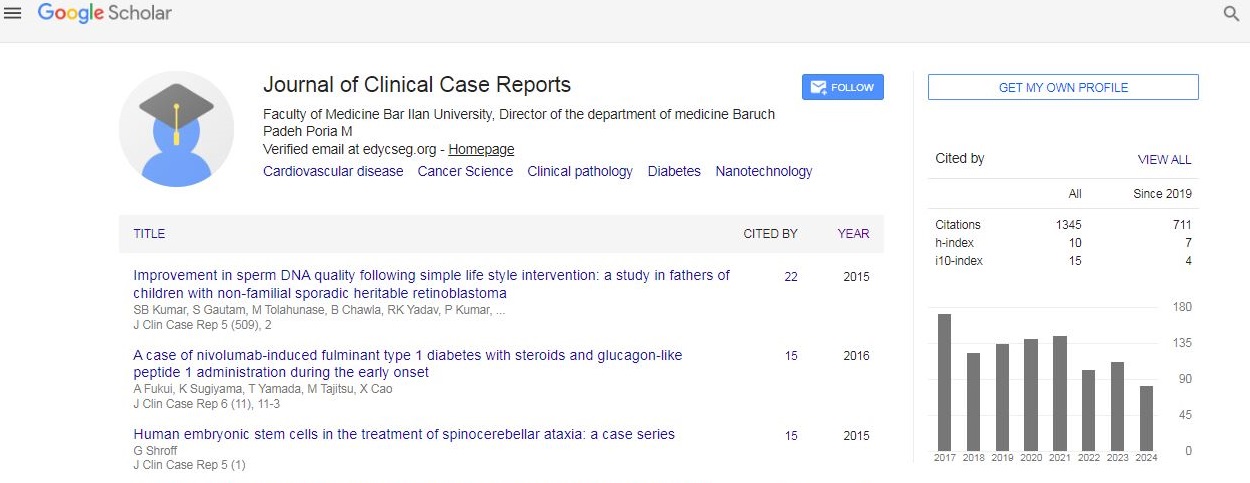
Journal of Clinical Case Reports received 1345 citations as per Google Scholar report