Commentary - (2025) Volume 8, Issue 3
Received: 01-Sep-2025, Manuscript No. pollution-25-176605;
Editor assigned: 03-Sep-2025, Pre QC No. P-176605;
Reviewed: 17-Sep-2025, QC No. Q-176605;
Revised: 22-Sep-2025, Manuscript No. R-176605;
Published:
29-Sep-2025
, DOI: 10.37421/2684-4958.2025.8.384
Citation: Rivera, Alejandro. ”ALAN: Widespread Threat to Health and Well-being.” Pollution 08 (2025):384.
Copyright: © 2025 Rivera A. This is an open-access article distributed under the terms of the Creative Commons Attribution License, which permits unrestricted use, distribution
and reproduction in any medium, provided the original author and source are credited.
This article points out that Artificial Light at Night (ALAN) isn't just an environmental issue; it's a potential disruptor of our metabolism. What this means is that prolonged exposure to light, especially during times our bodies expect darkness, could lead to metabolic dysregulation, impacting everything from energy balance to glucose processing. It's a significant health concern that needs more attention[1].
Blue light, a significant component of artificial light, has a profound impact on human sleep, health, and the environment. Here's the thing: while beneficial during the day, blue light exposure at night can suppress melatonin production, throwing off our circadian rhythm and contributing to sleep disturbances, eye strain, and even mood disorders. The article delves into these various consequences, highlighting the need for mindful light usage[2].
This study specifically investigates how artificial light at night affects adolescent sleep quality. What this really means is that younger populations, often exposed to screens and indoor lighting late into the evening, are experiencing noticeable impacts on their sleep patterns. The research shows a clear link, emphasizing that reducing light exposure before bed is crucial for adolescents' well-being and development[3].
This review consolidates findings on the extensive impact of light pollution on human health. It covers various aspects, from sleep disruption to potential links with chronic diseases, all stemming from our increasing exposure to artificial light after dark. The piece really drives home the idea that light pollution isn't just about dimming the stars; it's fundamentally altering our physiological processes and overall well-being[4].
Melatonin, our body's sleep hormone, is highly sensitive to light exposure. This article explains how artificial light at night directly interferes with melatonin production, leading to a cascade of negative health effects. It's a clear breakdown of the mechanisms by which light pollution impacts our internal clocks and, consequently, our broader health, highlighting the importance of darkness for hormonal balance[5].
This piece calls light pollution 'the new normal,' acknowledging its pervasive and rapidly expanding presence globally. It summarizes the multifaceted consequences across various ecosystems and human populations. The authors highlight that this 'new normal' comes with a steep cost, affecting biodiversity, human health, and even cultural aspects like stargazing. It frames light pollution not just as a problem but as an integral part of modern living we urgently need to address[6].
This umbrella review takes a broad look at the evidence linking artificial light at night to sleep disturbances. What's compelling here is how it synthesizes a vast body of research, confirming that ALAN is indeed a significant risk factor for poor sleep quality. This isn't just anecdotal; it's a well-supported conclusion across multiple studies, urging us to reconsider our lighting environments[7].
Light pollution affects more than just our sleep; it influences our bodies at a fundamental level. This article explores how ALAN impacts various physiological systems, contributing to conditions like hypertension and other cardiovascular issues. It’s a clear explanation of how disrupting our natural light-dark cycles leads to tangible, negative health outcomes beyond just feeling tired[8].
This paper highlights the broad detrimental effects of light pollution on human health. It acts as a comprehensive overview, underscoring how light at night isn't just an inconvenience but a significant environmental health stressor. The findings reinforce that reducing unnecessary light exposure after sunset is crucial for public health, touching on various physiological and psychological aspects[9].
Here's a critical insight: light pollution can be a risk factor for psychiatric disorders. This article explores the link between disrupted circadian rhythms due to light at night and increased vulnerability to mental health issues like depression and anxiety. It suggests that our brightly lit modern environments may be inadvertently contributing to a rise in psychiatric conditions, making the case for darker nights not just for sleep, but for mental well-being too[10].
Artificial Light at Night (ALAN) is increasingly recognized as more than an environmental concern; it actively disrupts human metabolism. Prolonged exposure to light, especially during periods when bodies naturally anticipate darkness, can lead to metabolic dysregulation, impacting everything from energy balance to glucose processing. This issue is a significant health concern demanding greater attention [1]. Light pollution, often referred to as "the new normal," has a pervasive and rapidly expanding global presence. It carries a substantial cost, affecting diverse ecosystems and human populations by influencing biodiversity, human health, and even cultural activities like stargazing. This frames light pollution not just as a problem but as an integral aspect of modern life that urgently needs to be addressed [6]. Ultimately, research emphasizes that light pollution fundamentally alters our physiological processes and overall well-being, highlighting its extensive and far-reaching impact on human health [4].
A primary mechanism through which light pollution exerts its detrimental effects is the disruption of melatonin production. Melatonin, our body's essential sleep hormone, is exquisitely sensitive to light exposure. Artificial light at night directly interferes with its synthesis, triggering a cascade of negative health outcomes by perturbing our internal clocks and hormonal balance [5]. This interference is a significant contributor to widespread sleep disturbances, a conclusion consistently supported by a vast body of research. An umbrella review unequivocally confirms that ALAN constitutes a major risk factor for compromised sleep quality, urging a critical reevaluation of our modern lighting environments [7]. Blue light, a prominent component of artificial illumination, exacerbates these effects. While beneficial during daylight hours, nocturnal blue light exposure profoundly suppresses melatonin, thereby throwing off circadian rhythms and contributing to sleep disturbances, eye strain, and mood disorders [2]. This impact is particularly pronounced in younger demographics, with studies specifically investigating how ALAN affects adolescent sleep quality, showing clear links between late-evening screen time and indoor lighting, and noticeable disruptions in sleep patterns. Consequently, reducing light exposure before bedtime is deemed crucial for adolescents' healthy development and overall well-being [3].
Beyond sleep, light pollution profoundly affects various physiological systems. It influences our bodies at a fundamental level, contributing to the development of conditions such as hypertension and other cardiovascular issues. This provides a clear explanation of how disrupting natural light-dark cycles leads to tangible, negative health outcomes that extend far beyond merely feeling tired [8]. The broad detrimental effects underscore that light at night is not merely an inconvenience but a significant environmental health stressor. The findings reinforce the imperative to reduce unnecessary light exposure after sunset for public health, touching upon a wide array of physiological and psychological aspects [9]. Furthermore, a critical insight reveals light pollution as a potential risk factor for psychiatric disorders. Research explores the link between disrupted circadian rhythms, caused by nocturnal light, and an increased vulnerability to mental health challenges like depression and anxiety. This suggests that our brightly lit contemporary environments might inadvertently contribute to a rise in psychiatric conditions, making a compelling case for darker nights not just for sleep, but equally for mental well-being [10].
In sum, the cumulative evidence from these studies unequivocally positions Artificial Light at Night as a multifaceted threat to human health. The consequences span from metabolic dysregulation and significant degradation of sleep quality to the emergence of cardiovascular and mental health challenges. The consistent and compelling findings across this diverse research body underscore that light pollution represents much more than a minor environmental nuisance; it is a fundamental alteration of our natural environment with profound and pervasive biological consequences. Addressing this critical challenge necessitates a concerted and conscious effort to manage and mitigate light exposure, particularly during evening hours, for the enduring benefit of global public health and the preservation of environmental integrity.
Artificial Light at Night (ALAN) and general light pollution present significant and widespread threats to human health and the environment. Exposure to artificial light during natural darkness periods can disrupt metabolism, leading to issues with energy balance and glucose processing. Blue light, a common component of modern lighting, is particularly impactful, suppressing melatonin production at night, which in turn disrupts circadian rhythms and contributes to poor sleep, eye strain, and mood disorders. This is especially concerning for adolescents, whose sleep quality is notably affected by late-evening light exposure. Beyond sleep disturbances, ALAN influences fundamental physiological systems, contributing to conditions like hypertension and other cardiovascular problems. It is also identified as a potential risk factor for psychiatric disorders, including depression and anxiety, by interfering with natural light-dark cycles crucial for mental well-being. Researchers collectively label light pollution as "the new normal" due to its pervasive global presence and multifaceted consequences, affecting not only human health but also biodiversity and cultural aspects. The consistent findings across various studies emphasize that reducing unnecessary light exposure after sunset is crucial for public health, addressing light pollution as a significant environmental health stressor that fundamentally alters human physiological processes and overall well-being.
None
None
Indexed at, Google Scholar, Crossref
Indexed at, Google Scholar, Crossref
Indexed at, Google Scholar, Crossref
Indexed at, Google Scholar, Crossref
Indexed at, Google Scholar, Crossref
Indexed at, Google Scholar, Crossref
Indexed at, Google Scholar, Crossref
Indexed at, Google Scholar, Crossref
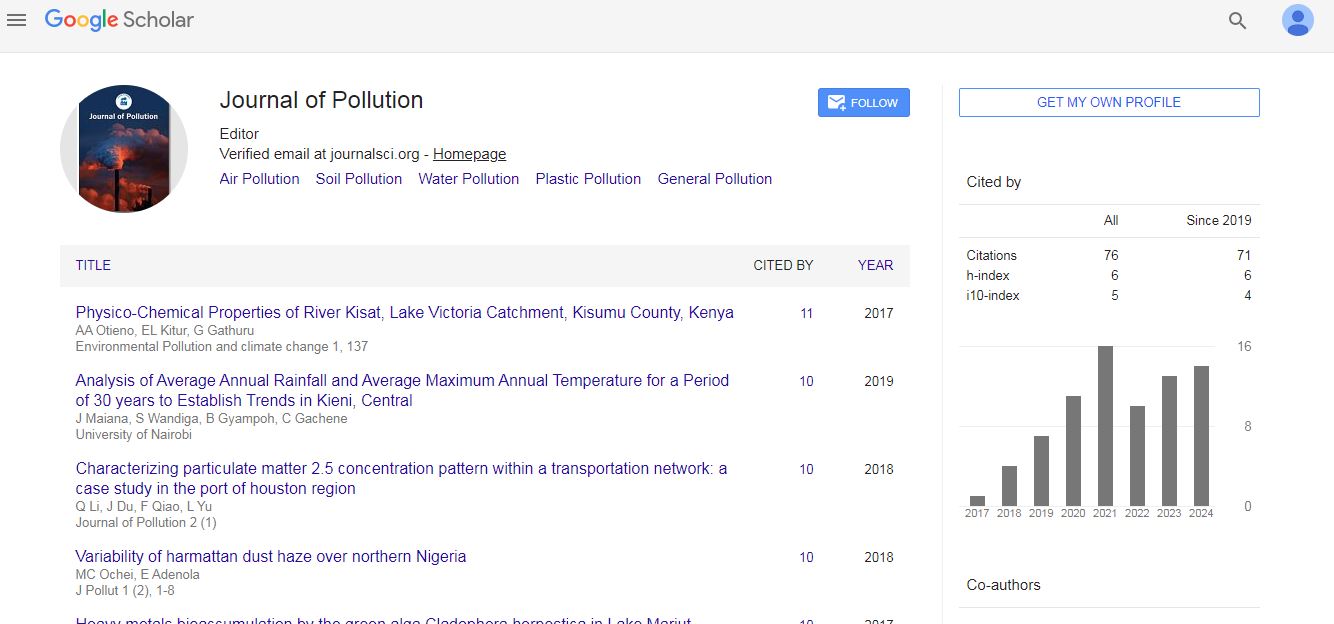
Journal of Pollution received 64 citations as per Google Scholar report