Short Communication - (2025) Volume 14, Issue 2
Received: 01-Mar-2025, Manuscript No. jtsm-26-179514;
Editor assigned: 03-Mar-2025, Pre QC No. P-179514;
Reviewed: 17-Mar-2025, QC No. Q-179514;
Revised: 24-Mar-2025, Manuscript No. R-179514;
Published:
31-Mar-2025
, DOI: 10.37421/2167-0919.2025.14.495
Citation: Wen, Li. ”AI-Driven Telecommunication Network Planning and Management.” J Telecommun Syst Manage 14 (2025):495.
Copyright: © 2025 Wen L. This is an open-access article distributed under the terms of the Creative Commons Attribution License, which permits unrestricted use, distribution and reproduction in any medium, provided the original author and source are credited.
The telecommunication industry stands at a pivotal juncture, grappling with exponential growth in data traffic and the burgeoning demands of advanced technologies. Efficient network planning and robust capacity management are paramount to ensuring seamless service delivery and optimal resource utilization in this dynamic landscape. The evolution towards next-generation networks, including 5G and the Internet of Things (IoT), introduces unprecedented complexities that necessitate innovative approaches. This paper aims to synthesize the current state of research in this critical domain, drawing insights from various studies that address these challenges. Advanced models for telecommunication network planning and capacity management are essential for maintaining service quality and resource efficiency. These models focus on optimizing the allocation of network resources to meet the ever-increasing demands, particularly in the face of growing data consumption and the proliferation of connected devices. The integration of sophisticated analytical techniques is crucial for predicting and adapting to fluctuating traffic patterns, thereby ensuring network stability and performance [1].
The application of machine learning techniques, particularly deep learning frameworks, has emerged as a powerful tool for real-time capacity prediction in mobile networks. By analyzing historical traffic data and performance metrics, these models can accurately forecast future demand. This predictive capability allows for optimized resource allocation, significant reductions in operational costs, and a substantial improvement in user experience by proactively preventing network congestion [2].
Next-generation wireless networks, such as 5G, present unique challenges for capacity management due to their dynamic traffic patterns and the requirement for intelligent resource orchestration across diverse network slices. Strategies that leverage artificial intelligence (AI) are vital for enabling automated capacity adjustments and maximizing the efficiency of spectrum utilization in these complex environments [3].
Beyond traffic dynamics, user mobility patterns and diverse service demands are critical factors in optimizing telecom network planning. Simulation-based modeling provides a valuable methodology for evaluating various network configurations and resource allocation schemes. The insights gained are instrumental in designing future-proof telecommunication infrastructures that are resilient and performant under varying conditions [4].
The advent of cloud-native architectures in telecommunication networks introduces new paradigms for intelligent capacity management. Dynamic scaling of network functions and resources is essential to accommodate fluctuating service demands. Adaptive control mechanisms, often powered by reinforcement learning, offer a promising avenue for achieving significant improvements in resource efficiency and service availability [5].
The proliferation of the Internet of Things (IoT) presents a distinct set of challenges for network planning and capacity management. Handling a massive number of low-bandwidth devices with intermittent traffic requires specialized approaches. Hierarchical planning and intelligent resource provisioning are key to ensuring scalability and quality of service for a vast array of IoT applications [6].
Heterogeneous wireless networks, characterized by the integration of multiple access technologies like Wi-Fi and cellular, necessitate joint optimization of network planning and capacity allocation. Balancing load across these diverse technologies is crucial for maximizing overall network performance and user satisfaction. This often involves incorporating sophisticated traffic prediction and dynamic resource slicing techniques [7].
Proactive capacity management in cellular networks is becoming increasingly important. By employing anomaly detection and predictive modeling, networks can identify potential bottlenecks before they impact users. Analyzing real-time key performance indicators (KPIs) allows for timely interventions, such as dynamic resource adjustments or network reconfigurations, to maintain consistent service quality [8].
Furthermore, the integration of artificial intelligence (AI) with network function virtualization (NFV) offers a pathway to flexible and scalable telecom network capacity planning. Intelligent orchestration frameworks that dynamically allocate virtual network functions and resources based on predicted traffic loads and service requirements are essential for enhancing network agility and overall efficiency [9].
The landscape of telecommunication network capacity management is continuously evolving, driven by technological advancements and increasing user demands. This necessitates a deep understanding of various models, techniques, and strategies that can ensure the efficient and reliable operation of modern networks. The following sections will delve into these aspects, providing a comprehensive overview of the research in this critical field. This foundational research underscores the importance of proactive and intelligent approaches to network planning and capacity management. The increasing complexity of telecommunication networks, driven by emerging technologies and evolving user behaviors, necessitates sophisticated solutions. Studies have explored advanced modeling techniques, machine learning applications, and AI-driven strategies to address these challenges effectively. The continuous evolution of network infrastructure, from 5G to cloud-native architectures and the massive deployment of IoT devices, demands adaptive and scalable capacity management solutions. This collection of work highlights the critical need for research that can ensure the performance, reliability, and efficiency of telecommunication networks in the face of unprecedented growth and complexity. By synthesizing these diverse perspectives, we aim to provide a holistic view of the current research landscape and identify key directions for future innovation in this vital field. The continuous surge in data traffic, coupled with the transformative potential of emerging technologies like 5G and IoT, has placed immense pressure on existing telecommunication infrastructures. This escalating demand necessitates a paradigm shift in how networks are planned and managed. The focus has moved from static, reactive approaches to dynamic, proactive strategies that leverage advanced analytical capabilities. The papers discussed herein collectively illustrate the critical role of data-driven insights and intelligent algorithms in navigating the complexities of modern network operations. They highlight the imperative for continuous innovation in developing models and methodologies that can ensure optimal resource utilization, maintain high service quality, and foster network resilience. The following sections will elaborate on these facets, presenting a structured overview of the current research landscape and its implications for the future of telecommunications. The rapid advancement in telecommunications technology, characterized by the widespread adoption of 5G and the exponential growth of the Internet of Things (IoT), presents significant challenges for network planning and capacity management. Meeting the ever-increasing demand for data services while ensuring consistent quality of service requires sophisticated and adaptive strategies. This paper synthesizes recent research efforts that aim to address these critical issues. The studies reviewed explore a range of innovative approaches, from advanced predictive modeling and machine learning algorithms to intelligent resource orchestration in cloud-native and virtualized network environments. The overarching goal is to provide insights into developing more efficient, scalable, and resilient telecommunication networks capable of supporting the demands of the digital age. The subsequent sections will provide a detailed examination of these findings and their implications for the future of the industry. The telecommunication sector is undergoing a profound transformation driven by the relentless growth of data traffic and the introduction of groundbreaking technologies such as 5G and the Internet of Things (IoT). This unprecedented expansion necessitates a fundamental reevaluation of traditional network planning and capacity management strategies. The papers compiled here offer a comprehensive overview of the cutting-edge research and innovative solutions being developed to tackle these challenges. They underscore the critical importance of leveraging advanced analytical models, artificial intelligence, and machine learning techniques to ensure efficient resource allocation, maintain superior service quality, and foster network scalability. The subsequent sections will delve into the specifics of these research contributions, highlighting their implications for the future of telecommunication network design and operation. The telecommunication industry is currently experiencing an unprecedented surge in data traffic, largely driven by the proliferation of mobile devices, cloud computing, and the expanding ecosystem of the Internet of Things (IoT). Concurrently, the rollout of next-generation technologies like 5G is introducing new services and demanding higher performance standards. This confluence of factors places significant strain on existing network infrastructure, making effective network planning and capacity management more critical than ever before. This paper aims to consolidate and analyze recent research contributions that address these complex challenges. The articles reviewed cover a spectrum of innovative approaches, including advanced modeling, machine learning-based prediction, and intelligent resource orchestration, all geared towards optimizing network performance and ensuring a seamless user experience. The following sections will provide a detailed exploration of these key research areas. Telecommunication networks are at the forefront of technological innovation, supporting an ever-expanding array of services and applications. The exponential growth in data consumption, coupled with the emergence of transformative technologies like 5G and the Internet of Things (IoT), has created a complex and dynamic environment for network operators. Ensuring that these networks can meet future demands requires sophisticated planning and proactive capacity management. This paper synthesizes key research findings that address these critical challenges. The studies presented explore advanced modeling techniques, machine learning applications for predictive analytics, and intelligent resource orchestration strategies, particularly in the context of next-generation networks and cloud-native architectures. The subsequent sections will delve into the details of these research contributions, offering insights into how the industry can navigate the evolving landscape of telecommunications. The telecommunication landscape is rapidly evolving, with an insatiable demand for data and the advent of disruptive technologies like 5G and the Internet of Things (IoT). These developments present formidable challenges for network planning and capacity management, requiring operators to constantly adapt and innovate. This paper draws upon a collection of significant research contributions that tackle these issues head-on. The reviewed studies highlight the critical role of advanced analytical models, AI-driven solutions, and machine learning techniques in predicting traffic patterns, optimizing resource allocation, and ensuring service quality. The subsequent sections will provide a comprehensive overview of these findings, emphasizing their importance for building resilient and scalable telecommunication infrastructures for the future. In the current era of digital transformation, telecommunication networks are the backbone of global connectivity, experiencing unparalleled growth in data traffic and the demand for enhanced services. The rapid deployment of technologies like 5G and the pervasive adoption of the Internet of Things (IoT) are further intensifying these pressures. Consequently, robust network planning and sophisticated capacity management have become paramount for ensuring network performance, reliability, and user satisfaction. This paper synthesizes a selection of recent research endeavors that are at the forefront of addressing these critical challenges. The reviewed literature spans advanced modeling approaches, the application of machine learning for predictive analytics, and intelligent orchestration strategies tailored for modern, dynamic network environments. The subsequent sections will offer a detailed examination of these contributions and their implications for the future of telecommunication infrastructure. The telecommunication industry is undergoing a period of rapid evolution, marked by an exponential increase in data traffic and the transformative influence of emerging technologies such as 5G and the Internet of Things (IoT). These advancements necessitate a strategic re-evaluation of network planning and capacity management practices to ensure sustained performance and service quality. This paper aims to provide a consolidated overview of recent research that tackles these complex issues. The studies examined explore innovative solutions ranging from advanced predictive modeling and machine learning applications to intelligent resource orchestration in virtualized and cloud-native environments. The subsequent sections will delve into the specifics of these research findings, highlighting their significance for the future development of telecommunication networks. Modern telecommunication networks are the critical infrastructure enabling the digital economy, facing unprecedented challenges from surging data traffic and the deployment of next-generation technologies like 5G and the Internet of Things (IoT). Effective network planning and capacity management are no longer optional but essential for ensuring robust performance, scalability, and user satisfaction. This paper synthesizes a collection of key research contributions that address these vital concerns. The articles reviewed highlight the growing importance of data-driven approaches, artificial intelligence, and machine learning in predicting network demands, optimizing resource allocation, and maintaining high quality of service. The following sections will present a detailed analysis of these research findings and their implications for the future of telecommunications. The telecommunication sector is experiencing a paradigm shift driven by the exponential growth in data traffic and the rapid advent of sophisticated technologies like 5G and the Internet of Things (IoT). This dynamic environment demands advanced strategies for network planning and capacity management to ensure optimal resource utilization and service quality. This paper presents a synthesized overview of recent research endeavors that address these critical challenges. The studies explored delve into various innovative approaches, including sophisticated modeling techniques, machine learning for predictive analytics, and AI-driven solutions for dynamic resource allocation and network orchestration. The subsequent sections will offer a detailed examination of these contributions, providing valuable insights into the future of telecommunication network design and operation.
The critical aspects of telecommunication network planning and capacity management are explored, focusing on advanced models designed to ensure efficient resource utilization and superior service quality. The research delves into the significant challenges presented by escalating data traffic and the evolving requirements of cutting-edge technologies like 5G and IoT. A key takeaway is the emphasized importance of predictive analytics and AI-driven methodologies for dynamic capacity allocation and proactive problem resolution within complex network infrastructures [1].
A specific investigation into the application of machine learning techniques for real-time capacity prediction in mobile telecommunication networks is presented. The authors introduce a deep learning framework engineered to analyze historical traffic data and network performance metrics, enabling accurate forecasting of future demand. The adoption of such a framework promises substantial benefits, including optimized resource allocation, reduced operational expenditures, and an enhanced user experience through the prevention of network congestion [2].
This study specifically addresses the complexities and strategic approaches required for capacity management in next-generation wireless networks, with a particular focus on 5G. It highlights the inherently dynamic nature of traffic patterns and underscores the necessity for intelligent orchestration of resources across different network slices. The research firmly advocates for the integration of AI to facilitate automated capacity adjustments and to achieve efficient spectrum utilization [3].
A novel framework is proposed for the optimization of telecom network planning, taking into account crucial factors such as user mobility patterns and specific service demands. The methodology employs simulation-based modeling to rigorously evaluate diverse network configurations and resource allocation strategies, with the overarching goal of improving network performance and reliability. The insights derived from this research are vital for the development of future-proof telecommunication infrastructures [4].
The focus of this research is on the intelligent capacity management of cloud-native telecommunication networks. It tackles the challenge of dynamically scaling network functions and resources to effectively meet fluctuating service demands. The proposed solution involves an adaptive control mechanism powered by reinforcement learning, which has demonstrated significant improvements in both resource efficiency and service availability [5].
This paper investigates the specific challenges and necessary strategies for network planning and capacity management within the context of massive Internet of Things (IoT) deployments. It highlights the unique difficulties associated with managing a vast number of low-bandwidth devices and handling intermittent traffic patterns. The authors propose a hierarchical planning approach complemented by intelligent resource provisioning to guarantee scalability and maintain quality of service for diverse IoT applications [6].
This study presents a joint optimization model designed for network planning and capacity allocation in heterogeneous wireless networks. The primary objective is to achieve a balanced load distribution across various access technologies, such as Wi-Fi and cellular networks, thereby maximizing overall network performance and user satisfaction. The proposed approach effectively integrates traffic prediction capabilities with dynamic resource slicing mechanisms [7].
The paper concentrates on proactive capacity management within cellular networks by employing advanced anomaly detection techniques and predictive modeling. This approach aims to identify potential capacity bottlenecks before they adversely affect users by continuously analyzing real-time network key performance indicators (KPIs). This enables timely and targeted interventions, including dynamic resource adjustments and network reconfigurations, to sustain optimal service quality [8].
This research explores the synergistic integration of artificial intelligence (AI) and network function virtualization (NFV) to achieve flexible and scalable capacity planning for telecommunication networks. The authors propose an intelligent orchestration framework that dynamically allocates virtual network functions and associated resources based on predicted traffic loads and specific service requirements. This approach significantly enhances network agility and overall efficiency [9].
The authors provide a comprehensive survey of existing capacity management techniques prevalent in modern telecommunication networks. The review places a strong emphasis on the ongoing shift towards software-defined networking (SDN) and network function virtualization (NFV). Various optimization algorithms and data-driven approaches are discussed concerning their effectiveness in efficient resource allocation, traffic engineering, and the assurance of quality of service in highly dynamic network environments [10].
Collectively, these studies highlight a critical trend: the increasing reliance on intelligent, data-driven approaches for managing the complexity and scale of modern telecommunication networks. From predictive modeling to AI-powered orchestration, the research indicates a clear path towards more resilient, efficient, and user-centric network infrastructures. The insights provided are essential for network operators, researchers, and policymakers aiming to navigate the evolving landscape of telecommunications and harness the full potential of new technologies. The methodologies presented offer tangible solutions for optimizing performance, reducing costs, and ensuring high availability in the face of ever-growing demands and increasingly complex network architectures. The continuous pursuit of innovation in these areas is vital for supporting the digital economy and its future advancements. These research contributions collectively underscore the imperative for adopting sophisticated and adaptive strategies in telecommunication network management. The identified challenges, ranging from massive data traffic growth to the complexities of 5G and IoT deployments, necessitate a departure from traditional methods. The emphasis on machine learning, AI, and advanced modeling techniques signifies a move towards more proactive, predictive, and automated network operations. The insights into optimizing resource allocation, ensuring service quality, and enhancing network resilience are crucial for the continued growth and evolution of the telecommunications industry. These studies provide a solid foundation for future research and development in creating the next generation of telecommunication infrastructures. The presented research collectively emphasizes a strong and growing reliance on advanced analytical tools and intelligent algorithms to manage the intricate demands of contemporary telecommunication networks. The transition towards proactive and predictive capacity management is evident, driven by the need to accommodate rapidly increasing data volumes and the unique characteristics of emerging technologies. The various proposed frameworks and methodologies offer practical solutions for optimizing resource utilization, mitigating congestion, and ensuring a high quality of service for end-users. These findings are instrumental for shaping the future trajectory of network design, deployment, and operational strategies within the telecommunications sector, paving the way for more agile and efficient infrastructures. The collective body of work presented here illustrates a significant evolution in the approaches to telecommunication network planning and capacity management. The increasing complexity and scale of modern networks, driven by technological advancements and user behavior, demand intelligent solutions. The research consistently points towards the efficacy of data-driven strategies, machine learning, and AI in addressing these challenges. By focusing on predictive analytics, dynamic resource allocation, and proactive issue resolution, these studies offer valuable insights for building more robust, scalable, and efficient telecommunication infrastructures that can meet the demands of the future. The research highlighted provides a comprehensive view of the current state and future directions in telecommunication network planning and capacity management. The consistent theme across these studies is the critical role of advanced technologies, particularly AI and machine learning, in addressing the challenges posed by increasing data traffic and new technological paradigms like 5G and IoT. The methodologies and frameworks presented offer practical pathways towards achieving greater network efficiency, scalability, and resilience. These insights are invaluable for stakeholders seeking to develop and manage next-generation telecommunication infrastructures effectively.
This collection of research addresses the critical challenges in telecommunication network planning and capacity management, driven by exponential data traffic growth and the emergence of technologies like 5G and IoT. Studies explore advanced modeling, machine learning for predictive analytics, and AI-driven approaches for dynamic resource allocation. Key themes include optimizing resource utilization, ensuring service quality, and enhancing network resilience. Research covers areas such as real-time capacity prediction, strategies for 5G networks, simulation-based optimization considering user mobility, intelligent management of cloud-native networks using reinforcement learning, network planning for massive IoT deployments, joint optimization in heterogeneous wireless networks, proactive capacity management through anomaly detection, and the integration of AI with network function virtualization. A survey also reviews capacity management techniques in modern networks, emphasizing SDN and NFV. The overarching goal is to develop scalable, agile, and efficient telecommunication infrastructures for the future.
None
None
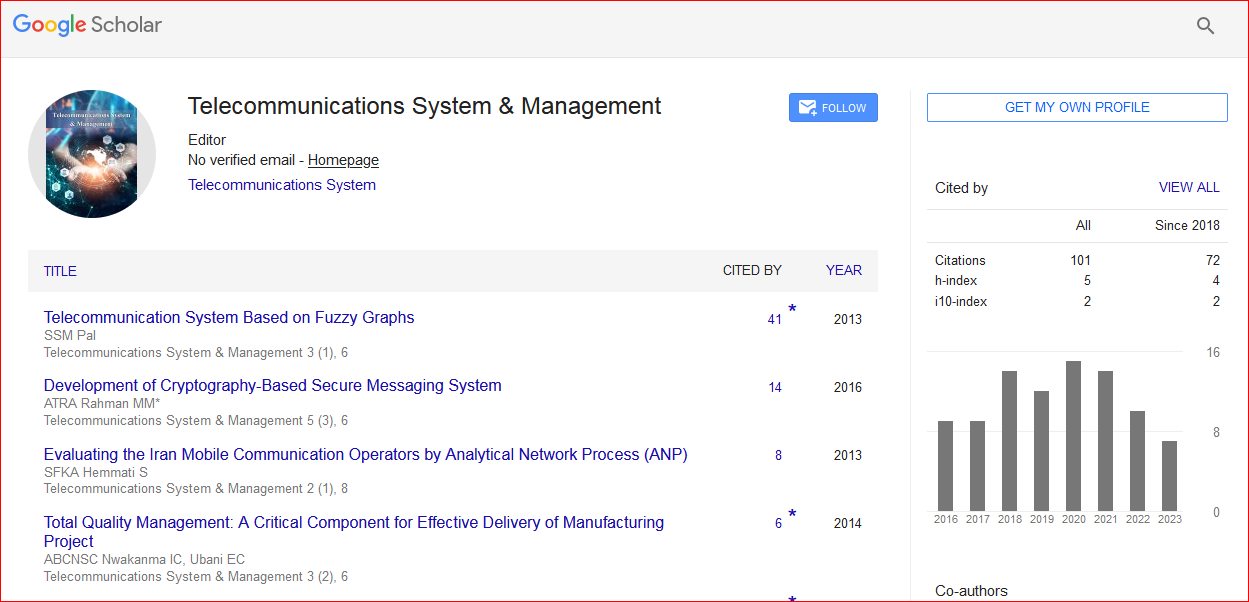
Telecommunications System & Management received 109 citations as per Google Scholar report