Short Communication - (2025) Volume 8, Issue 6
Received: 01-Dec-2025, Manuscript No. jcnn-25-178212;
Editor assigned: 03-Dec-2025, Pre QC No. P-178212;
Reviewed: 17-Dec-2025, QC No. Q-178212;
Revised: 22-Dec-2025, Manuscript No. R-178212;
Published:
29-Dec-2025
, DOI: 10.37421/2684-6012.2025.8.331
Citation: Müller, Yvonne. ”Advancing Brain Tumor Treatment Through Precision Oncology.” J Clin Neurol Neurosurg 08 (2025):331.
Copyright: © 2025 Müller Y. This is an open-access article distributed under the terms of the Creative Commons Attribution License, which permits unrestricted use, distribution and reproduction in any medium, provided the original author and source are credited.
Advances in neurosurgical oncology are rapidly expanding treatment options for brain and spinal cord tumors, representing a significant evolution in patient care. This includes the integration of minimally invasive techniques, sophisticated imaging modalities like intraoperative MRI and awake craniotomy, and the application of molecular profiling to tailor therapies to individual tumor characteristics. Robotic-assisted surgery and stereotactic radiosurgery are also playing increasingly important roles in improving surgical precision and reducing patient morbidity, marking a shift towards less invasive and more effective interventions. The ongoing development of targeted therapies and immunotherapies holds significant promise for improving outcomes in this challenging field, offering new hope for patients with previously intractable conditions. These advancements collectively aim to improve both the efficacy of treatment and the quality of life for patients undergoing neurosurgical oncology interventions. The application of artificial intelligence (AI) in neurosurgical oncology is revolutionizing diagnostic capabilities and treatment planning, offering unprecedented analytical power. AI algorithms can analyze radiological images with high accuracy, predict tumor behavior with greater precision, and assist in surgical navigation, thereby enhancing safety and efficiency throughout the treatment pathway. This technological integration is crucial for developing personalized treatment strategies and can ultimately lead to improved patient prognoses and long-term outcomes. The ability of AI to process vast amounts of data and identify subtle patterns is transforming how we approach complex neurological conditions. Its role is expected to expand as the technology matures and its integration into clinical workflows becomes more seamless. Minimally invasive surgical techniques in neurosurgical oncology, such as keyhole surgery and endoscopic approaches, offer significant advantages, including reduced tissue trauma, shorter hospital stays, and faster recovery times for patients. These techniques demand high precision and advanced visualization, often incorporating neuronavigation and intraoperative imaging to ensure safe and effective tumor resection while preserving critical neurological structures. The shift towards less invasive methods reflects a broader trend in surgery to minimize patient impact and accelerate recovery. This approach is particularly valuable in the delicate environment of the brain, where preserving function is paramount. The role of molecular profiling in neurosurgical oncology is paramount for precise tumor classification and personalized treatment strategies, moving beyond traditional histological classifications. Identifying specific genetic mutations and molecular targets allows for the selection of the most effective targeted therapies and immunotherapies, which can significantly enhance treatment efficacy and minimize off-target effects. This detailed understanding of a tumor's genetic makeup is central to the concept of precision medicine. By tailoring treatments to the molecular landscape of a tumor, clinicians can achieve better results and reduce the burden of side effects. This paradigm shift is fundamental to modern neuro-oncological practice. Stereotactic radiosurgery (SRS) has emerged as a crucial modality in the management of various brain tumors, offering high-dose, conformal radiation delivery with minimal damage to surrounding healthy tissues. Its applications range from treating metastases to primary tumors like meningiomas and gliomas, often as a standalone treatment or in conjunction with surgery and systemic therapies, thereby improving local control and patient quality of life. SRS provides a highly targeted method of radiation delivery, maximizing therapeutic effect on the tumor while sparing adjacent healthy brain tissue. This precision is key to its success in treating sensitive areas of the brain. The development and refinement of intraoperative imaging techniques, including MRI and CT, have profoundly impacted neurosurgical oncology by providing real-time visualization of tumor margins and critical neurovascular structures. These technologies enable more precise and complete tumor resection while minimizing the risk of neurological deficits. The integration of these advanced imaging tools is essential for maximizing surgical outcomes and ensuring patient safety during complex procedures. Real-time imaging allows surgeons to adapt their approach dynamically based on the current operative field. Awake craniotomy has become an indispensable tool for resecting brain tumors located in eloquent areas of the brain. This technique allows for continuous neurological monitoring during surgery, enabling neurosurgeons to identify and preserve critical brain functions, such as speech and motor control. The application of awake craniotomy significantly reduces the risk of permanent neurological deficits and improves the extent of tumor resection possible in these sensitive regions. The ability to test neurological function in real-time is invaluable for preserving quality of life. Robotic-assisted surgery is increasingly being adopted in neurosurgical oncology to enhance precision and dexterity in the operating room. Robots can provide superior instrument control and tremor filtration, allowing for more intricate dissections and access to difficult-to-reach tumor locations. This technology promises to improve surgical safety and potentially expand the scope of minimally invasive interventions, pushing the boundaries of what is surgically achievable. The enhanced control offered by robotic systems can lead to more refined surgical maneuvers. The advent of targeted therapies, guided by molecular diagnostics, is transforming the treatment landscape for neurosurgical oncology by offering agents designed to inhibit specific oncogenic pathways. These therapies are showing promise in improving tumor response and survival rates, particularly for tumors with identifiable driver mutations. This personalized approach aims to maximize therapeutic benefit while minimizing systemic toxicity, representing a significant step forward in cancer treatment. By targeting the underlying molecular drivers of cancer, these therapies offer a more precise and potentially less toxic alternative to traditional chemotherapy. Immunotherapy has opened new avenues for treating challenging brain tumors by harnessing the patient's immune system to fight cancer. Immunotherapeutic agents are demonstrating potential in specific neuro-oncological contexts, and ongoing research focuses on optimizing their delivery and efficacy. Efforts are also directed towards overcoming the immunosuppressive tumor microenvironment, a major hurdle in achieving successful immune responses against brain tumors. This burgeoning field offers a novel approach to cancer treatment that leverages the body's own defenses.
Advances in neurosurgical oncology are rapidly expanding treatment options for brain and spinal cord tumors, representing a significant evolution in patient care. This includes the integration of minimally invasive techniques, sophisticated imaging modalities like intraoperative MRI and awake craniotomy, and the application of molecular profiling to tailor therapies to individual tumor characteristics. Robotic-assisted surgery and stereotactic radiosurgery are also playing increasingly important roles in improving surgical precision and reducing patient morbidity, marking a shift towards less invasive and more effective interventions. The ongoing development of targeted therapies and immunotherapies holds significant promise for improving outcomes in this challenging field, offering new hope for patients with previously intractable conditions. These advancements collectively aim to improve both the efficacy of treatment and the quality of life for patients undergoing neurosurgical oncology interventions [1].
The application of artificial intelligence (AI) in neurosurgical oncology is revolutionizing diagnostic capabilities and treatment planning, offering unprecedented analytical power. AI algorithms can analyze radiological images with high accuracy, predict tumor behavior with greater precision, and assist in surgical navigation, thereby enhancing safety and efficiency throughout the treatment pathway. This technological integration is crucial for developing personalized treatment strategies and can ultimately lead to improved patient prognoses and long-term outcomes. The ability of AI to process vast amounts of data and identify subtle patterns is transforming how we approach complex neurological conditions. Its role is expected to expand as the technology matures and its integration into clinical workflows becomes more seamless [2].
Minimally invasive surgical techniques in neurosurgical oncology, such as keyhole surgery and endoscopic approaches, offer significant advantages, including reduced tissue trauma, shorter hospital stays, and faster recovery times for patients. These techniques demand high precision and advanced visualization, often incorporating neuronavigation and intraoperative imaging to ensure safe and effective tumor resection while preserving critical neurological structures. The shift towards less invasive methods reflects a broader trend in surgery to minimize patient impact and accelerate recovery. This approach is particularly valuable in the delicate environment of the brain, where preserving function is paramount [3].
The role of molecular profiling in neurosurgical oncology is paramount for precise tumor classification and personalized treatment strategies, moving beyond traditional histological classifications. Identifying specific genetic mutations and molecular targets allows for the selection of the most effective targeted therapies and immunotherapies, which can significantly enhance treatment efficacy and minimize off-target effects. This detailed understanding of a tumor's genetic makeup is central to the concept of precision medicine. By tailoring treatments to the molecular landscape of a tumor, clinicians can achieve better results and reduce the burden of side effects. This paradigm shift is fundamental to modern neuro-oncological practice [4].
Stereotactic radiosurgery (SRS) has emerged as a crucial modality in the management of various brain tumors, offering high-dose, conformal radiation delivery with minimal damage to surrounding healthy tissues. Its applications range from treating metastases to primary tumors like meningiomas and gliomas, often as a standalone treatment or in conjunction with surgery and systemic therapies, thereby improving local control and patient quality of life. SRS provides a highly targeted method of radiation delivery, maximizing therapeutic effect on the tumor while sparing adjacent healthy brain tissue. This precision is key to its success in treating sensitive areas of the brain [5].
The development and refinement of intraoperative imaging techniques, including MRI and CT, have profoundly impacted neurosurgical oncology by providing real-time visualization of tumor margins and critical neurovascular structures. These technologies enable more precise and complete tumor resection while minimizing the risk of neurological deficits. The integration of these advanced imaging tools is essential for maximizing surgical outcomes and ensuring patient safety during complex procedures. Real-time imaging allows surgeons to adapt their approach dynamically based on the current operative field [6].
Awake craniotomy has become an indispensable tool for resecting brain tumors located in eloquent areas of the brain. This technique allows for continuous neurological monitoring during surgery, enabling neurosurgeons to identify and preserve critical brain functions, such as speech and motor control. The application of awake craniotomy significantly reduces the risk of permanent neurological deficits and improves the extent of tumor resection possible in these sensitive regions. The ability to test neurological function in real-time is invaluable for preserving quality of life [7].
Robotic-assisted surgery is increasingly being adopted in neurosurgical oncology to enhance precision and dexterity in the operating room. Robots can provide superior instrument control and tremor filtration, allowing for more intricate dissections and access to difficult-to-reach tumor locations. This technology promises to improve surgical safety and potentially expand the scope of minimally invasive interventions, pushing the boundaries of what is surgically achievable. The enhanced control offered by robotic systems can lead to more refined surgical maneuvers [8].
The advent of targeted therapies, guided by molecular diagnostics, is transforming the treatment landscape for neurosurgical oncology by offering agents designed to inhibit specific oncogenic pathways. These therapies are showing promise in improving tumor response and survival rates, particularly for tumors with identifiable driver mutations. This personalized approach aims to maximize therapeutic benefit while minimizing systemic toxicity, representing a significant step forward in cancer treatment. By targeting the underlying molecular drivers of cancer, these therapies offer a more precise and potentially less toxic alternative to traditional chemotherapy [9].
Immunotherapy has opened new avenues for treating challenging brain tumors by harnessing the patient's immune system to fight cancer. Immunotherapeutic agents are demonstrating potential in specific neuro-oncological contexts, and ongoing research focuses on optimizing their delivery and efficacy. Efforts are also directed towards overcoming the immunosuppressive tumor microenvironment, a major hurdle in achieving successful immune responses against brain tumors. This burgeoning field offers a novel approach to cancer treatment that leverages the body's own defenses [10].
Neurosurgical oncology is rapidly advancing with the integration of minimally invasive techniques, sophisticated imaging, and molecular profiling. These developments are enhancing precision and personalization in treating brain and spinal cord tumors. Key technologies include AI for diagnostics and planning, advanced surgical approaches like awake craniotomy and robotic assistance, and innovative therapies such as targeted agents and immunotherapies. Stereotactic radiosurgery offers a precise radiation delivery method, while intraoperative imaging guides surgeons for more complete resections with reduced risk. Molecular profiling is crucial for tailoring treatments based on tumor genetics, leading to improved efficacy and minimized side effects. The ongoing pursuit of novel treatment strategies aims to significantly improve outcomes and quality of life for patients facing these complex conditions.
None
None
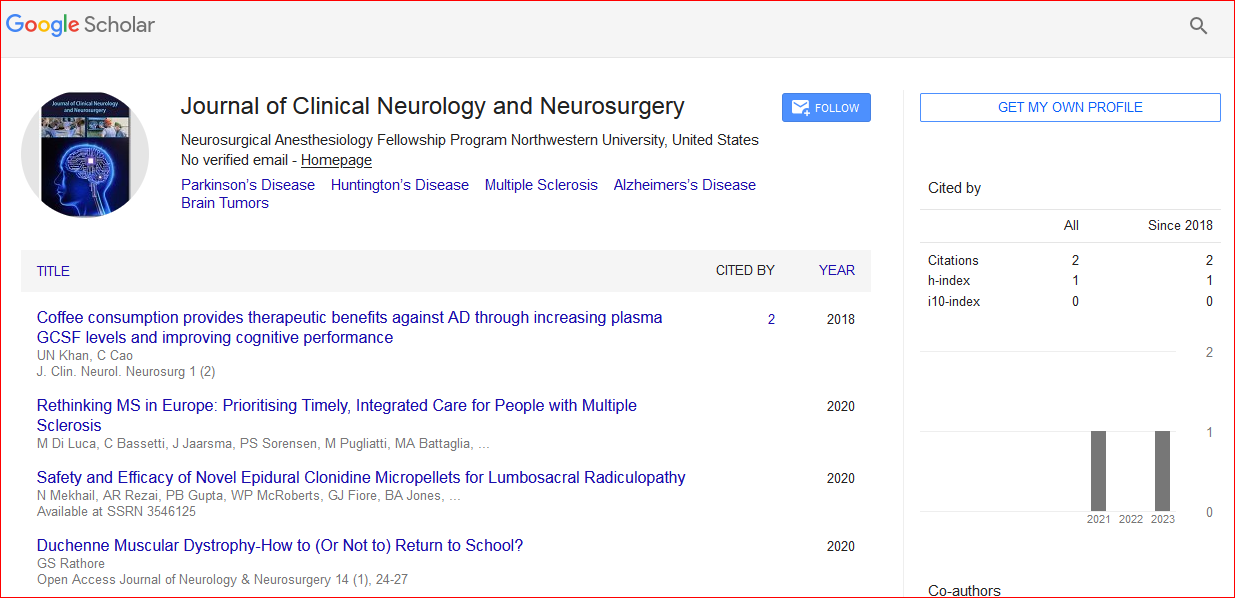
Journal of Clinical Neurology and Neurosurgery received 2 citations as per Google Scholar report