Opinion - (2025) Volume 14, Issue 6
Received: 01-Dec-2025, Manuscript No. idse-26-183635;
Editor assigned: 03-Dec-2025, Pre QC No. P-183635;
Reviewed: 17-Dec-2025, QC No. Q-183635;
Revised: 22-Dec-2025, Manuscript No. R-183635;
Published:
29-Dec-2025
, DOI: 10.37421/2168-9768.2025.14.522
Citation: Belkacem, Omar. ”Advancements in Drainage
Engineering: Sustainable, Resilient Solutions.” Irrigat Drainage Sys Eng 14
(2025):522.
Copyright: © 2025 Belkacem O. This is an open-access article distributed under the terms of the Creative Commons Attribution License, which permits unrestricted use,
distribution and reproduction in any medium, provided the original author and source are credited.
The engineering design of drainage systems, encompassing both surface and subsurface applications, is a multifaceted discipline that integrates principles from hydrology, soil mechanics, and hydraulics. This field aims to create effective and sustainable solutions for managing excess water, a critical aspect for agriculture, urban development, and environmental protection. Advances in this area continuously seek to optimize system performance and minimize ecological impact through site-specific investigations and advanced modeling techniques [1].
Subsurface drainage, in particular, has seen significant innovation, with studies exploring novel methods for pipe and mole drainage design. The effectiveness of these systems is heavily influenced by soil properties, groundwater dynamics, and the specific water requirements of crops. Precision design in this domain is crucial for enhancing agricultural productivity and mitigating issues like waterlogging, especially in challenging soil environments [2].
In urban settings, the engineering of surface drainage systems presents unique challenges. Managing stormwater runoff, promoting infiltration, and integrating green infrastructure are key considerations. The design of resilient systems that can effectively handle increasing rainfall intensities and reduce flood risks in densely populated areas is paramount for public safety and urban sustainability [3].
The application of numerical modeling has become indispensable for simulating the performance of complex drainage networks. Methodologies for calibrating and validating these models using field data allow for accurate predictions of water table behavior and drainage efficiency. This quantitative approach is vital for informed decision-making in the design and management of large-scale drainage projects [4].
Sustainability in drainage system design is increasingly focused on water quality protection. Analyzing the impact of drainage practices on nutrient and sediment transport to aquatic ecosystems, and subsequently proposing design strategies to mitigate these effects, is a growing area of research. Integrated watershed management plays a significant role in this context, highlighting the contribution of drainage to ecological health [5].
The rehabilitation of existing drainage systems, particularly in older agricultural areas, often involves complex retrofitting projects. Case studies detailing the challenges encountered, design modifications, and observed improvements in efficiency and salinity control offer valuable lessons for similar infrastructure renewal initiatives worldwide [6].
For open drainage channels, hydraulic design that considers sediment transport and erosion control is essential for long-term stability. Developing novel approaches for determining optimal channel geometry and selecting appropriate lining materials ensures efficient water flow and prevents channel degradation, making these findings applicable to a broad range of water management projects [7].
The impact of climate change on drainage system design requirements is a critical area of ongoing research. Utilizing climate projection data to assess future precipitation patterns and their implications for drainage capacity necessitates adaptive and robust designs capable of withstanding extreme weather events [8].
Specific challenges, such as the engineering design of drainage systems for saline-affected soils, require specialized strategies. Techniques for salt leaching and improving soil aeration through subsurface drainage, along with guidance on material selection and spacing, are crucial for effective salinity management in irrigated agriculture [9].
Finally, the economic feasibility and environmental benefits of advanced drainage technologies are being rigorously evaluated. Cost-effectiveness analyses of various designs and their contributions to agricultural productivity, water conservation, and ecosystem services support informed investment in modern drainage infrastructure [10].
The engineering design of surface and subsurface drainage systems relies on a deep understanding of hydrological analysis, soil mechanics, and hydraulic principles to achieve effective and sustainable water management [1].
These systems are crucial for various applications, from agricultural productivity to urban flood control and environmental protection. Site-specific investigations and the integration of advanced modeling techniques are highlighted as key strategies for optimizing performance and minimizing environmental impacts. Innovative methods for subsurface drainage design, including pipe and mole drainage, are being explored to enhance agricultural water management [2].
The success of these designs is contingent upon a thorough consideration of soil properties, groundwater levels, and crop water needs. Precision design principles are emphasized for their role in boosting crop yields and alleviating waterlogging, especially in difficult soil conditions. Urban surface drainage engineering grapples with the complexities of managing large volumes of stormwater runoff, promoting infiltration, and incorporating green infrastructure [3].
The development of resilient drainage systems capable of withstanding increased rainfall intensity and mitigating flood risks in built-up environments is a significant engineering challenge. Numerical modeling provides a powerful tool for simulating the behavior of complex drainage networks. The validation of these models with field data enables accurate predictions of water table fluctuations and drainage efficiency, thereby supporting informed design and management decisions for extensive drainage projects [4].
Sustainability in drainage design is increasingly linked to safeguarding water quality. Research in this area focuses on understanding how drainage practices affect nutrient and sediment transport into receiving waters and proposes design modifications to mitigate these effects [5].
This aligns with broader goals of integrated watershed management and maintaining ecological health. Case studies on the retrofitting of aging drainage systems in agricultural areas offer practical insights into overcoming design and implementation challenges [6].
These studies document the modifications made and the subsequent improvements in drainage efficiency and salinity control, providing valuable lessons for similar rehabilitation efforts globally. The hydraulic design of open drainage channels necessitates a focus on sediment transport and erosion control to ensure long-term stability and efficient water conveyance [7].
Developing optimal channel geometries and selecting appropriate lining materials are crucial for the success of irrigation and flood control projects. The influence of climate change on drainage system design is a growing concern, prompting research into adaptive strategies [8].
By using climate projection data, designers can better anticipate future changes in precipitation patterns and ensure drainage systems possess adequate capacity to handle extreme weather events. For saline-affected soils, specialized engineering designs for subsurface drainage are essential for soil reclamation [9].
Strategies involving salt leaching and improved soil aeration, along with careful selection of pipe materials and spacing, are critical for managing salinity in irrigated agricultural lands. Finally, the economic and environmental implications of modern drainage technologies are subjects of ongoing assessment [10].
Evaluating the cost-effectiveness of different drainage designs and their contributions to agricultural output, water conservation, and ecosystem services aids in making sound investment decisions for drainage infrastructure.
This collection of research highlights advancements and considerations in drainage system engineering, covering both surface and subsurface applications. Key themes include the integration of hydrological, soil, and hydraulic principles for sustainable designs, with an emphasis on site-specific investigations and advanced modeling. Innovations in subsurface drainage aim to improve agricultural productivity, while urban surface drainage focuses on managing stormwater and mitigating flood risks. Sustainability and water quality protection are increasingly important, with research proposing strategies to reduce nutrient and sediment runoff. The impact of climate change necessitates adaptive and robust designs. Specific challenges like saline soil reclamation and the rehabilitation of existing systems are also addressed. Furthermore, the economic feasibility and environmental benefits of modern drainage technologies are being evaluated to guide infrastructure investment.
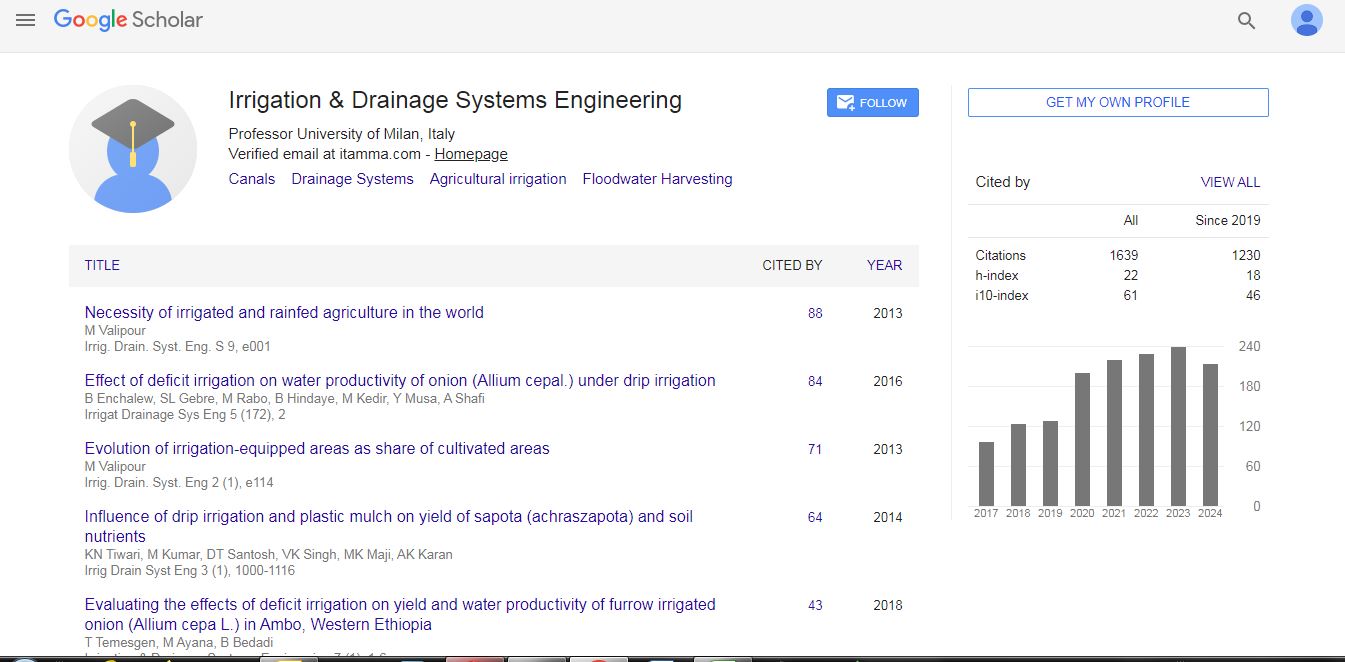
Irrigation & Drainage Systems Engineering received 835 citations as per Google Scholar report