Opinion - (2025) Volume 10, Issue 3
Received: 01-May-2025, Manuscript No. JPNM-26-185777;
Editor assigned: 03-May-2025, Pre QC No. P-185777;
Reviewed: 19-May-2025, QC No. Q-185777;
Revised: 22-May-2025, Manuscript No. R-185777;
Published:
29-May-2025
, DOI: 10.37421/2472-100X.2025.10.345
Citation: Mendes, Rafael. "Advancements in Cerebral Palsy Care and Treatment." J Pediatr Neurol Med 10 (2025):345.
Copyright: © 2025 Mendes R. This is an open-access article distributed under the terms of the Creative Commons Attribution License, which permits unrestricted use, distribution and reproduction in any medium, provided the original author and source are credited.
Recent advancements in cerebral palsy (CP) care are significantly enhancing diagnostic accuracy and timing through innovations in neuroimaging, genetic testing, and sophisticated motor assessment tools [1].
These developments allow for earlier identification of risk factors and subtle signs of CP in infancy, which is paramount for timely and effective intervention [3].
Neuroimaging techniques, such as diffusion tensor imaging (DTI) and susceptibility-weighted imaging (SWI), are providing deeper insights into early brain injury patterns, further refining diagnostic capabilities [3].
The genetic landscape of CP is also becoming clearer, with the identification of numerous genes associated with increased risk, paving the way for more targeted diagnostic approaches and potentially novel therapeutic strategies [4].
These genetic insights are crucial for understanding the complex interplay between genetics, environment, and early brain development, which is vital for developing more effective preventative and therapeutic measures [1].
In parallel with diagnostic improvements, rehabilitation for pediatric cerebral palsy is increasingly focusing on personalized and technology-driven approaches. Evidence strongly supports the efficacy of intensive motor training programs that are task-specific and involve repetitive practice to enhance motor learning and functional outcomes [2].
Emerging technologies, such as robotic-assisted therapy and virtual reality, offer novel ways to deliver consistent, engaging, and potentially more effective training [2].
Functional electrical stimulation (FES) and wearable technologies are also gaining traction, with FES used to facilitate voluntary movements and improve motor control, while wearable sensors provide objective data on movement patterns for personalized feedback [5].
The role of the family in the rehabilitation process is also increasingly recognized as vital, with a growing emphasis on empowering caregivers with strategies for home-based interventions to support the child's progress outside of clinical settings [2].
Pharmacological interventions for spasticity in CP are also evolving, moving towards targeted treatments that minimize side effects. Botulinum toxin injections remain a cornerstone for managing focal spasticity, with improved injection techniques and ultrasound guidance enhancing outcomes [6].
Oral medications are used judiciously, and research is exploring novel agents targeting specific neurotransmitter pathways [6].
Furthermore, the importance of interdisciplinary teams in providing comprehensive care for children with CP cannot be overstated. Collaboration among various specialists, including neurologists, physiatrists, therapists, and psychologists, ensures a holistic approach that addresses the multifaceted needs of affected children [1, 8]. This integrated approach facilitates the development of personalized care plans and optimizes functional outcomes by considering all aspects of a child's development and well-being [8].
Advances in assistive technology, encompassing powered mobility devices, communication aids, and adaptive equipment, are also significantly improving the independence and quality of life for children with CP, with personalization being key to their successful implementation [9].
Understanding the neurobiological underpinnings of motor control deficits in CP is crucial for developing targeted interventions. Research employing advanced neurophysiological techniques is shedding light on altered cortical connectivity and sensorimotor integration, helping to elucidate the impact of early brain injury on developing neural pathways [10].
This knowledge is fundamental for designing rehabilitation strategies that effectively promote neuroplasticity and functional recovery [10].
The integration of these multidisciplinary teams, encompassing a wide range of expertise, ensures that the complex needs of children with CP are holistically addressed [1].
The evolving understanding of the genetic basis of CP is paving the way for more precise diagnostic tools and potentially new therapeutic avenues targeting specific genetic pathways [4].
While CP is traditionally viewed as a non-progressive neurological disorder, ongoing research is exploring the roles of persistent neuroinflammation and synaptic plasticity in its long-term progression and how these factors influence response to interventions [4].
This deeper understanding of neurobiological mechanisms is critical for refining current therapeutic approaches and exploring novel interventions [10].
In the realm of potential future therapies, the role of the microbiome in neurological development is an emerging area of research. Studies are investigating possible links between gut microbiome composition and the risk or severity of CP, suggesting that microbiome modulation could represent a future therapeutic avenue, though this research is still in its early stages [7].
Advances in neuroimaging, such as DTI and SWI, are providing critical insights into the early brain injury patterns that contribute to CP, aiding in both diagnosis and understanding of pathogenesis [3].
The collaborative efforts of multidisciplinary teams are essential for delivering comprehensive care, ensuring that all developmental and well-being aspects of a child with CP are addressed through personalized plans and optimized functional outcomes [8].
The continuous integration of technology, from robotics in therapy to wearable sensors for monitoring, highlights a growing trend towards data-driven and personalized rehabilitation strategies [2, 5]. Overall, the field of cerebral palsy care is characterized by a synergistic progression of more accurate early diagnosis, sophisticated and personalized rehabilitation techniques, and a deepening understanding of the underlying genetic and neurobiological factors, all aimed at improving functional outcomes and quality of life for affected individuals [1, 4, 10].
The diagnostic landscape for cerebral palsy (CP) has been significantly advanced by innovations in neuroimaging, genetic testing, and motor assessment tools, leading to improved accuracy and earlier identification [1].
Techniques such as diffusion tensor imaging (DTI) and susceptibility-weighted imaging (SWI) are crucial for gaining deeper insights into early brain injury patterns, which aids in timely intervention for high-risk infants [3].
Neonatal screening protocols and standardized neurological examinations for infants at risk are being refined to facilitate earlier referrals to specialized care [3].
Simultaneously, research into the genetic underpinnings of CP is uncovering numerous associated genes, which is paving the way for more targeted diagnostic approaches and the potential development of novel therapeutic strategies focused on specific genetic pathways [4].
This growing understanding of the complex interplay between genetic factors, environmental influences, and early brain development is fundamental for creating more effective preventative and therapeutic measures [1].
Rehabilitation for pediatric cerebral palsy is undergoing a transformation towards more personalized and technology-driven strategies. Intensive motor training programs that emphasize task-specificity and repetitive practice have demonstrated efficacy in enhancing motor learning and functional outcomes [2].
Robotic-assisted therapy and virtual reality are emerging as valuable tools, offering consistent and engaging training modalities that can potentially improve motor skills and functional abilities [2].
Functional electrical stimulation (FES) is being utilized to facilitate voluntary movements, strengthen muscles, and improve motor control, while wearable sensors are providing objective data on movement patterns, enabling personalized feedback and progress monitoring [5].
The crucial role of families in the rehabilitation process is increasingly acknowledged, with a focus on empowering caregivers with strategies for home-based interventions to support continued progress [2].
In managing spasticity, a common challenge in CP, pharmacological interventions are evolving. Botulinum toxin injections remain a primary treatment for focal spasticity, with advancements in injection techniques and ultrasound guidance contributing to improved results [6].
Oral medications are employed judiciously, and ongoing research aims to identify novel agents that target specific neurotransmitter pathways for more effective spasticity management [6].
Comprehensive care for children with CP is facilitated by interdisciplinary teams comprising pediatric neurologists, physiatrists, physical and occupational therapists, speech-language pathologists, social workers, and educators [8].
This collaborative approach ensures that all facets of a child's development and overall well-being are addressed through personalized care plans, ultimately optimizing functional outcomes [8].
Assistive technology, including powered mobility devices, communication aids, and adaptive equipment, is playing an increasingly significant role in enhancing the independence and quality of life for children with CP, with the personalization of these technologies being critical for their successful implementation [9].
Investigating the neurobiological mechanisms underlying motor control deficits in CP is paramount for developing targeted interventions. Advanced neurophysiological techniques are illuminating altered cortical connectivity and sensorimotor integration, highlighting the impact of early brain injury on developing neural pathways [10].
This foundational knowledge is essential for designing rehabilitation strategies that promote neuroplasticity and foster functional recovery [10].
The integration of multidisciplinary teams is vital for ensuring that the complex needs of children with CP are met holistically, encompassing medical, therapeutic, psychological, and social aspects [1].
The identification of specific genes associated with an increased risk of CP is refining diagnostic capabilities and opening avenues for developing therapies that target particular genetic pathways [4].
While CP is traditionally considered a non-progressive condition, research is exploring the persistent roles of neuroinflammation and synaptic plasticity in its ongoing progression and response to interventions [4].
This continuous exploration of the neurobiological underpinnings is key to advancing therapeutic strategies [10].
Emerging research is examining the potential influence of the gut microbiome on neurological development and disorders, including CP. Investigations into the relationship between microbiome composition and CP risk or severity suggest that microbiome modulation could become a future therapeutic strategy, although this area requires further investigation [7].
The refinement of neuroimaging techniques provides critical insights into the early brain injury patterns that contribute to CP, aiding in diagnosis and the understanding of its pathogenesis [3].
The collaborative efforts of interdisciplinary teams are essential for providing comprehensive care, ensuring personalized treatment plans and optimal functional outcomes by addressing the diverse needs of children with CP [8].
The incorporation of technology, from robotic therapy to wearable sensors, reflects a growing trend towards personalized and data-driven rehabilitation approaches [2, 5]. In summary, the field of CP care is advancing through improved diagnostic methods, personalized and technology-enhanced rehabilitation, and a deeper understanding of the underlying genetic and neurobiological factors, all contributing to enhanced functional outcomes and improved quality of life for individuals with CP [1, 4, 10].
Recent advancements in cerebral palsy (CP) care include improved early diagnosis through neuroimaging and genetic testing, leading to more accurate and timely identification. Rehabilitation strategies are becoming increasingly personalized and technology-driven, utilizing robotics, virtual reality, and functional electrical stimulation to enhance motor learning and functional outcomes. The importance of family involvement and multidisciplinary teams is emphasized for holistic care. Pharmacological management of spasticity is evolving with targeted treatments. Research into the genetic basis and neurobiological underpinnings of CP is paving the way for novel therapeutic approaches. Assistive technologies are also significantly improving independence and quality of life. Emerging research on the gut microbiome suggests potential future therapeutic avenues.
None
None
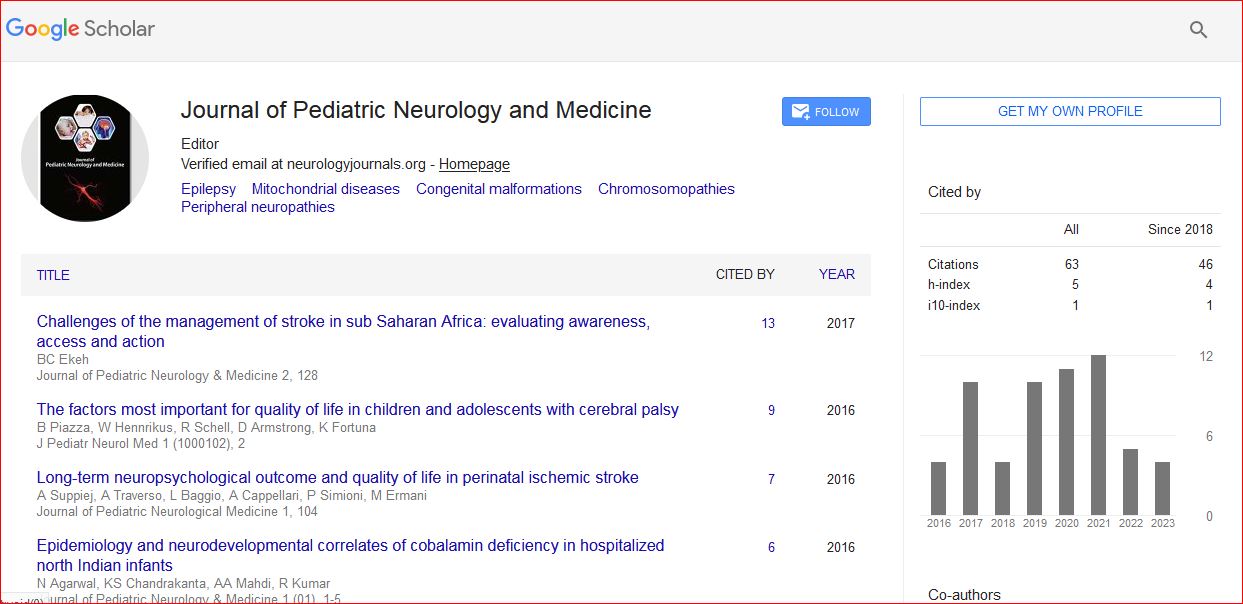
Journal of Pediatric Neurology and Medicine received 68 citations as per Google Scholar report