Brief Report - (2025) Volume 10, Issue 2
Received: 01-Apr-2025, Manuscript No. jcct-26-183201;
Editor assigned: 03-Apr-2025, Pre QC No. P-183201;
Reviewed: 17-Apr-2025, QC No. Q-183201;
Revised: 22-Apr-2025, Manuscript No. R-183201;
Published:
29-Apr-2025
, DOI: 10.37421/2577-0535.2025.9.299
Citation: Moretti, Luca. ”Adaptive Oncology Trials: Accelerating Treatment Discovery.” J Cancer Clin Trials 10 (2025):299.
Copyright: © 2025 Moretti L. This is an open-access article distributed under the terms of the Creative Commons Attribution License, which permits unrestricted use, distribution and reproduction in any medium, provided the original author and source are credited.
Adaptive trial designs represent a paradigm shift in oncology research, offering enhanced flexibility by permitting pre-specified adjustments to trial parameters based on incoming data. This adaptability can expedite the identification of effective treatments, optimize the utilization of patient resources, and potentially lead to improved patient outcomes. However, the implementation of these designs is accompanied by notable challenges, including statistical complexities, navigating regulatory pathways, and establishing the robust infrastructure required for dynamic trial modifications [1].
Within the broader category of adaptive trials, Bayesian adaptive designs stand out for their ability to continuously or sequentially re-estimate treatment effects and other critical parameters. This approach has the potential to increase statistical power and decrease sample size requirements, particularly in the early identification of superior treatments. A fundamental characteristic of these designs is the integration of prior knowledge, which necessitates careful consideration to prevent the introduction of bias into the trial findings [2].
Response-adaptive randomization is a particularly powerful adaptive design strategy that ethically allocates more participants to treatment arms demonstrating superior early outcomes. This method aims to maximize the number of patients receiving the most effective therapy while simultaneously minimizing their exposure to less efficacious or potentially toxic treatments. The successful implementation of response-adaptive randomization hinges on the availability of robust statistical expertise and stringent data monitoring processes [3].
The regulatory landscape governing adaptive trials in oncology is undergoing continuous evolution. Regulatory bodies such as the FDA and EMA are actively providing guidance to facilitate their use. Crucial considerations for regulatory approval include maintaining the integrity of the trial, effectively managing statistical multiplicity, and ensuring patient safety throughout the adaptive adjustments. Transparent communication and the explicit pre-specification of all potential adaptations are indispensable for securing regulatory endorsement [4].
The operational execution of adaptive trials presents significant hurdles, demanding a sophisticated data infrastructure and specialized statistical acumen. Central to these designs is the capacity for real-time data analysis and subsequent decision-making, which poses challenges related to data management systems, statistical software capabilities, and the availability of highly qualified biostatisticians. Consequently, close collaboration between clinical teams and statistical experts is of paramount importance [5].
Platform trials represent a distinct yet complementary type of adaptive design, enabling the simultaneous evaluation of multiple investigational drugs against a common control arm. This integrated approach has the potential to substantially accelerate drug development by reducing the time and financial resources typically required to assess new therapies, especially in therapeutic areas with limited existing treatment options [6].
Enrichment strategies, frequently integrated within adaptive trial frameworks, involve the judicious selection of patient subgroups identified as more likely to respond favorably to a particular treatment. By increasing the probability of detecting a true treatment effect, these strategies can significantly enhance the efficiency of clinical trials. However, the careful definition and validation of selection criteria are essential to mitigate bias and preserve the generalizability of the trial findings [7].
The ethical dimensions of adaptive trials are profound and warrant careful deliberation. While these designs are fundamentally aimed at benefiting patients by expediting the discovery of effective treatments, meticulous attention must be paid to the process of informed consent, particularly given the inherent possibility of trial parameter changes. Ensuring transparency and maintaining clear communication with patients regarding the adaptive nature of the study is critically important [8].
Master protocols, a class of designs that includes adaptive methodologies such as basket and umbrella trials, offer a structured approach for efficiently assessing numerous drugs across diverse cancer types or specific molecular subtypes. These protocols leverage shared operational infrastructure and standardized statistical methodologies, thereby streamlining the complex process of drug development and evaluation [9].
The statistical intricacies inherent in adaptive designs necessitate the application of advanced statistical methodologies and rigorous simulation studies. A primary challenge lies in maintaining the validity of statistical inference while simultaneously permitting pre-specified modifications to the trial. Statistical techniques such as alpha spending functions and conditional power calculations are commonly employed to preserve the overall integrity of the trial's statistical framework [10].
Adaptive trial designs offer a flexible and dynamic approach to oncology research, enabling pre-specified modifications to trial parameters based on accumulating data. This adaptability can expedite the identification of effective treatments, optimize the use of patient resources, and potentially lead to improved patient outcomes. However, these designs are not without their challenges, including statistical complexities, navigating regulatory hurdles, and the necessity of a robust infrastructure for managing dynamic trial adjustments [1].
Bayesian adaptive designs, a specialized subset of adaptive trials, facilitate the continuous or sequential re-estimation of treatment effects and other key parameters. This allows for enhanced statistical power and reduced sample size requirements, particularly beneficial for the early detection of superior treatments. A core feature is the integration of prior knowledge, which, while powerful, demands careful consideration to avoid introducing bias into the study results [2].
Response-adaptive randomization is a significant adaptive design strategy that ethically directs more patients towards treatment arms exhibiting better early outcomes. This approach aims to maximize the number of participants receiving effective therapy while minimizing exposure to less effective or toxic treatments. The successful implementation of these designs requires substantial statistical expertise and diligent data monitoring [3].
The regulatory environment for adaptive trials in oncology is continuously evolving, with agencies like the FDA and EMA providing critical guidance. Key aspects for regulatory approval include ensuring trial integrity, managing multiplicity issues, and safeguarding patient safety throughout the adaptive process. Clear communication and the pre-specification of all possible adaptations are essential for regulatory acceptance [4].
Implementing adaptive trials poses operational challenges that necessitate a robust data infrastructure and specialized statistical expertise. Real-time data analysis and decision-making are central to these designs, creating demands for advanced data management systems, statistical software, and a skilled workforce of biostatisticians. Effective collaboration between clinical teams and statisticians is therefore paramount for success [5].
Platform trials represent a type of adaptive design that facilitates the simultaneous testing of multiple investigational drugs against a common control arm. This methodology can significantly accelerate drug development by reducing the time and resources required to evaluate novel therapies, especially in areas where treatment options are limited [6].
Enrichment strategies, often employed within adaptive designs, involve identifying and selecting patient subgroups who are more likely to benefit from a specific treatment. This can improve trial efficiency by increasing the likelihood of detecting a treatment effect. Careful definition and validation of selection criteria are vital to avoid bias and ensure the generalizability of findings [7].
The ethical implications of adaptive trials are substantial. While these designs aim to benefit patients by identifying effective treatments more rapidly, careful attention must be paid to informed consent, particularly when trial parameters are subject to change. Transparency and clear communication with patients about the adaptive nature of the trial are critical considerations [8].
Master protocols, which incorporate adaptive designs such as basket and umbrella trials, provide a structured framework for efficiently evaluating multiple drugs across different cancer types or subtypes. These designs capitalize on shared infrastructure and statistical methodologies, thereby streamlining the drug development process [9].
Statistical complexities inherent in adaptive designs require advanced statistical methods and thorough simulation studies. A key challenge is maintaining the validity of statistical inference while allowing for pre-specified modifications. Techniques such as alpha spending functions and conditional power calculations are employed to preserve the statistical integrity of the trial [10].
Adaptive trial designs offer a flexible approach to oncology research, allowing for pre-specified modifications based on accumulating data to speed up the identification of effective treatments and optimize resource use. Key types include Bayesian adaptive designs, which leverage prior knowledge for efficiency, and response-adaptive randomization, which ethically directs patients to more promising treatments. Operational and statistical complexities are significant, requiring robust infrastructure and advanced statistical methods. Regulatory bodies are providing guidance, emphasizing trial integrity and patient safety. Enrichment strategies and master protocols like platform, basket, and umbrella trials further enhance efficiency. Ethical considerations, particularly informed consent, are crucial due to the dynamic nature of these trials. Overall, adaptive designs promise accelerated drug development but demand careful planning and execution.
None
None
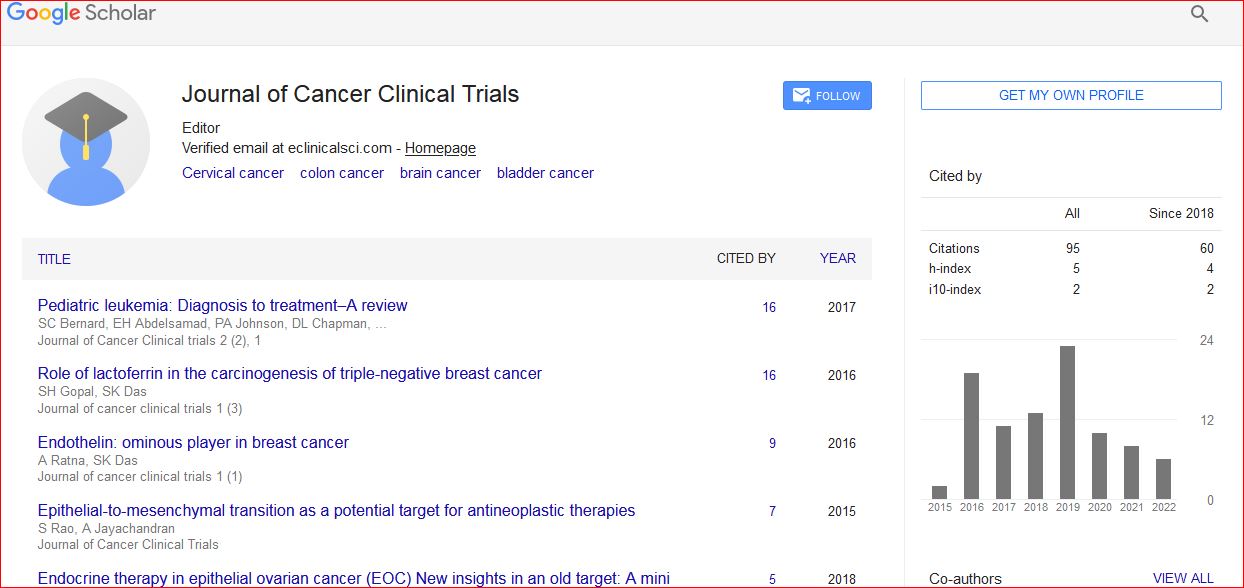
Journal of Cancer Clinical Trials received 95 citations as per Google Scholar report