Commentary - (2025) Volume 14, Issue 1
Received: 01-Jan-2025, Manuscript No. jtm-25-172808;
Editor assigned: 03-Jan-2025, Pre QC No. P-172808;
Reviewed: 17-Jan-2025, QC No. Q-172808;
Revised: 22-Jan-2025, Manuscript No. R-172808;
Published:
29-Jan-2025
, DOI: 10.37421/2167-1222.2025.14.658
Citation: O’Donnell, James. ”Acute Trauma: Comprehensive Care, Better Outcomes.” J Trauma Treat 14 (2025):658.
Copyright: © 2025 O’Donnell J. This is an open-access article distributed under the terms of the Creative Commons Attribution License, which permits unrestricted use, distribution and reproduction in any medium, provided the original author and source are credited.
This article really digs into the initial steps for managing musculoskeletal injuries right after they happen. It emphasizes how critical early and accurate assessment is, covering things like proper immobilization, pain control, and deciding when to refer. The authors make a strong case for a structured approach to prevent chronic issues and improve patient recovery timelines, which is something every clinician needs to hear [1].
Here's a comprehensive look at how we're training first responders and emergency medical services personnel for prehospital trauma care. The review identifies what kind of training interventions are out there and highlights areas where we can improve. What this really means is that optimizing initial care before patients even reach the hospital significantly impacts their outcomes, and better training is key to that [2].
This paper explores the tricky balance in managing acute pain following an injury. It discusses various analgesic options, from opioids to non-opioid alternatives, and the critical need to weigh effective pain relief against the potential for harm, like addiction or adverse side effects. Itâ??s all about finding that sweet spot for patient comfort without creating new problems [3].
What this study shows is the significant benefit of getting critically ill trauma patients into rehabilitation early. It systematically reviews existing literature to demonstrate how early mobility and physical therapy can drastically improve functional outcomes, reduce complications, and shorten hospital stays. It challenges the traditional "wait and see" approach, advocating for proactive rehabilitation [4].
This piece provides an evidence-based look at nutritional support for trauma and surgical critical care patients. It emphasizes that proper nutrition isn't just about feeding patients; it's a vital component of recovery, helping with wound healing, immune function, and overall metabolic support. The authors lay out practical strategies for tailored nutritional interventions that make a real difference [5].
This narrative review zeros in on the psychological aspects of acute trauma and the importance of early interventions. It discusses how critical it is to address mental health needs from the outset, highlighting methods like psychological first aid and early screening for PTSD. The message here is clear: recovery from physical injury is deeply intertwined with mental well-being [6].
When it comes to pediatric trauma, managing acute pain presents unique challenges. This review offers a deep dive into best practices for children, considering their developmental stages and potential for long-term psychological impacts. It stresses the importance of age-appropriate pain assessment and multimodal treatment strategies to ensure effective and compassionate care [7].
This article focuses on the immediate management of sports-related concussions, giving us an evidence-based framework. It covers everything from initial on-field assessment to early return-to-play guidelines, stressing the need for a conservative approach to prevent further injury and long-term neurological issues. The guidance is practical for anyone working with athletes [8].
Let's break down the role of imaging in diagnosing acute musculoskeletal trauma. This review explains the different modalities available, like X-rays, MRI, and CT scans, and when each is most appropriate. It helps clinicians make informed decisions about imaging to accurately identify injuries, avoiding unnecessary radiation or delayed diagnoses [9].
This paper tackles the ethical dilemmas inherent in acute trauma care. It explores complex scenarios clinicians face, such as resource allocation, informed consent in emergency situations, and end-of-life decisions for severely injured patients. The authors offer a framework for navigating these difficult choices, emphasizing patient best interest and shared decision-making [10].
Managing acute trauma effectively starts the moment an injury occurs, particularly with musculoskeletal issues. This initial phase demands prompt and precise assessment, emphasizing critical steps like proper immobilization, effective pain management, and making informed decisions about when to refer patients for specialized care. Such a structured approach is crucial for preventing long-term complications and accelerating patient recovery [1]. Concurrent to this, prehospital care significantly impacts patient outcomes. Training for first responders and emergency medical services personnel is under constant review, aiming to optimize initial interventions before patients even reach a hospital, thereby identifying areas for improvement in existing training programs [2]. Complementing these early interventions, accurate diagnosis is paramount. Imaging plays a pivotal role in acute musculoskeletal trauma, with a variety of modalities such as X-rays, MRI, and CT scans available. Clinicians must judiciously select the most appropriate imaging technique to ensure precise identification of injuries, avoiding unnecessary radiation exposure and preventing delayed diagnoses [9].
Pain management following acute injury represents a complex balancing act. Clinicians must navigate the diverse array of analgesic options, from potent opioids to various non-opioid alternatives. The goal is always effective pain relief, but this must be carefully weighed against the inherent potential for harm, including the risks of addiction and adverse side effects, to ensure patient comfort without introducing new problems [3]. This complexity intensifies significantly when addressing acute pain in pediatric trauma patients. Here, best practices involve a deep consideration of a child's unique developmental stage and the potential for profound, long-term psychological impacts. The focus is on employing age-appropriate pain assessment methods and implementing multimodal treatment strategies to deliver not only effective but also compassionate care [7].
Beyond immediate care, early intervention in rehabilitation profoundly benefits critically ill trauma patients. Systematic reviews show that introducing early mobility and physical therapy can dramatically improve functional outcomes, substantially reduce complications, and significantly shorten hospital stays. This proactive approach actively challenges the traditional 'wait and see' method, advocating instead for prompt and vigorous rehabilitation efforts [4]. In parallel, proper nutritional support is recognized as far more than just sustenance for trauma and surgical critical care patients. It is an indispensable component of the recovery process, playing a vital role in wound healing, bolstering immune function, and providing essential metabolic support. Practical, tailored nutritional interventions are key to making a tangible difference in patient recovery [5].
The path to recovery from physical injury is undeniably interwoven with mental well-being, highlighting the critical importance of addressing psychological aspects of acute trauma from the very outset. Early interventions, such as psychological first aid and proactive screening for Post-Traumatic Stress Disorder (PTSD), are vital in this regard. This emphasizes a holistic view of patient recovery that includes mental health needs [6]. A similar proactive stance is essential in managing sports-related concussions. An evidence-based framework guides immediate management, encompassing initial on-field assessment, conservative return-to-play guidelines, and a strong emphasis on preventing further injury and mitigating long-term neurological issues. This practical guidance is indispensable for professionals working with athletes [8].
Finally, the field of acute trauma care is frequently confronted with profound ethical dilemmas. Clinicians regularly navigate complex scenarios, which might include difficult decisions regarding resource allocation in emergencies, ensuring informed consent from patients who may be severely compromised, and making sensitive end-of-life determinations for those with grave injuries. A robust ethical framework is essential to guide these challenging choices, always prioritizing the patient's best interests and fostering shared decision-making whenever possible [10].
Acute trauma care is a multifaceted field that demands a comprehensive approach, from the immediate aftermath of an injury through to long-term recovery. Initial management of musculoskeletal injuries highlights the importance of early and accurate assessment, including proper immobilization, pain control, and timely referral to prevent chronic issues. This initial phase also underscores the critical role of prehospital care, with ongoing efforts to optimize training for first responders and emergency medical services personnel to improve patient outcomes. Effective diagnosis is further supported by appropriate imaging modalities, ensuring accurate identification of injuries while minimizing unnecessary exposure. A significant focus lies on pain management, navigating the balance between providing relief and mitigating risks like addiction, a challenge that intensifies with pediatric patients requiring age-appropriate strategies. Beyond acute interventions, early rehabilitation, involving mobility and physical therapy, is shown to drastically improve functional outcomes and shorten hospital stays for critically ill trauma patients. Nutritional support is also recognized as a vital component of recovery, contributing to wound healing and immune function. The scope of trauma care extends to mental well-being, emphasizing early psychological interventions for acute trauma, recognizing that physical and mental recovery are deeply intertwined. Specific injury types, such as sports-related concussions, require evidence-based, conservative management to prevent lasting neurological issues. Finally, the field grapples with complex ethical considerations, including resource allocation, informed consent, and end-of-life decisions, necessitating a framework that prioritizes patient best interests and shared decision-making. These diverse elements collectively aim to enhance patient recovery timelines and overall well-being.
None
None
Indexed at, Google Scholar, Crossref
Indexed at, Google Scholar, Crossref
Indexed at, Google Scholar, Crossref
Indexed at, Google Scholar, Crossref
Indexed at, Google Scholar, Crossref
Indexed at, Google Scholar, Crossref
Indexed at, Google Scholar, Crossref
Indexed at, Google Scholar, Crossref
Indexed at, Google Scholar, Crossref
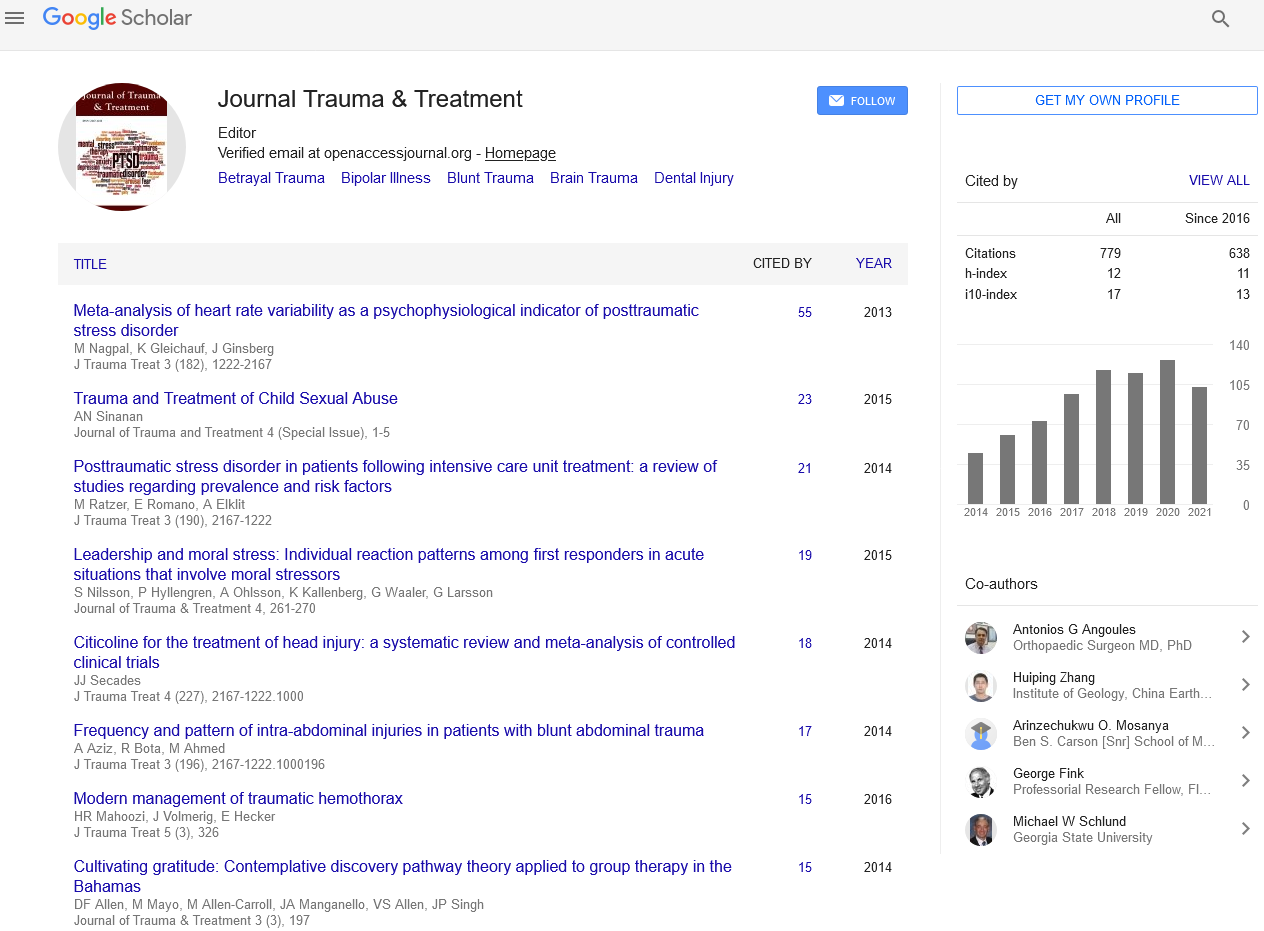
Journal of Trauma & Treatment received 1048 citations as per Google Scholar report