Opinion - (2025) Volume 9, Issue 6
Received: 13-Sep-2024, Manuscript No. JGGE-24-147942;
Editor assigned: 16-Sep-2024, Pre QC No. JGGE-24-147942 (PQ);
Reviewed: 01-Oct-2024, QC No. JGGE-24-147942;
Revised: 14-Dec-2025, Manuscript No. JGGE-24-147942 (R);
Published:
21-Dec-2025
, DOI: 10.37421/2684-4567.2025.9.204
Citation: Hu, Patrick. "The Impact of Whole Genome Sequencing on Rare Disease Diagnosis and Treatment." J Genet Genom 9 (2025): 204.
Copyright: © 2025 Hu P. This is an open-access article distributed under the terms of the creative commons attribution license which permits unrestricted
use, distribution and reproduction in any medium, provided the original author and source are credited.
The advent of Whole Genome Sequencing (WGS) has marked a revolutionary leap in the field of genomics, offering an unparalleled view into the complete genetic makeup of individuals. This comprehensive approach to genetic analysis has emerged as a transformative tool, especially in the realm of rare diseases, where traditional diagnostic methods often fall short. Rare diseases, which are frequently characterized by their low prevalence and complex genetic etiology, have long posed significant challenges in terms of accurate diagnosis and effective treatment. The impact of whole genome sequencing on rare disease diagnosis and treatment delves into how WGS is reshaping our approach to these elusive conditions. By providing a complete and detailed map of an individual’s DNA, WGS enables researchers and clinicians to identify genetic variants that are often missed by more targeted or less comprehensive sequencing methods. This capability is particularly crucial for rare diseases, where the genetic underpinnings can be diverse and intricate. In this article, we explore the ways in which WGS is revolutionizing the diagnostic landscape for rare diseases. From accelerating the diagnostic process and uncovering previously hidden genetic causes to offering insights into the molecular mechanisms of these conditions, WGS represents a critical advancement in our ability to address the complexities of rare diseases.
The impact of whole genome sequencing on rare disease diagnosis and treatment provides a comprehensive analysis of how Whole Genome Sequencing (WGS) is revolutionizing the field of rare diseases. This transformative technology allows for the complete analysis of an individual’s genetic code, offering unprecedented insights into the genetic underpinnings of rare and often elusive conditions. This article explores the significant advances in diagnosing rare diseases through WGS, detailing how it enables the identification of genetic variants that are not detectable through traditional sequencing methods. By covering case studies and realworld applications, it demonstrates how WGS has led to breakthroughs in pinpointing the genetic causes of previously undiagnosed conditions, accelerating the diagnostic process, and offering clarity where conventional approaches have struggled. Furthermore, the text delves into the implications of WGS for personalized treatment strategies. It illustrates how understanding the precise genetic alterations underlying a rare disease can lead to tailored therapeutic interventions, including targeted therapies and precision medicine approaches.
The article also addresses the challenges and considerations associated with WGS, such as data interpretation, ethical concerns, and the integration of genomic findings into clinical practice. Ideal for clinicians, geneticists, researchers, and students, the impact of whole genome sequencing on rare disease diagnosis and treatment provides an in-depth look at how this cutting-edge technology is transforming the landscape of rare disease management, offering new hope and opportunities for patients and their families. Furthermore, the article examines the potential of WGS to inform personalized treatment strategies, providing a framework for tailoring therapeutic approaches based on an individual’s unique genetic profile. We will also address the challenges that accompany the integration of WGS into clinical practice, including issues related to data interpretation, ethical considerations, and the need for interdisciplinary collaboration. As we navigate these challenges, it is essential to harness the full potential of WGS to enhance our understanding and treatment of rare diseases. This article is designed for clinicians, geneticists, researchers, and students who seek to understand the profound impact of WGS on rare disease diagnosis and treatment. By exploring both the advancements and the ongoing challenges in this field, we aim to provide a comprehensive overview of how whole genome sequencing is transforming the management of rare diseases and paving the way for a future of more precise and personalized medicine.
In concluding the impact of whole genome sequencing on rare disease diagnosis and treatment, it is evident that Whole Genome Sequencing (WGS) has profoundly reshaped the landscape of rare disease diagnostics and therapeutics. This powerful technology has ushered in a new era of precision medicine, offering the ability to decode the complete genetic blueprint of individuals and uncover the intricate details of rare and complex conditions that eluded traditional diagnostic methods. WGS has proven to be a game-changer by not only accelerating the identification of genetic variants responsible for rare diseases but also by enabling a more accurate and timely diagnosis. This capability has been crucial in providing clarity for patients and their families, who often face prolonged diagnostic odysseys. Furthermore, the insights gained from WGS pave the way for personalized treatment strategies, allowing for interventions that are tailored to the specific genetic alterations underlying each individual’s condition. However, the journey is not without challenges
The complexities of data interpretation, ethical considerations surrounding genetic information, and the integration of WGS findings into clinical practice are areas that require ongoing attention and refinement. As the field continues to evolve, addressing these challenges will be crucial to fully realizing the potential of WGS in transforming rare disease management. Looking ahead, the integration of WGS into routine clinical care promises to enhance our ability to diagnose and treat rare diseases more effectively. The continued advancement of technology, coupled with a deeper understanding of the genetic basis of rare conditions, holds the potential to drive significant improvements in patient outcomes and quality of life. In summary, the impact of whole genome sequencing on rare disease diagnosis and treatment is profound and farreaching. As we continue to explore and harness the capabilities of WGS, we move closer to a future where rare diseases are understood with greater clarity and treated with unprecedented precision, offering new hope and opportunities for those affected by these challenging conditions.
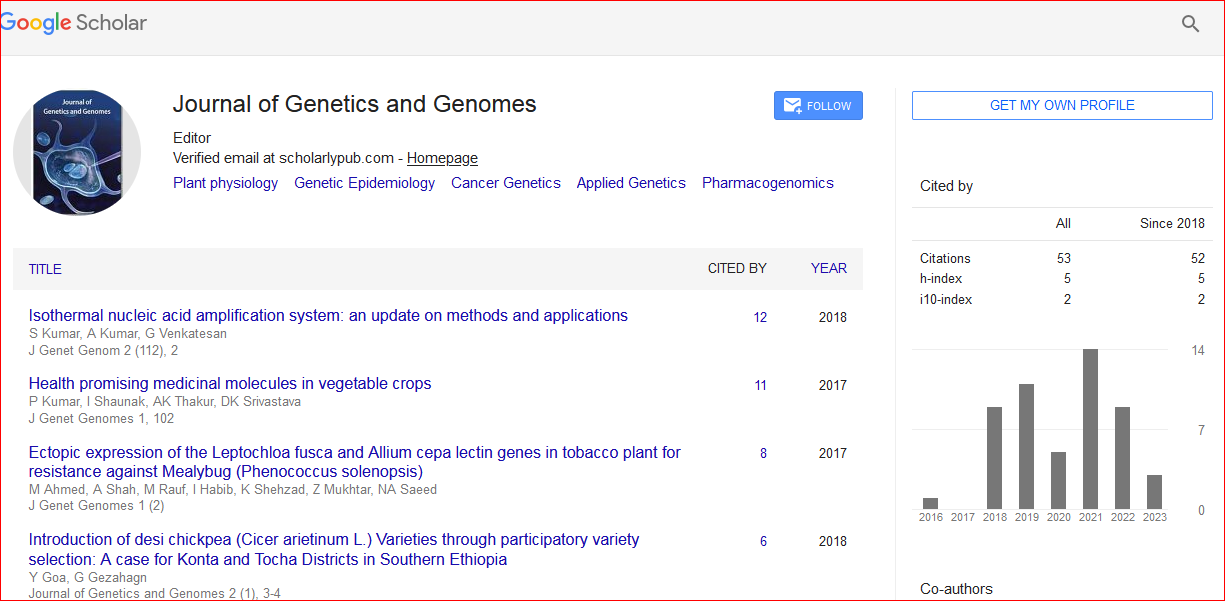
Journal of Genetics and Genomes received 65 citations as per Google Scholar report