For genetically different hyphae to interact, to take advantage of heterokaryosis or the sexual cycle, for example, the process of hyphal anastomosis must be closely regulated so that the physiological and genetic advantages of heterokaryosis can be realised without hazard. And there are hazards: hyphal anastomosis carries the risk of exposure to contamination with alien genetic information from defective or harmful cell organelles, viruses or plasmids. But nuclear and cytoplasmic control strategies have very different requirements. To maximise the advantage of sexual reproduction the controls must ensure that the nuclei are genetically as different as possible. In contrast, safe operation of the cell requires that cytoplasms that are to mingle must be as similar as possible.
Scientific Tracks Abstracts: Journal of Molecular Biomarkers & Diagnosis
Scientific Tracks Abstracts: Molecular Biomarkers & Diagnosis
Scientific Tracks Abstracts: Journal of Molecular Biomarkers & Diagnosis
Scientific Tracks Abstracts: Molecular Biomarkers & Diagnosis
Scientific Tracks Abstracts: Journal of Tissue Science and Engineering
Scientific Tracks Abstracts: Journal of Tissue Science and Engineering
Keynote: Molecular Biology: Open Access
Keynote: Molecular Biology: Open Access
Scientific Tracks Abstracts: Metabolomics:Open Access
Scientific Tracks Abstracts: Metabolomics:Open Access
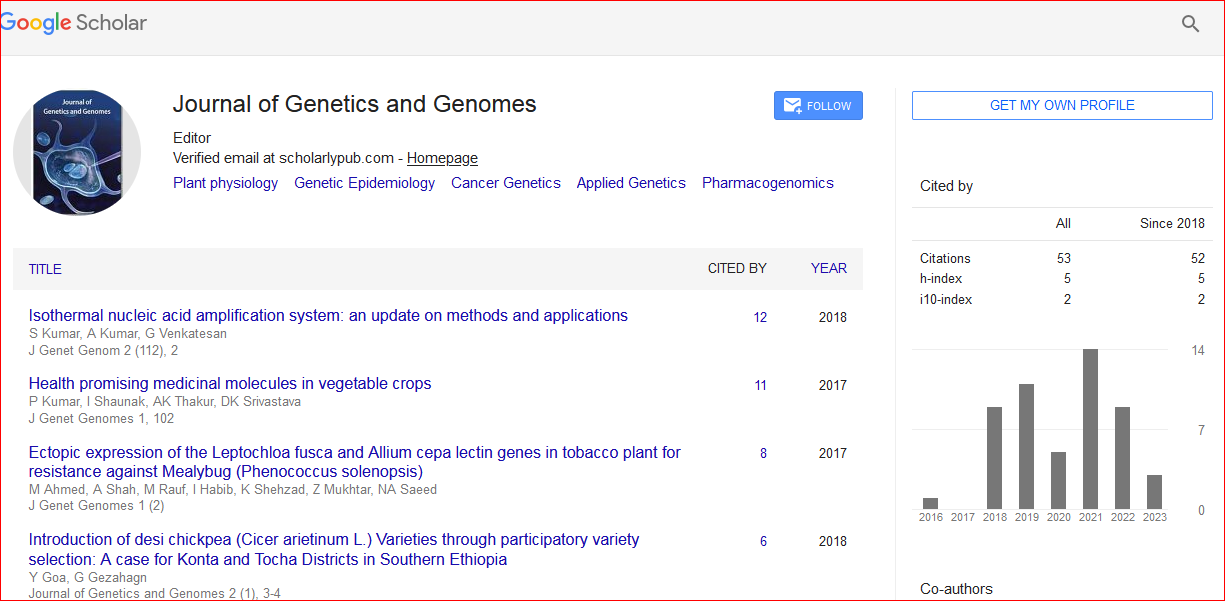
Journal of Genetics and Genomes received 65 citations as per Google Scholar report
 Spanish
  Chinese
  Russian
  German
  French
  Japanese
  Portuguese
  Hindi
Hindi 