A strain to be selected for fermentation process should satisfy the following criteria- it should be able to produce the desired product and produce the product at large scale, it should be a well-known organism, it should be able to grow faster, it should be safe to handle, it should grow in minimal to moderate growth media, it should have optimum growth temperature considerably above 400c, reduces the cooling costs and will be beneficial for isolation procedures at large scale fermentation processes, it should be genetically stable and simple to understand, it should be easier to manipulate it at genetic level, product recovery should be easy from the culture. Either pure cultures can be isolated from their natural habitats or can be acquired by order from culture collection centers. Natural habitat that we select for isolation of the desired strain should have a high biodiversity, should be unexplored and should encourage the dominance of desired microbial strain. Culture collection center include ATCC, NCYC, JCM, NCIB etc. â € œStrain improvementâ € has been a breakthrough of all commercial fermentation processes. This improvement process has been achieved through mutation or by genetic recombination and selection. This process enables the microbial strains to the overproduction of desired industrial products accordingly. Strain improvement through mutations include either chemicals or radiations as mutagen. Genetic recombination includes desired strain construction, a vector, promoters, expressions systems etc. Genetically improved strains need to be identified and isolated from various microbial populations through high throughput screening methods. Finally the isolated microbes need to be stored by lyophilisation, agar slope cultures in mineral oil at -200c etc. Innovations are new idea, device or process. Innovations are the application of better solutions that meet new requirements, inarticulated needs or existing market needs. It is proficient through more effective products, processes, services, technologies, or new ideas that are readily available to markets, governments and society. Innovations are something original and novel, as a significant, new that â € œbreaks intoâ € the market or society
Posters & Accepted Abstracts: Medical Microbiology & Diagnosis
Posters & Accepted Abstracts: Medical Microbiology & Diagnosis
Posters & Accepted Abstracts: Medical Microbiology & Diagnosis
Posters & Accepted Abstracts: Medical Microbiology & Diagnosis
Posters & Accepted Abstracts: Medical Microbiology & Diagnosis
Posters & Accepted Abstracts: Medical Microbiology & Diagnosis
Posters & Accepted Abstracts: Medical Microbiology & Diagnosis
Posters & Accepted Abstracts: Medical Microbiology & Diagnosis
Posters & Accepted Abstracts: Medical Microbiology & Diagnosis
Posters & Accepted Abstracts: Medical Microbiology & Diagnosis
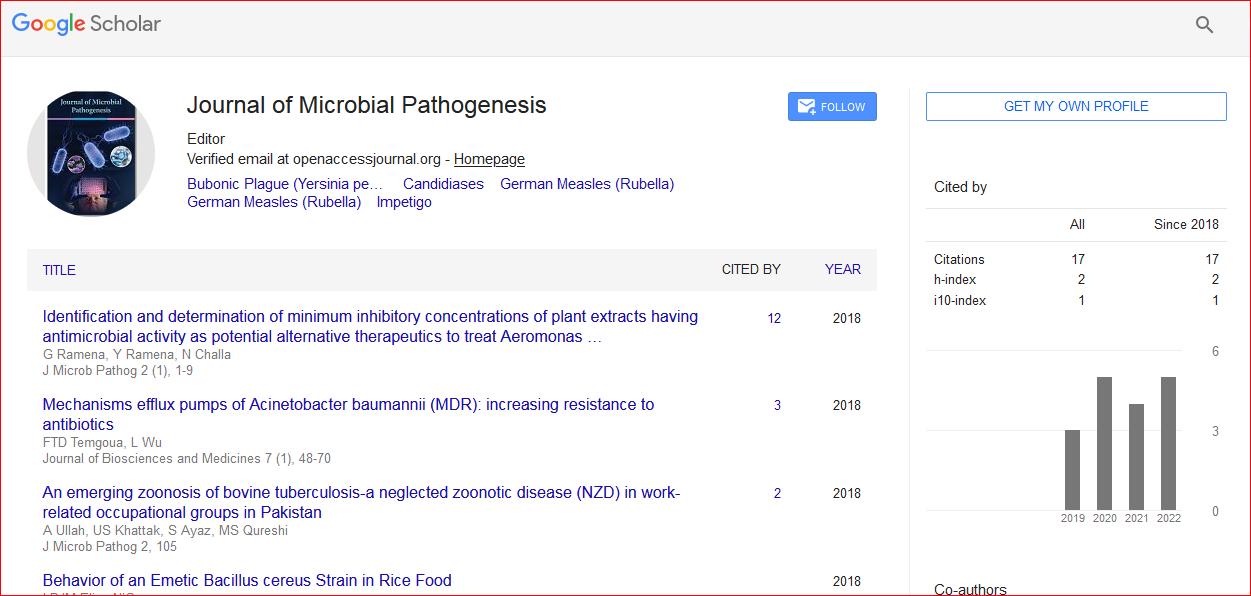
Journal of Microbial Pathogenesis received 17 citations as per Google Scholar report


 Spanish
  Chinese
  Russian
  German
  French
  Japanese
  Portuguese
  Hindi
Hindi 