A neurodegenerative disorder which predominantly affects the dopamine levels of brain cells from a particular area, resulting in slow movement of organs is called as Parkinson’s disease. Dopamine is a substance in brain which results in smooth behaviour of muscle movements in the body and so when these dopamine levels are in abnormal conditions, it results in improper muscle behaviour of the body resulting in slow movement in organs. Some of its symptoms include tremors, bradykinesia, rigidity, difficulty in speaking, facial expressions, gait etc., Parkinson disease articles provides us the information about the disease such as occurrence, symptoms, treatment and research that is going on regarding the disease for betterment in its treatment and cure.
Research Article: Neurological Disorders
Research Article: Neurological Disorders
Case Report: Neurological Disorders
Case Report: Neurological Disorders
Case Report: Neurological Disorders
Case Report: Neurological Disorders
Opinion Article: Neurological Disorders
Opinion Article: Neurological Disorders
Case Report: Neurological Disorders
Case Report: Neurological Disorders
Keynote: Neurological Disorders
Keynote: Neurological Disorders
Posters & Accepted Abstracts: Neurological Disorders
Posters & Accepted Abstracts: Neurological Disorders
Keynote: Neurological Disorders
Keynote: Neurological Disorders
Scientific Tracks Abstracts: Neurological Disorders
Scientific Tracks Abstracts: Neurological Disorders
Scientific Tracks Abstracts: Neurological Disorders
Scientific Tracks Abstracts: Neurological Disorders
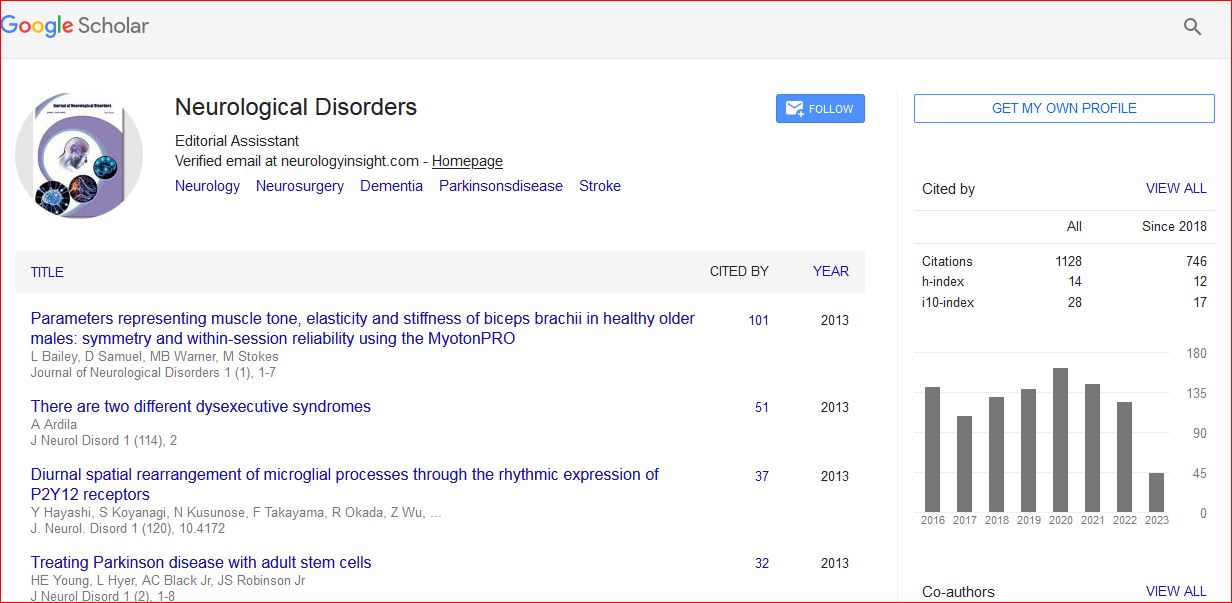
Neurological Disorders received 1343 citations as per Google Scholar report
 Spanish
  Chinese
  Russian
  German
  French
  Japanese
  Portuguese
  Hindi
Hindi 