Neuroanesthesia technique for tumours resection that affect extensive motor areas with an awakened patient, poses a challenge for surgical teams. The advancement in neuroimaging and the incursion of neuron avigation as a surgical tool, allow reducing motor sequelae and extending the safety margins in the resection of these types of tumours.
The case report of a 25-year-old patient with a 6 by 5 cm glioma, 5 cm successfully resected under anaesthesia with awake patient and neuron avigation techniques is presented. The Global Deterioration Scale (GDS-FAST) after three years of the procedure indicates a very mild cognitive deficit. One of the dilemmas of brain tumour surgery in the eloquent cortex is the way to obtain benefits for the patient in terms of prolonged survival, maintenance or even improvement of function, quality of life and at the same time not to run the risk of new neurological deficits The craniotomy with the awake patient is a functional-focus neurosurgery where the anaesthesiologist should keep the patient conscious and collaborator to allow his specific neurological evaluation, offering him a conscious sedation and analgesia for his comfort without altering neurological monitoring and maintaining control of hemodynamic, brain physiology, ventilation and airway
Letter to Editor: Neurological Disorders
Letter to Editor: Neurological Disorders
Editorial: Neurological Disorders
Editorial: Neurological Disorders
Research Article: Neurological Disorders
Research Article: Neurological Disorders
Case Report: Neurological Disorders
Case Report: Neurological Disorders
Case Report: Neurological Disorders
Case Report: Neurological Disorders
Scientific Tracks Abstracts: Journal of Spine
Scientific Tracks Abstracts: Journal of Spine
Posters & Accepted Abstracts: Neurological Disorders
Posters & Accepted Abstracts: Neurological Disorders
Posters & Accepted Abstracts: Journal of Spine
Posters & Accepted Abstracts: Journal of Spine
Posters & Accepted Abstracts: Neurological Disorders
Posters & Accepted Abstracts: Neurological Disorders
Posters & Accepted Abstracts: Neurological Disorders
Posters & Accepted Abstracts: Neurological Disorders
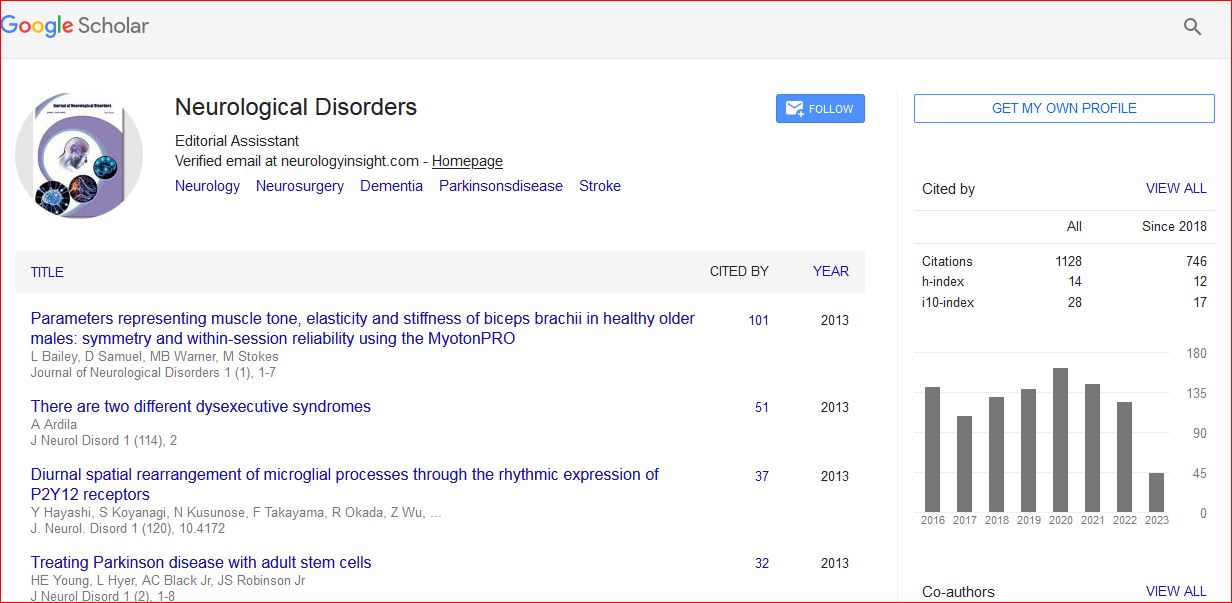
Neurological Disorders received 1343 citations as per Google Scholar report
 Spanish
  Chinese
  Russian
  German
  French
  Japanese
  Portuguese
  Hindi
Hindi 