liver cirrhosis is a frequent consequence of the long clinical course of all chronic liver diseases and is characterized by tissue fibrosis and the conversion of normal liver architecture into structurally abnormal nodules. Portal hypertension is the earliest and most important consequence of cirrhosis and underlies most of the clinical complications of the disease. Portal hypertension results from an increased intrahepatic resistance combined with increased portal (and hepatic arterial) blood flow. The fibrotic and angio-architectural modifications of liver tissue leading to increased intrahepatic resistance and the degree of portal hypertension seem to be highly correlated until HVPG values of 10-12 mmHg are reached. At this stage, which broadly represents the turning point between 'compensated' and 'decompensated' cirrhosis, additional extra-hepatic factors condition the further worsening of PH. Indeed, a HVPG ≥10-12 mmHg represents a critical threshold beyond which chronic liver disease becomes a systemic disorder with the involvement of other organs and systems. The progressive failure of one of the fundamental functions of the liver, i.e. the detoxification of potentially harmful substances received from the splanchnic circulation and particularly bacterial end-products, is responsible for the establishment of a systemic pro-inflammatory state further accelerating disease progression. The biology of liver cirrhosis is characterized by a constant stimulus for hepatocellular regeneration in a microenvironment characterized by chronic inflammation and tissue fibrosis, thus representing an ideal condition predisposing to the development of hepatocellular carcinoma (HCC). In reason of the significant improvements in the management of the complications of cirrhosis occurred in the past 20 years, HCC is becoming the most common clinical event leading to patient death. Whereas evidence clearly indicates reversibility of fibrosis in pre-cirrhotic disease, the determinants of fibrosis regression in cirrhosis are not sufficiently clear, and the point at which cirrhosis is truly irreversible is not established, either in morphologic or functional terms. Accordingly, the primary end-point of antifibrotic therapy in cirrhotic patients should be the reduction of fibrosis in the context of cirrhosis with a beneficial impact on portal hypertension and the emergence of HCC.
Past Conference Report: Journal of Clinical Research
Past Conference Report: Journal of Clinical Research
2021 Conference Announcement: Journal of Clinical Research
2021 Conference Announcement: Journal of Clinical Research
Case Report: Journal of Clinical Research
Case Report: Journal of Clinical Research
Commentary: Journal of Clinical Research
Commentary: Journal of Clinical Research
Commentary: Journal of Clinical Research
Commentary: Journal of Clinical Research
Scientific Tracks Abstracts: Journal of Clinical Case Reports
Scientific Tracks Abstracts: Journal of Clinical Case Reports
Scientific Tracks Abstracts: Journal of AIDS & Clinical Research
Scientific Tracks Abstracts: Journal of AIDS & Clinical Research
Accepted Abstracts: Journal of AIDS & Clinical Research
Accepted Abstracts: Journal of AIDS & Clinical Research
Scientific Tracks Abstracts: Journal of Cosmetology & Trichology
Scientific Tracks Abstracts: Journal of Cosmetology & Trichology
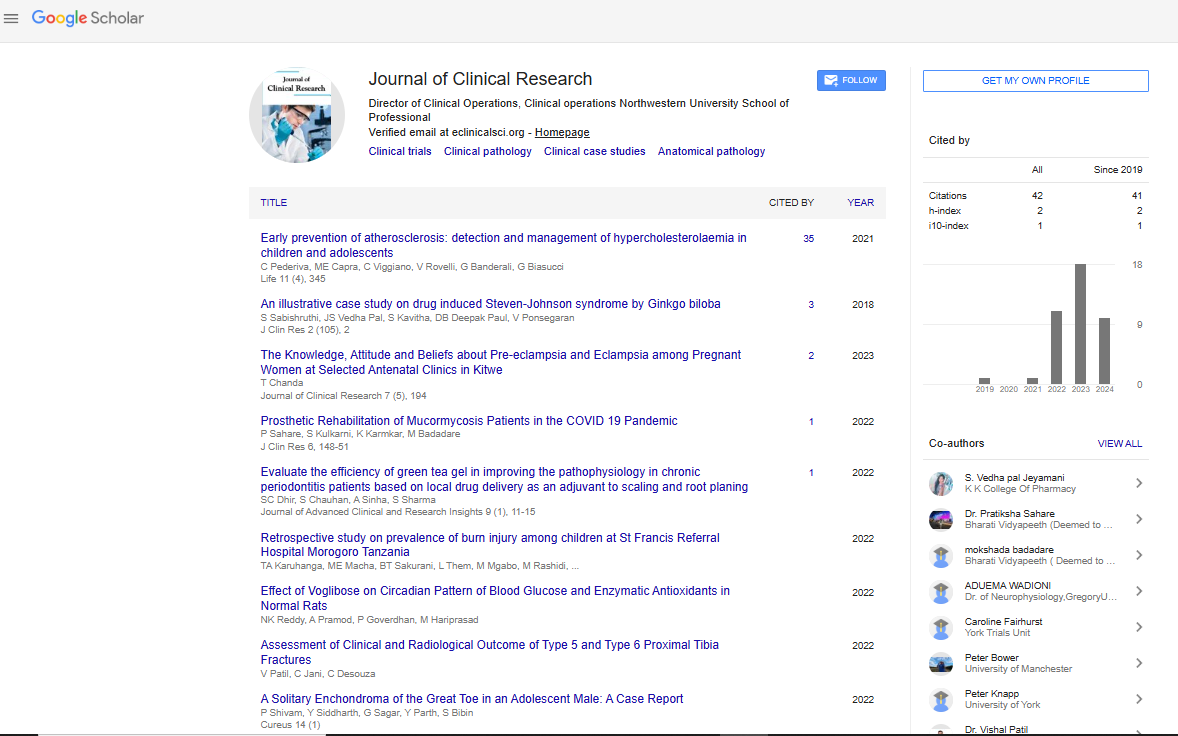
Journal of Clinical Research received 11 citations as per Google Scholar report


 Spanish
  Chinese
  Russian
  German
  French
  Japanese
  Portuguese
  Hindi
Hindi 