The drug discovery process begins with the identification of a disease-modifying target. This critical step traditionally begins with a manual search of the scientific literature and biomedical databases to gather evidence linking the molecular target to the disease and to assess the efficacy, safety and commercial potential of the target. Molecular targets for drug discovery are selected based on the accumulation of a series of experimental evidence supporting the hypothesis that modulation of the function of the molecule will have an effect on the disease.Technology has been a major driver of advances in drug discovery. Automation, nanofluidics, imaging, software and assay technologies have played a major role in getting better data, faster.There are different opinions on this and much of the evidence is anecdotal, but technology innovation is critical to the improvement of the drug discovery process and worth discussing.Drug discovery and development is a long-term, competitive, expensive and complicated process. Placing drugs on the market, i.e. screening and identifying the drug when it is introduced to the market, requires several years of effort. The process of discovering and developing a new drug involves a complex interaction between investors, industry, academia, patent laws, regulatory authorities, marketing and the need to balance confidentiality and privacy. communication. Vs Prashansa Agrawal, Drug discovery and development: an overview of pharmacovigilance.
Review Article: Pharmaceutical Regulatory Affairs: Open Access
Review Article: Pharmaceutical Regulatory Affairs: Open Access
Case Report: Pharmaceutical Regulatory Affairs: Open Access
Case Report: Pharmaceutical Regulatory Affairs: Open Access
Review Article: Pharmaceutical Regulatory Affairs: Open Access
Review Article: Pharmaceutical Regulatory Affairs: Open Access
Posters & Accepted Abstracts: Pharmaceutical Regulatory Affairs: Open Access
Posters & Accepted Abstracts: Pharmaceutical Regulatory Affairs: Open Access
Posters & Accepted Abstracts: Journal of Bioanalysis & Biomedicine
Posters & Accepted Abstracts: Journal of Bioanalysis & Biomedicine
Posters-Accepted Abstracts: Pharmaceutical Regulatory Affairs: Open Access
Posters-Accepted Abstracts: Pharmaceutical Regulatory Affairs: Open Access
Scientific Tracks Abstracts: Journal of Bioanalysis & Biomedicine
Scientific Tracks Abstracts: Journal of Bioanalysis & Biomedicine
Keynote Forum: Pharmaceutical Regulatory Affairs: Open Access
Keynote Forum: Pharmaceutical Regulatory Affairs: Open Access
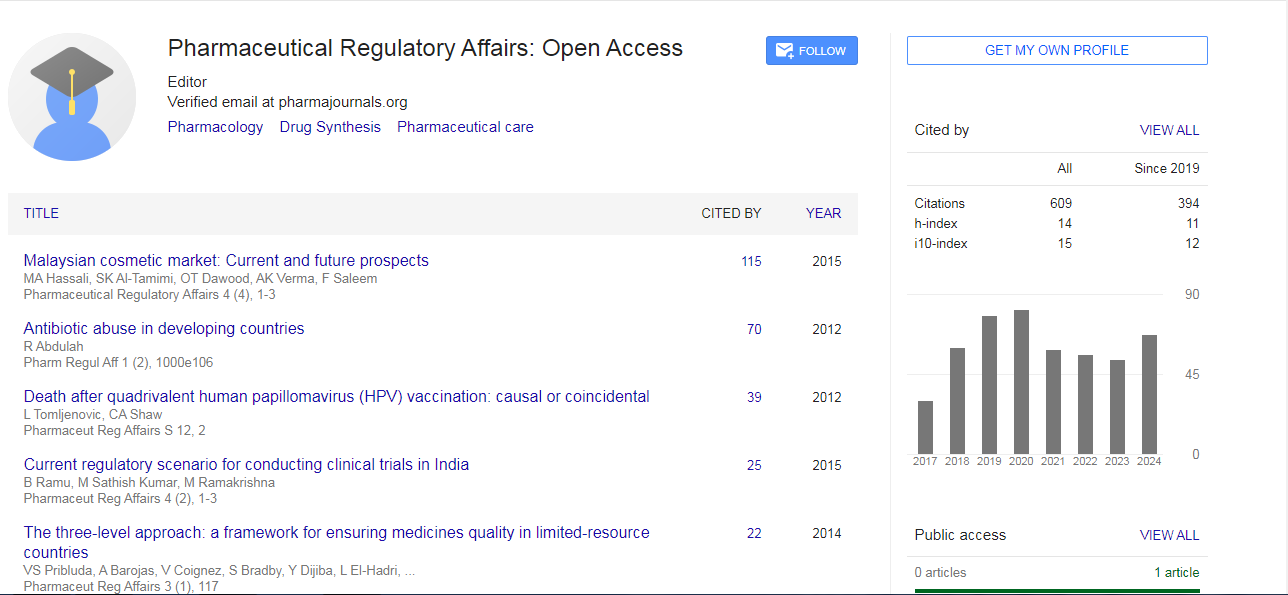
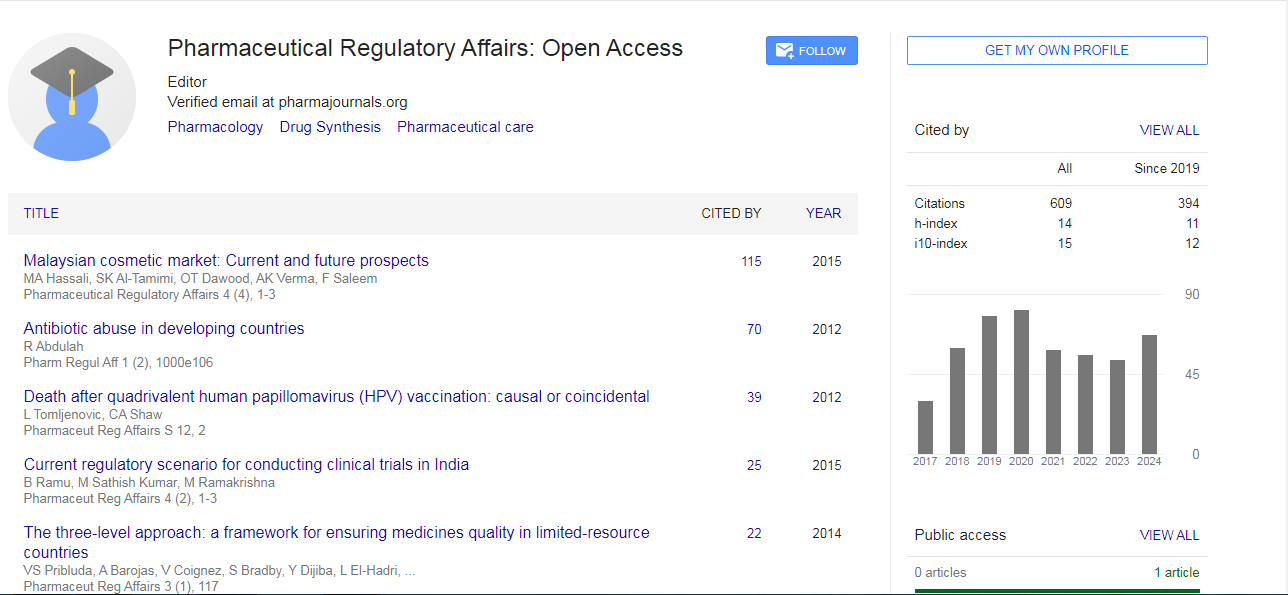
Pharmaceutical Regulatory Affairs: Open Access received 533 citations as per Google Scholar report
 Spanish
  Chinese
  Russian
  German
  French
  Japanese
  Portuguese
  Hindi
Hindi 