Theories of catalysis explain the influence of the catalysts upon the rate of a reaction by describing the detailed mechanism by which the catalyst is involved in the steps of the chemical reaction. There are two types of catalysis- Homogeneous catalysis and Heterogeneous catalysis. In homogeneous catalysis, catalyst and reactants are in the same physical state, while in heterogeneous catalysis, catalyst and reactants both are in different physical states. There are also types of catalyst which are significant and important-Positive catalyst-The catalyst which activates the rate of reaction is called a positive catalyst. Negative catalyst-The catalyst which deactivates the rate of reaction is called a negative catalyst. Auto catalyst- When any product forms during any chemical- reaction act like the catalyst for the same chemical reaction then it is called an auto catalyst.Induced catalyst- when the product of any chemical reaction acts like the catalyst of any other chemical reaction then it is called induced catalyst.
Research Article: Medicinal Chemistry
Research Article: Medicinal Chemistry
Research Article: Medicinal Chemistry
Research Article: Medicinal Chemistry
Research Article: Medicinal Chemistry
Research Article: Medicinal Chemistry
Research Article: Medicinal Chemistry
Research Article: Medicinal Chemistry
Research Article: Medicinal Chemistry
Research Article: Medicinal Chemistry
Scientific Tracks Abstracts: Chemical Sciences Journal
Scientific Tracks Abstracts: Chemical Sciences Journal
Scientific Tracks Abstracts: Chemical Sciences Journal
Scientific Tracks Abstracts: Chemical Sciences Journal
Keynote: Medicinal Chemistry
Keynote: Medicinal Chemistry
Keynote: Medicinal Chemistry
Keynote: Medicinal Chemistry
Scientific Tracks Abstracts: Medicinal Chemistry
Scientific Tracks Abstracts: Medicinal Chemistry
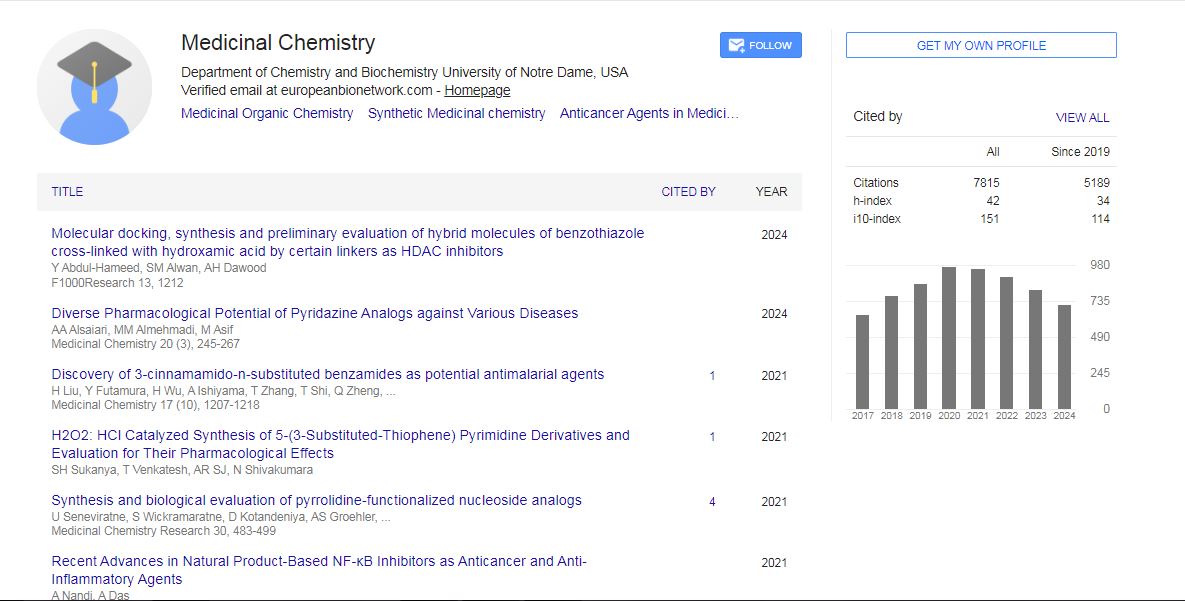
Medicinal Chemistry received 6627 citations as per Google Scholar report
 Spanish
  Chinese
  Russian
  German
  French
  Japanese
  Portuguese
  Hindi
Hindi 