Biological weapons include any organism or toxin found in nature that can be used to incapacitate, kill, or otherwise impede an adversary. Biological weapons are characterized by low visibility, high potency, substantial accessibility, and relatively easy delivery. The potential spectrum of bioterrorism ranges from hoaxes and use of agents by individuals or small groups against individuals or smaller subsets of the population to state-sponsored terrorism that employs classic biological warfare (BW) agents and their delivery systems that can produce mass casualties. Such scenarios would present serious challenges for patient treatment and for prophylaxis of exposed persons. Environmental contamination could pose continuing threats.The recent bioterrorist attacks using anthrax spores have emphasized the need to detect and decontaminate critical facilities in the shortest possible time. There has been a remarkable progress in the detection, protection and decontamination of biological warfare agents as many instrumentation platforms and detection methodologies are developed and commissioned. Even then the threat of biological warfare agents and their use in bioterrorist attacks still remain a leading cause of global concern. Furthermore in the past decade there have been threats due to the emerging new diseases and also the re-emergence of old diseases and development of antimicrobial resistance and spread to new geographical regions. The preparedness against these agents need complete knowledge about the disease, better research and training facilities, diagnostic facilities and improved public health system. This review on the biological warfare agents will provide information on the biological warfare agents, their mode of transmission and spread and also the detection systems available to detect them
Research Article: Advances in Recycling & Waste Management
Research Article: Advances in Recycling & Waste Management
Research Article: Advances in Recycling & Waste Management
Research Article: Advances in Recycling & Waste Management
Research Article: Advances in Recycling & Waste Management
Research Article: Advances in Recycling & Waste Management
Research Article: Advances in Recycling & Waste Management
Research Article: Advances in Recycling & Waste Management
Review Article: Advances in Recycling & Waste Management
Review Article: Advances in Recycling & Waste Management
Posters & Accepted Abstracts: Advances in Recycling & Waste Management
Posters & Accepted Abstracts: Advances in Recycling & Waste Management
Posters-Accepted Abstracts: Journal of Applied & Computational Mathematics
Posters-Accepted Abstracts: Journal of Applied & Computational Mathematics
Scientific Tracks Abstracts: Journal of Mass Communication & Journalism
Scientific Tracks Abstracts: Journal of Mass Communication & Journalism
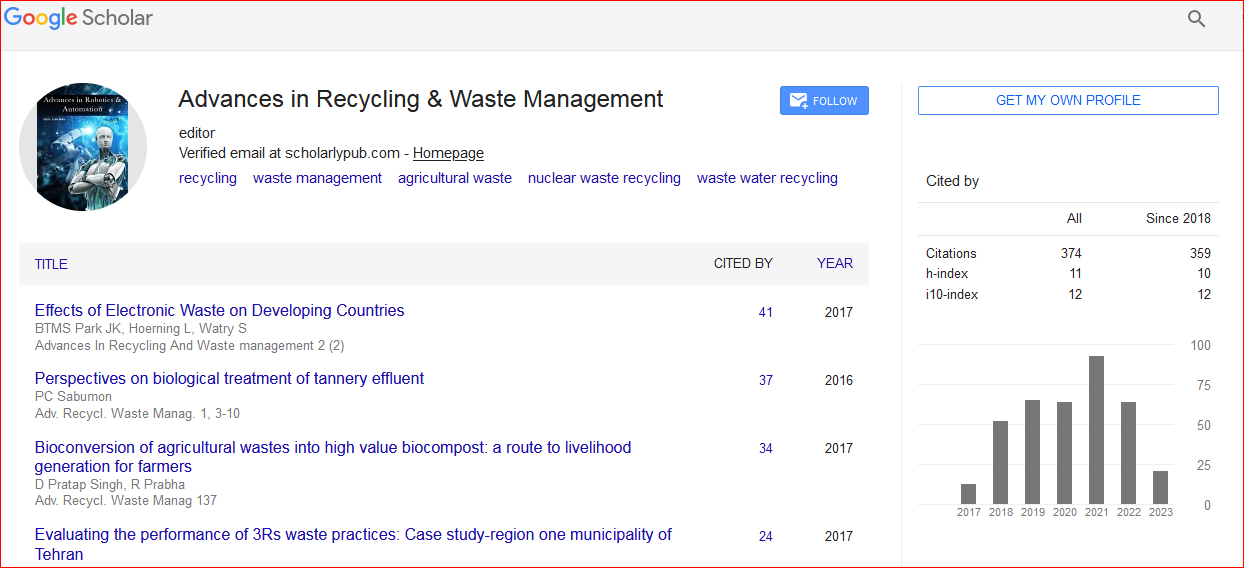
Advances in Recycling & Waste Management received 438 citations as per Google Scholar report

 Spanish
  Chinese
  Russian
  German
  French
  Japanese
  Portuguese
  Hindi
Hindi 