In biological systems, lipids generate membranes and play a key role in cell signaling and energy storage. Consequently, there is a great diversity of molecular lipids expressed at the level of the composition in cell membranes and organelles, as well as in tissues, the lipid distribution of which remains uncertain. Here, we report a study by mass spectrometry of lipid abundance in 7 rat tissues, detecting and quantifying 652 lipid molecular species of the glycerolipid, glycerophospholipid, fatty acyl, sphingolipid, sterol lipid and prenol lipid categories. Our results demonstrate that each tissue analyzed has a specific lipid distribution and concentration. Thus, glycerophospholipids are the most abundant tissue lipids, they share a similar tissue distribution but differ in particular the lipid species between the tissues. Sphingolipids are more concentrated in the renal cortex and sterol lipids are found mainly in the liver and kidneys. The two types of white adipose tissue, visceral and subcutaneous, are rich in glycerolipids but differ in quantity. Acylcarnitines are found mainly in skeletal muscle, the gluteal region and the soleus, while the heart has higher levels of ubiquinone than other tissues. The present study demonstrates the existence of a fingerprint specific to rat tissue.
Posters & Accepted Abstracts: Journal of AIDS & Clinical Research
Posters & Accepted Abstracts: Journal of AIDS & Clinical Research
Scientific Tracks Abstracts: Journal of Advanced Practices in Nursing
Scientific Tracks Abstracts: Journal of Advanced Practices in Nursing
Scientific Tracks Abstracts: Journal of Advanced Practices in Nursing
Scientific Tracks Abstracts: Journal of Advanced Practices in Nursing
Posters & Accepted Abstracts: Journal of Advanced Practices in Nursing
Posters & Accepted Abstracts: Journal of Advanced Practices in Nursing
Posters & Accepted Abstracts: Journal of Cosmetology & Trichology
Posters & Accepted Abstracts: Journal of Cosmetology & Trichology
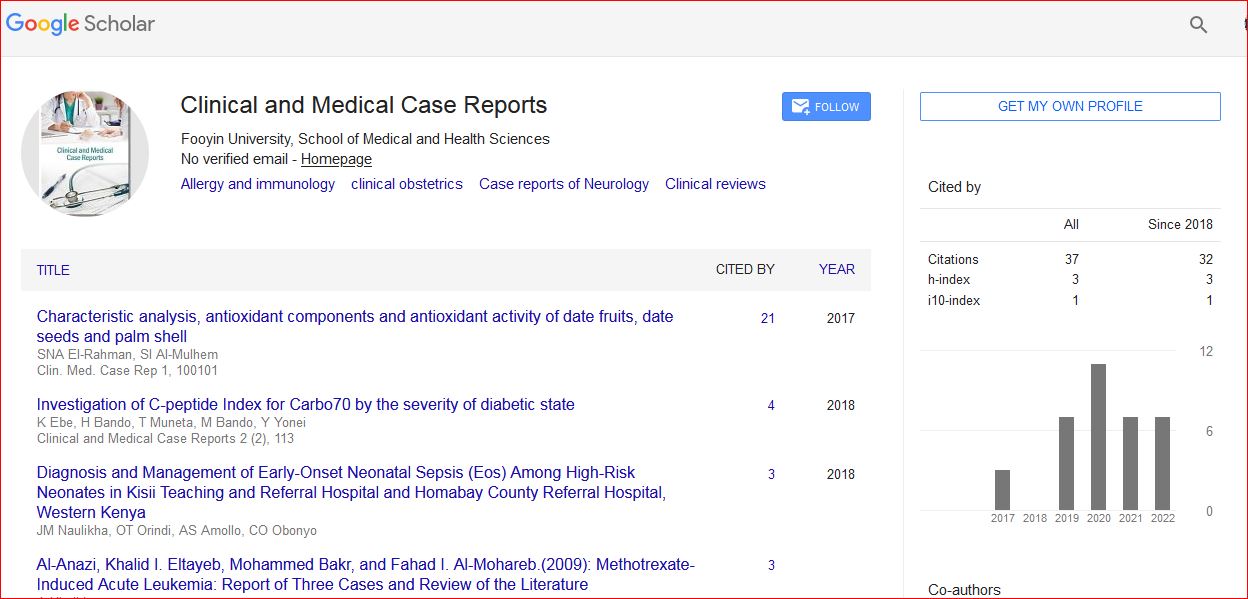
Clinical and Medical Case Reports received 53 citations as per Google Scholar report


 Spanish
  Chinese
  Russian
  German
  French
  Japanese
  Portuguese
  Hindi
Hindi 