Tanzania
Review Article
Critical Illness and the Aging Population: Clinical Implications and Pharmacotherapy Challenges
Author(s): Catherine K. Floroff, Patricia W. Slattum and Gretchen M. BrophyCatherine K. Floroff, Patricia W. Slattum and Gretchen M. Brophy
The rate of critically ill older patients being admitted to intensive care units (ICU) continues to rise. Multiple factors influence the complexity of treatment strategies and create challenges for optimizing patient care while avoiding unwanted adverse effects. These factors include Pharmacokinetic (PK) and Pharmacodynamics (PD) changes that are compounded by both age and critical illnesses and may heighten the risk of suboptimal treatment strategies and adverse drug events, including neurotoxicity, to the patient. Medications that increase the risk for adverse drug events, drug-drug interactions, and drug-disease interactions may be classified as a potentially inappropriate medications based on risk versus benefit of use in older adults. However, many times these agents are needed for treatment of critically ill patients and must be dosed and monitored appropriately to avoid complic.. Read More»
DOI:
10.4172/2329-6895.1000197
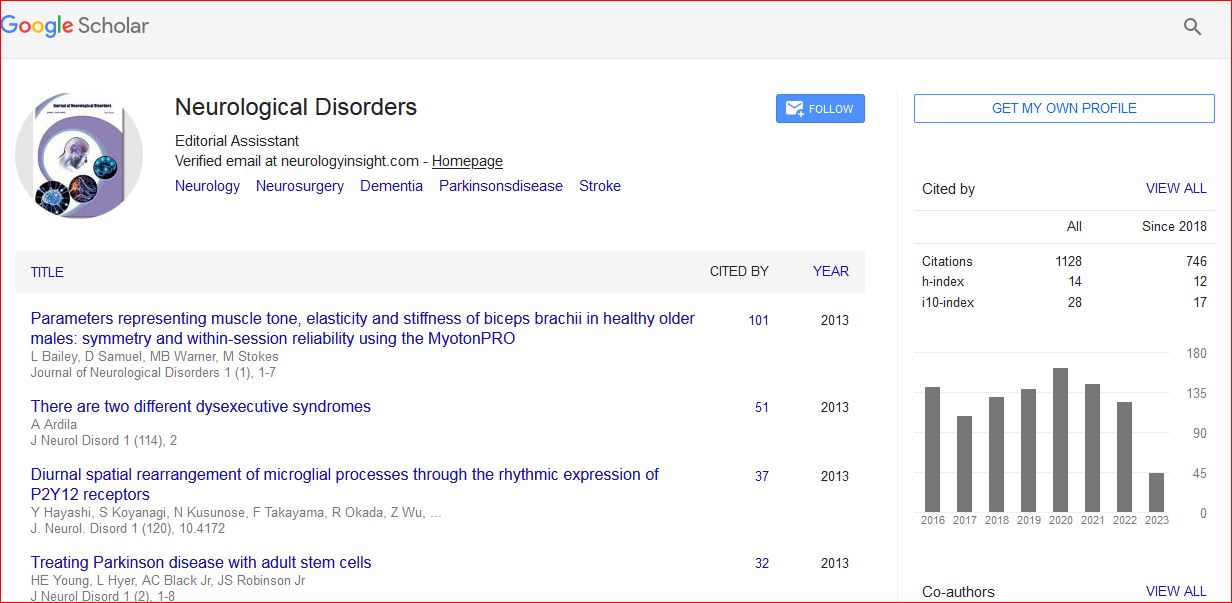
Neurological Disorders received 1343 citations as per Google Scholar report
 Spanish
  Chinese
  Russian
  German
  French
  Japanese
  Portuguese
  Hindi
Hindi 