Director, Hypertension, Kidney and Vascular Research Center and the Division of Nephrology and Hypertension, Georgetown University, USA
Christopher Wilcox is Chief of the Division of Nephrology and Hypertension, Director of the Hypertension, Kidney and Vascular Research Center and Associate Director of the Angiogenesis Program in the Lombardi Cancer Institute. His special interests include secondary forms of hypertension (including renovascular hypertension, adrenal hypertension, and hypertension complicating kidney disease), management of complicated and drug-resistant hypertension, and renal disease.
His scientific research centers on studies of kidney and microvascular disease in hypertension; it is supported by 5 grants from the NIH. One of these has been funded for 30 years, another is a Program Project Grant that funds 3 collaborative research centers at Georgetown University, and other funds research training for fellows in nephrology and hypertension.
His research encompasses experiments on genes, cells and animal models in addition to clinical research in patients with hypertension and kidney diseases. He is the author of more than 250 scientific articles and 2 books on nephrology and hypertension. He has patents for new drugs to treat oxidative stress. He has chaired 4 NIH peer review groups. He has delivered 8 name lectures at universities. He was awarded the Lifetime Achievement Award by the American Heart Association and delivered the Dahl lecture to that society and the Frank Starling lecture to the American Physiology Society. He has been elected a Fellow of the Royal Society of Medicine and a Fellow of the Royal College of Physicians in the UK and a Master of the American College of Physicians and a Fellow of the American Association of Professors.
His lab focuses on molecular physiology of renal mechanisms of blood pressure control. Ongoing research uses micropuncture, microperfusion, isolated perfused arteriole, and whole animal preparations to investigate the roles of vascoconstrictor prostaglandins, isoprostanes and arachidonate metabolites in intrarenal vasoregulation. Similiar approaches, augmented by molecular techniques focus on elucidating the contributions of tissue hypoxia and oxidative stress to impaired NO signaling in hypertension. Clinical research protocols address pharmacologic control of oxidative stress and abnormal arginine methylation in hemodialysis patients and novel approaches to the diagnosis of renovascular hypertension. His research is funded by a 10 year Merit Award from the NIH for "Role of Thromboxone in Blood Pressure and Kidney Function" and is the PI of another ROI “NOS” and is PI of an NIH Program Project Grant on "Renal Mechanism of Oxidative Stress in Hypertension" and a Nephrology and Hypertension Research Training Grant which total more than $18 million.
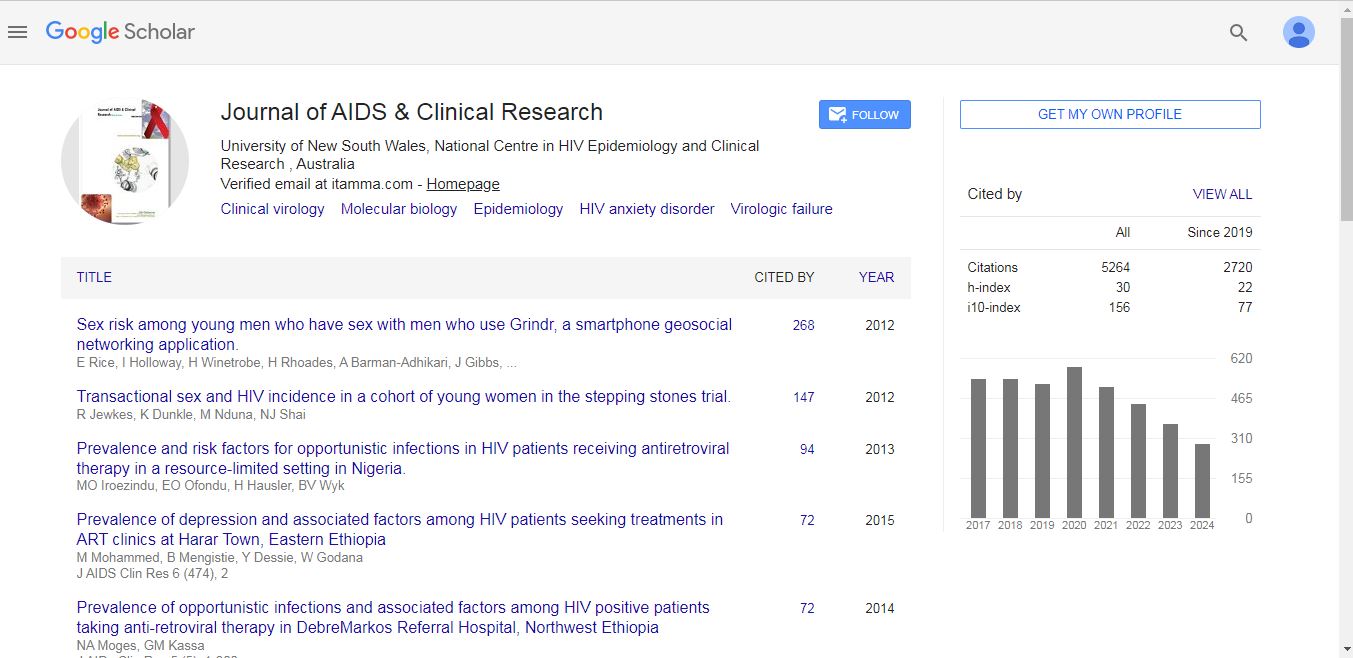
Journal of AIDS & Clinical Research received 5264 citations as per Google Scholar report
 Spanish
  Chinese
  Russian
  German
  French
  Japanese
  Portuguese
  Hindi
Hindi 