Ryan Z Taylor*, Ryan K. Schmocker, Gregory Minwell and Laura M. Enomoto
DOI: 10.37421/2165-7920.2025.15.1679
Cystic Artery Pseudoaneurysms (CAPs) are rare but have been associated with a high risk of complications including hemorrhage. While most often associated with cholecystitis, the presentation is inconsistent and management remains controversial. Similarly, the diagnostic workup is variable and typically includes endoscopy, computed tomography and angiography. Traditionally, angioembolization followed by open cholecystectomy has been the most common treatment approach; however laparoscopic management and selective pseudoaneurysm embolization alone have also been reported. We present an interesting case of cholelithiasis and choledocholithiasis associated with an upper gastrointestinal bleed secondary to a CAP which was successfully managed with a staged multidisciplinary approach.
DOI: 10.37421/2165-7920.2025.15.1680
Introduction: Kennedy disease is a late-onset X-linked recessive inherited neurodegenerative disorder characterized by progressive proximal limb and medullary muscle atrophy with spontaneous laryngospasm . Anesthesia for patients with Kennedy disease is extremely challenging because the nature of Kennedy disease exposes patients with the disease to anesthetic risks including acute laryngospasm, increased sensitivity
to non-depolarizing muscle relaxants and postoperative respiratory failure or aspiration.
Case presentation: We report a 55-year-old male patient who suffers from Kennedy disease. He underwent open reduction and internal fixation of the left fibular fracture due to trauma. The patient first noticed muscle weakness in the proximal lower limbs at the age of 40 and was diagnosed with Kennedy disease after undergoing genetic testing two years later. After detailed discussion and with the patient's consent, the surgical procedure was completed under the method of "venous sedation combined with ultrasound-guided nerve block and acupuncture anesthesia".
Conclusion: This case report indicates that the internal fixation surgery for fibular fracture in patients with Kennedy disease can be safely and smoothly completed through intravenous sedation combined with ultrasound-guided nerve block and acupuncture anesthesia, without deterioration of neurological signs or symptoms.
Sama Mohamud*, Shambhu Aryal, Daniel Tang, Vikramjit Khangoora, Alan Nyquist, Anju Singhal, Oksana A. Shlobin, Jared D Wilkinson, Christopher Thomas, Steven D. Nathan, Haresh Mani, Sajal Tanna and Christopher S. King
DOI: 10.37421/2165-7920.2025.15.1681
DOI: 10.37421-2165-7920.2025.15.1682
DOI: 10.37421-2165-7920.2025.15.1684
DOI: : 10.37421-2165-7920.2025.15.1683
DOI: 10.37421-2165-7920.2025.15.1685
DOI: 10.37421-2165-7920.2025.15.1686
DOI: 10.37421-2165-7920.2025.15.1687
DOI: 10.37421-2165-7920.2025.15.1688
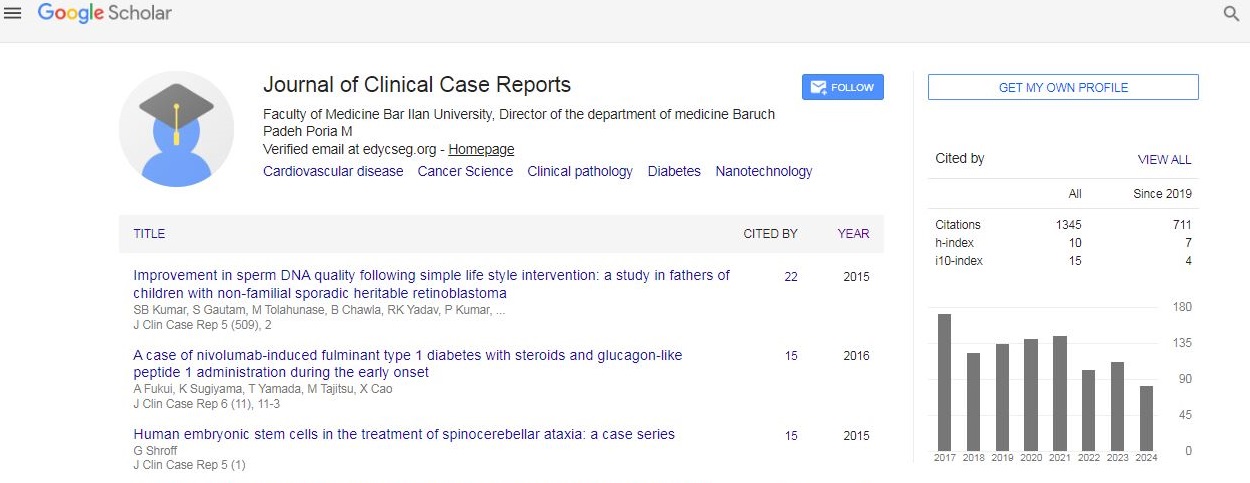
Journal of Clinical Case Reports received 1345 citations as per Google Scholar report

 Spanish
  Chinese
  Russian
  German
  French
  Japanese
  Portuguese
  Hindi
Hindi 