Mohamad Mahameed
Israel
Scientific Tracks Abstracts: J Laser Opt Photonics
Abstract: Oropharyngeal cancer treatment has significantly improved survival, yet patients often experience long-term impairments in quality of life (QoL), including swallowing dysfunction, speech difficulties, fatigue, and social limitations. While various treatment modalities offer oncologic control, their impact on QoL remains incompletely understood. Methods: A systematic search of five databases was conducted following PRISMA guidelines.Subgroup analyses were performed based on management modality, surgical approach, and follow-up duration. Meta-regression was conducted to explore associations with age, gender, alcohol use, and follow-up time. Results: Significant variations in QoL were observed across treatment groups. Swallowing function was most impaired following chemoradiotherapy , with persistent deficits beyond 12 months. Speech outcomes were better with surgery alone compared to chemoradiotherapy. Xerostomia was a major long-term complication, particularly with chemoradiotherapy. Social eating and emotional well-being were significantly affected posttreatment, with gradual recovery over time. Subgroup analyses revealed that management modality and followup duration were significant moderators of QoL outcomes. Meta-regression analysis identified age as a significant predictor of worsening cognitive function, insomnia, swallowing dysfunction, and weight loss, while older patients reported better sensory function. Male patients had better physical and emotional well-being, but no significant advantage in speech outcomes. Follow-up duration was associated with gradual improvements in global QoL, emotional function, and cognitive function, though swallowing function did not significantly improve over time. Chemotherapy alone was linked to the greatest decline in global QoL and dry mouth, while radiotherapy significantly impacted emotional well-being and swallowing function. Conclusion: This Study highlights the profound impact of oropharyngeal cancer treatment on QoL, with swallowing dysfunction, speech impairment, and xerostomia emerging as key long-term challenges. The findings support the need for treatment de-intensification strategies, tailored rehabilitation protocols, and multidisciplinary survivorship care to optimize patient-centered outcomes.
Mohamad Mahameed, Israel, is a dedicated clinical researcher specializing in head and neck oncology with a strong focus on survivorship and long-term functional outcomes. His work emphasizes evidence-based approaches to improving quality of life in patients with oropharyngeal cancer.
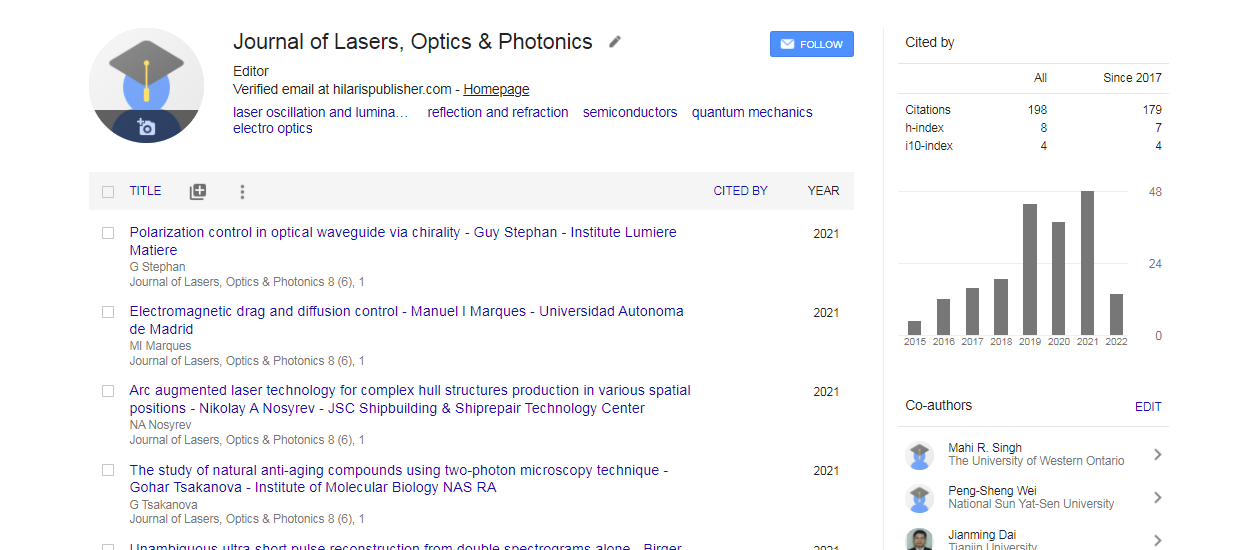
Journal of Lasers, Optics & Photonics received 279 citations as per Google Scholar report
 Spanish
  Chinese
  Russian
  German
  French
  Japanese
  Portuguese
  Hindi
Hindi 