Grace Garrick
The University of Manchester, United Kingdom
Scientific Tracks Abstracts: J Environ Hazard
Climate change-induced sea level rise poses significant health threats to coastal populations through saltwater intrusion into freshwater supplies. This systematic review examines whether increased water salinity resulting from rising sea levels increases cardiovascular risk through elevated blood pressure and hypertension rates. A systematic literature search was conducted using PubMed with search terms "salinity" AND "hypertension", applying filters for human studies, English language, and publications within the past 20 years. Studies comparing blood pressure measurements or hypertension rates between coastal regions exposed to increased water salinity versus non-exposed control areas were included. The CASP checklist was used to assess study quality, with five studies meeting inclusion criteria: four conducted in coastal Bangladesh and one in Vietnam's Mekong Delta region. Four of five studies demonstrated a significant association between increased water salinity and elevated blood pressure or hypertension risk. One study in coastal Bangladesh found 2.1 times higher odds of hypertension in exposed populations (95% CI: 1.37-3.23), whilst another observed that each 100 mg/L reduction in water sodium concentration decreased hypertension odds by 14% (95% CI: 7.4-20.6). A Vietnamese study reported a 9% increased risk of hypertension-related hospital admissions in salinity-exposed areas (95% CI: 3-14%). One contrasting study suggested beneficial effects of calcium and magnesium in saline water may offset sodium's hypertensive effects. Current evidence supports a significant relationship between climate change-driven saltwater intrusion and increased hypertension risk in coastal populations. Variability in findings likely reflects differences in water mineral composition and local lifestyle factors. Further research in diverse coastal regions is essential, alongside public health interventions including water desalination technologies, blood pressure monitoring programs, and community education about salt intake reduction for vulnerable coastal populations.
Grace Garrick is a fourth-year medical student with a Master's degree in Humanitarianism and Conflict Response. Passionate about the intersection of climate change and public health, they work with Manchester-based charitable gardens to address nutritional inequalities through locally produced food. Their academic background in both medicine and humanitarian response informs their commitment to community-driven health solutions.
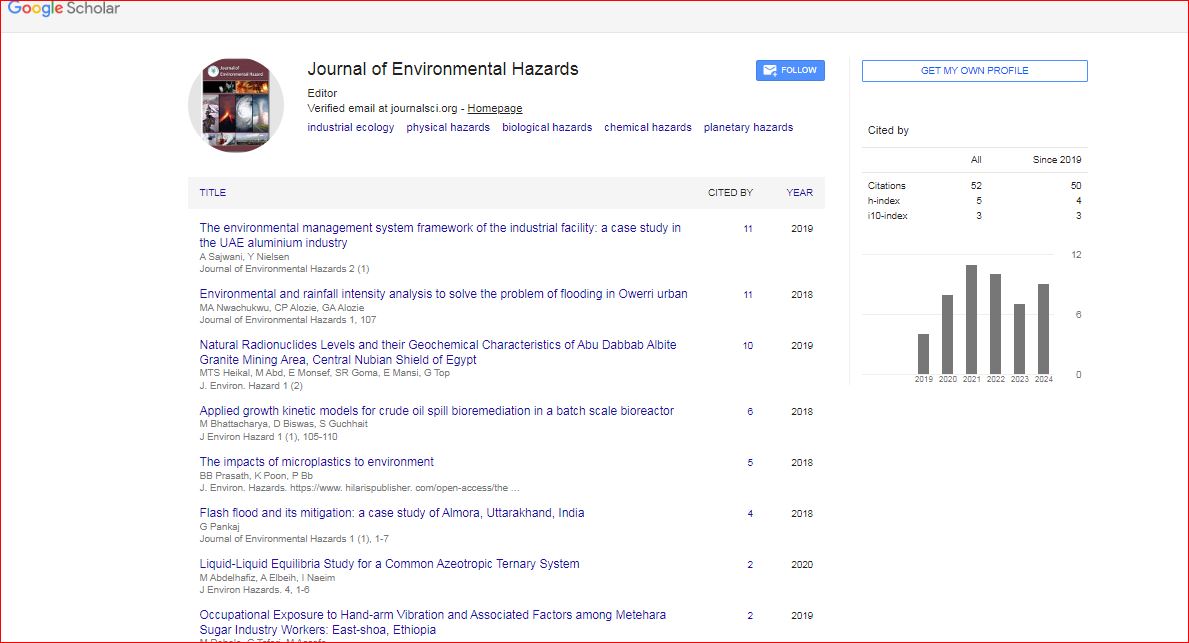
Journal of Environmental Hazards received 51 citations as per Google Scholar report
 Spanish
  Chinese
  Russian
  German
  French
  Japanese
  Portuguese
  Hindi
Hindi 