Hannah Oâ??Connor
Kingâ??s College London, United Kingdom
Posters & Accepted Abstracts: J Diabetic Complications Med
Type 1 diabetes (T1D) requires meticulous and lifelong glycemic control to prevent hypoglycemia, hyperglycemia, and long-term complications. Recent advancements in artificial intelligence (AI) have paved the way for innovative insulin therapy solutions, including predictive algorithms, automated insulin delivery systems, and adaptive learning-based decision support tools. This presentation examines the integration of AI into T1D care and its implications for clinical outcomes, patient safety, and personalized treatment. AI-driven closed-loop insulin delivery systems leverage continuous glucose monitoring (CGM) data to predict glucose fluctuations and automatically adjust basal insulin delivery. Machine-learning algorithms can identify individualized glycemic patterns, predict hypoglycemia events up to 30 minutes in advance, and optimize bolus dosing recommendations. Clinical studies show that AI-mediated therapy significantly increases time-inrange (TIR), reduces glycemic variability, and enhances quality of life. This abstract further discusses emerging technologies such as reinforcement-learning insulin control, digital twin modeling, and AI-powered dietary assessment tools. These tools provide real-time insights into carbohydrate estimation errors, exercise-related variability, and hormonal influences on glucose metabolism. Challenges such as algorithm transparency, data security, and clinical integration will also be addressed. By synthesizing the latest clinical evidence, this session will highlight how AI is reshaping T1D management and outline practical pathways for endocrinologists to incorporate these technologies into routine patient care.
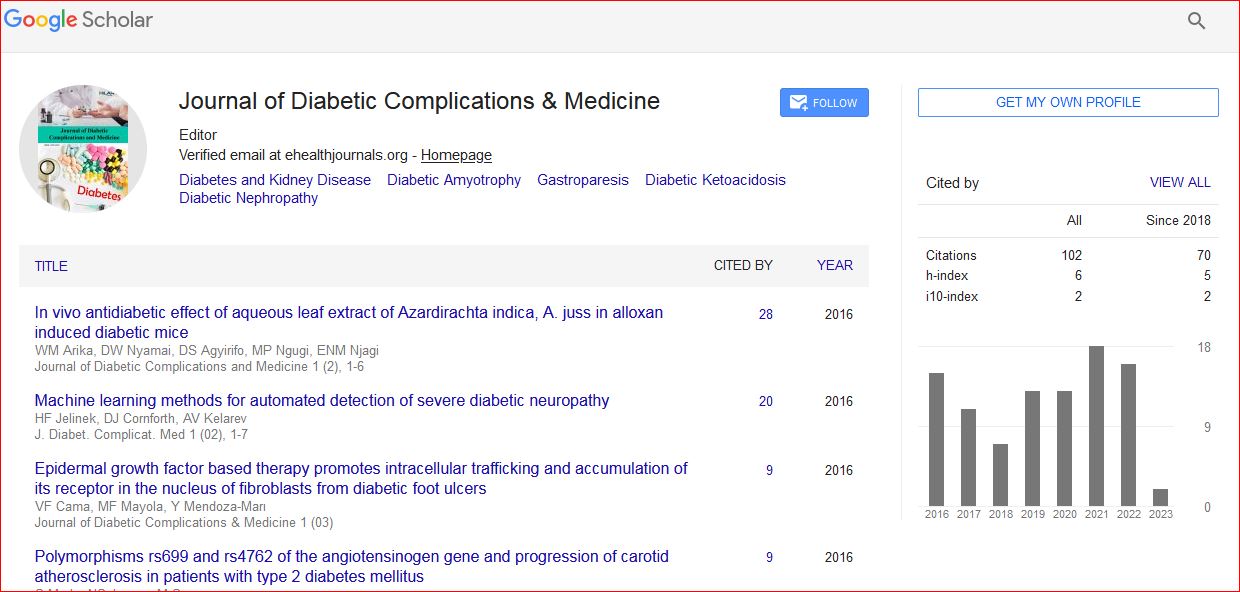
Journal of Diabetic Complications & Medicine received 102 citations as per Google Scholar report

 Spanish
  Chinese
  Russian
  German
  French
  Japanese
  Portuguese
  Hindi
Hindi 