Maria Elena Ruiz
University of Barcelona, Spain
Posters & Accepted Abstracts: J Diabetic Complications Med
Type 2 diabetes (T2D) represents one of the most pressing global health challenges, driven by complex interactions between genetics, metabolism, lifestyle, and environmental exposures. Traditional management strategies, while effective for many, often fail to address the heterogeneity of disease phenotypes across diverse populations. Precision medicine has emerged as a transformative approach, enabling individualized therapeutic decisions based on molecular, clinical, and digital health data. This presentation provides an in-depth analysis of recent advancements in genomics, metabolomics, and digital biomarkers in the context of T2D. Genomic profiling has enabled the identification of high-risk alleles and polygenic risk scores that refine early-diagnosis models. Metabolomic signatures, particularly lipidomic and amino acid profiles, have shown strong predictive value for insulin resistance, beta-cell dysfunction, and therapeutic responsiveness. The rise of digital biomarkers—continuous glucose monitoring (CGM), wearable metabolic sensors, and AIdriven behavioral analytics—has further enhanced the capacity to personalize treatment plans. Integrating these modalities allows clinicians to categorize patients into clinically meaningful metabolic subgroups, optimize drug selection, and predict treatment outcomes with improved accuracy. This abstract summarizes evidence from recent clinical trials exploring genotype-guided metformin therapy, metabolomic-based risk stratification, and AI-supported insulin titration systems. The results demonstrate significant improvements in glycemic control, treatment adherence, and long-term complication prevention. By synthesizing current knowledge, this session will highlight the potential of precision endocrinology to reshape diabetes management and provide practical strategies for adapting these innovations into routine clinical practice.
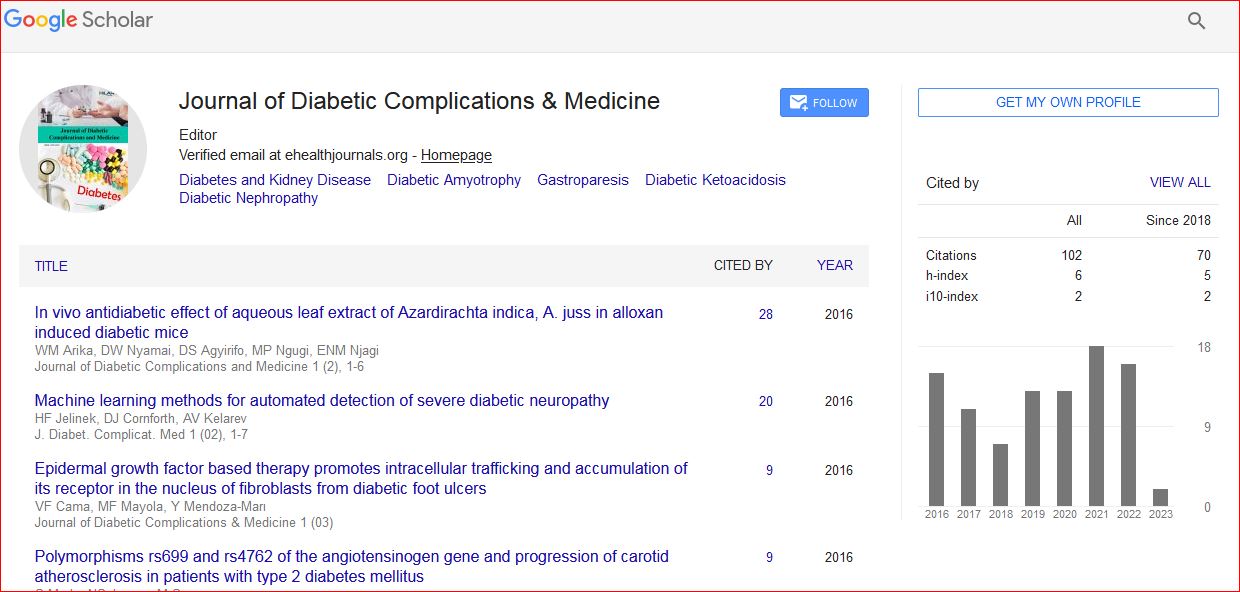
Journal of Diabetic Complications & Medicine received 102 citations as per Google Scholar report
 Spanish
  Chinese
  Russian
  German
  French
  Japanese
  Portuguese
  Hindi
Hindi 