Brief Report - (2025) Volume 9, Issue 5
Received: 01-Sep-2025, Manuscript No. jma-26-184614;
Editor assigned: 03-Sep-2025, Pre QC No. P-184614;
Reviewed: 17-Sep-2025, QC No. Q-184614;
Revised: 22-Sep-2025, Manuscript No. R-184614;
Published:
29-Sep-2025
, DOI: 10.37421/2684-4265.2025.09.399
Citation: Whitfield, Robert A.. ”Vascular Bundles: Monocot Versus Dicot Adaptations.” J Morphol Anat 09 (2025):399.
Copyright: © 2025 Whitfield A. Robert This is an open-access article distributed under the terms of the Creative Commons Attribution License, which permits unrestricted use, distribution and reproduction in any medium, provided the original author and source are credited.
The arrangement of vascular bundles is a defining characteristic that distinguishes monocotyledonous and dicotyledonous plants, offering profound insights into their anatomy and evolutionary paths. In monocots, these bundles are dispersed across the stem, a feature that eschews the differentiation into a distinct cortex and pith. Each vascular bundle in monocots is encased by a sclerenchymatous sheath, with xylem situated centrally and phloem towards the outer edge. This scattered configuration provides robust structural integrity, though it inherently limits the potential for secondary growth. Conversely, dicots present vascular bundles organized in a circular pattern, which clearly delineates the cortex from the pith. This ring-like arrangement is crucial for facilitating secondary growth, primarily due to the presence of vascular cambium positioned between the xylem and phloem, enabling an increase in stem diameter and the formation of wood. These contrasting structural blueprints are indicative of divergent life strategies and adaptations to diverse environmental conditions. The ontogeny of vascular bundle development in herbaceous dicots reveals a dynamic process involving cambial activity and the subsequent formation of secondary xylem. This developmental trajectory stands in stark contrast to the determinate growth observed in monocots, where vascular bundles are considered closed, lacking any inherent capacity for cambial activity. The initial disposition of procambial strands fundamentally dictates the ultimate vascular architecture and the plant's potential for radial expansion. The functional implications of scattered vascular bundles in monocot stems are particularly significant for mechanical support and efficient transport. The sclerenchyma that encases each bundle plays a vital role in preventing stem collapse, a critical adaptation for survival in environments prone to strong winds. However, this structural arrangement inherently imposes limitations on the extent of secondary thickening. Molecular mechanisms governing vascular bundle patterning in developing dicot embryos are intricate, with auxin gradients and specific transcription factors playing pivotal roles. These elements orchestrate the radial organization of vascular tissues, laying the groundwork for organized secondary growth. This research illuminates the genetic control that underpins vascular development. A detailed comparative analysis of xylem and phloem structure within the vascular bundles of various monocot species reveals notable variations. Differences in the size and arrangement of vessel elements, alongside the characteristics of sieve tube elements, correlate with specific ecological niches and the efficiency of water transport. Furthermore, variations in the composition of the bundle cap are also explored. Environmental influences can significantly impact the plasticity of vascular bundle arrangement in dicotyledonous plants. Factors such as light intensity, water availability, and mechanical stress can modulate cambial activity and influence overall vascular architecture, thereby showcasing the adaptive capabilities of the vascular system. This highlights the dynamic interplay between the plant and its surroundings. Phylogenetic trends in vascular bundle organization across major plant lineages, with a specific focus on the comparative aspects within angiosperms, provide valuable evolutionary perspectives. The divergence between scattered and ring arrangements reflects key evolutionary shifts and adaptive radiations. Morphological and molecular data are instrumental in reconstructing these evolutionary pathways. The role of sclerenchyma in providing structural support to monocot stems is intrinsically linked to its close association with scattered vascular bundles. Biomechanical analyses quantify the contribution of the bundle sheath to stem rigidity, underscoring its importance in preventing buckling under physical stress. This emphasizes a critical functional aspect of monocot stem anatomy. Studies on the microanatomy of vascular bundles in aquatic monocots reveal how their submerged habitats shape bundle structure and arrangement. These adaptations are crucial for efficient water and nutrient uptake, as well as for facilitating gas exchange in relation to their unique vascular tissue organization within an aquatic milieu.
The distinct arrangement of vascular bundles in monocots and dicots provides fundamental insights into plant anatomy and evolutionary divergence. In monocots, vascular bundles are scattered throughout the stem, lacking a distinct cortex and pith. Each bundle is typically surrounded by a sclerenchymatous sheath and contains xylem towards the center and phloem towards the periphery. This scattered arrangement offers structural integrity but less flexibility in secondary growth. Conversely, dicots exhibit vascular bundles arranged in a ring, demarcating a clear cortex and pith. This arrangement facilitates secondary growth through the presence of vascular cambium between xylem and phloem, allowing for increased stem diameter and wood formation. The distinct patterns reflect different life strategies and adaptations to various environments. Research into the ontogeny of vascular bundle development in herbaceous dicots highlights the dynamic process of cambial activity and secondary xylem formation. This contrasts with the determinate growth typical of monocots, where vascular bundles are closed and lack cambial potential. The initial arrangement of procambial strands dictates the future vascular architecture and the capacity for radial expansion. The functional implications of scattered vascular bundles in monocot stems are examined in relation to mechanical support and efficient transport. The presence of sclerenchyma surrounding each bundle plays a crucial role in preventing stem collapse, particularly in wind-prone environments. The limitations this structure imposes on extensive secondary thickening are also discussed. Molecular mechanisms underlying vascular bundle patterning in developing dicot embryos are investigated, focusing on the role of auxin gradients and transcription factors. These factors are critical in establishing the radial arrangement of vascular tissues, paving the way for organized secondary growth and providing insights into the genetic control of vascular development. A detailed comparative analysis of xylem and phloem structure within vascular bundles of various monocot species is presented. This study highlights variations in vessel element size and arrangement, as well as sieve tube element characteristics, correlating these with ecological niches and water transport efficiency. Differences in bundle cap composition are also examined. The developmental plasticity of vascular bundle arrangement in response to environmental stimuli in dicotyledonous plants is explored. Changes in light, water availability, and mechanical stress can influence cambial activity and the overall vascular architecture, demonstrating the adaptive capacity of the vascular system. Phylogenetic trends in vascular bundle organization across major plant lineages, comparing monocots and dicots within angiosperms, are examined. The scattered versus ring arrangement reflects divergence and adaptation, with the research employing morphological and molecular data to infer evolutionary pathways. The role of sclerenchyma in the structural support of monocot stems is investigated, emphasizing its association with scattered vascular bundles. Through biomechanical analysis, the contribution of the bundle sheath to stem rigidity and its importance in preventing buckling under stress are quantified. Microanatomical studies of vascular bundles in aquatic monocots explore how their submerged environment influences bundle structure and arrangement. This includes examining adaptations for water and nutrient uptake, and gas exchange in relation to vascular tissue organization.
Vascular bundle arrangement is a key differentiator between monocots and dicots. Monocots feature scattered vascular bundles, offering structural integrity but limited secondary growth, while dicots display bundles in a ring, facilitating significant secondary growth and wood formation. This structural difference reflects divergent evolutionary strategies and adaptations. Monocot vascular bundles are supported by sclerenchyma for mechanical strength, especially in exposed environments. Dicot vascular development is influenced by molecular mechanisms like auxin gradients, enabling organized growth. Environmental factors also impact vascular arrangement plasticity in dicots. Studies compare xylem and phloem structures in monocots, linking variations to ecological roles and transport efficiency. Evolutionary analyses trace the development of these distinct organizations across plant lineages. Aquatic monocots exhibit specific adaptations in their vascular bundles to their submerged lifestyles. Overall, the arrangement of vascular bundles significantly impacts nutrient transport efficiency and plant performance in both groups.
None
None
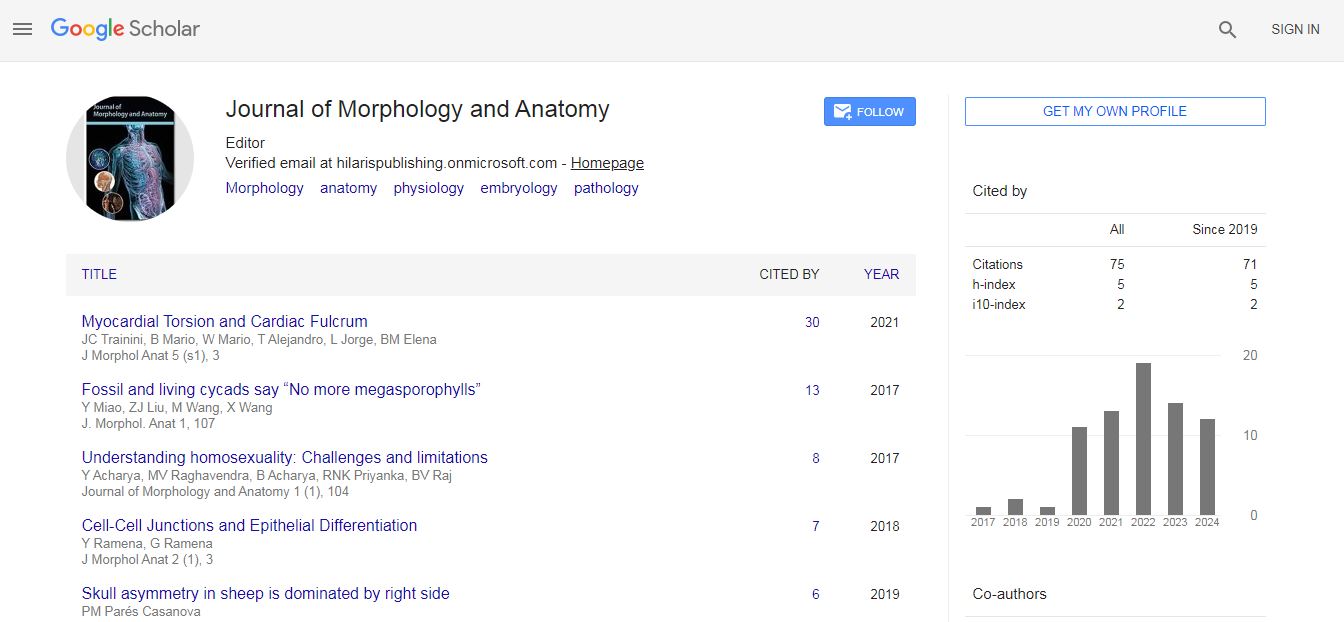
Journal of Morphology and Anatomy received 63 citations as per Google Scholar report