Short Communication - (2026) Volume 16, Issue 2
Received: 02-Mar-2026, Manuscript No. jnt-26-191287;
Editor assigned: 04-Mar-2026, Pre QC No. P-191287;
Reviewed: 18-Mar-2026, QC No. Q-191287;
Revised: 23-Mar-2026, Manuscript No. R-191287;
Published:
30-Mar-2026
, DOI: 10.37421/2161-0959.2026.16.619
Citation: Petrova, Elena. ”Undiagnosed Hypertension: Silent Threat to Kidney Health.” J Nephrol Ther 16 (2026):619.
Copyright: © 2026 Petrova E. This is an open-access article distributed under the terms of the Creative Commons Attribution License, which permits unrestricted use, distribution and reproduction in any medium, provided the original author and source are credited.
Undiagnosed hypertension stands as a primary catalyst for the rapid advancement of chronic kidney disease (CKD), often progressing unnoticed until significant renal damage has occurred, leading to an accelerated decline in kidney function. The early detection and management of hypertension are therefore crucial for preventing or slowing the progression of CKD. Delayed diagnoses can be attributed to the often asymptomatic nature of early hypertension and a lack of consistent screening protocols. The sustained high pressure on glomerular capillaries is the primary mechanism by which the kidneys are damaged in these cases, leading to glomerulosclerosis and interstitial fibrosis. Therapeutic interventions are centered on aggressive blood pressure control through antihypertensive medications and essential lifestyle modifications [1].
This review underscores the silent and insidious impact of hypertension on renal health, emphasizing that without routine monitoring, many individuals develop severe CKD before hypertension is even identified. The article thoroughly examines the pathological pathways through which elevated blood pressure inflicts damage on the kidneys, including mechanisms such as hyperfiltration, endothelial dysfunction, and inflammation. Furthermore, it addresses the inherent challenges in diagnosing hypertension across diverse populations and highlights the critical importance of primary care screening initiatives [2].
Focusing specifically on the 'rapidly progressive' nature of the disease, this study meticulously investigates the characteristic renal lesions observed in patients with long-standing, undiagnosed hypertension. It details the specific histological findings, such as glomerular hypertrophy, arteriolar hyalinosis, and tubular atrophy, which collectively contribute to the accelerated loss of renal function. The research unequivocally stresses the critical necessity of early intervention to avert these irreversible pathological changes [3].
This article critically examines the diagnostic journey undertaken by patients who present with advanced CKD stemming from previously unrecognized hypertension. It delves into the complexities of differentiating rapidly progressive CKD from other potential etiologies and underscores the indispensable role of a comprehensive medical history and physical examination in uncovering subtle clues of undiagnosed hypertension, such as hypertensive retinopathy or cardiac hypertrophy [4].
This paper presents a thorough epidemiological overview that establishes a clear link between undiagnosed hypertension and the incidence and progression of CKD on a global scale. It powerfully highlights the substantial burden imposed by this preventable cause of kidney failure and issues a strong call for the reinforcement of public health initiatives aimed at enhancing hypertension screening and management strategies [5].
This clinical trial rigorously investigates the impact of aggressive blood pressure reduction on the rate of CKD progression among patients with established, yet previously undertreated, hypertension. The compelling findings demonstrate that achieving lower blood pressure targets can markedly decelerate the decline in glomerular filtration rate, even in instances where some degree of renal damage has already manifested [6].
This article engages with the intricate role of renal immunology within the context of hypertensive nephropathy. It explores in detail how persistently elevated blood pressure contributes to inflammatory processes within the kidney, thereby exacerbating existing damage. A deeper understanding of these immunological pathways holds the potential for identifying novel therapeutic targets for the effective management of hypertensive CKD [7].
This paper prominently features the significance of patient education and unwavering adherence to prescribed treatments in effectively managing hypertension and mitigating the progression of CKD. It vividly illustrates how a fundamental lack of awareness regarding the risks associated with uncontrolled blood pressure can directly lead to poor adherence, consequently accelerating kidney damage. The article subsequently discusses various strategies designed to enhance patient engagement and compliance [8].
This article undertakes an examination of the influence of genetic predisposition on the development of hypertension and its subsequent ramifications on kidney disease. It discusses how specific genetic variations may influence the body's blood pressure regulation mechanisms and the kidney's susceptibility to damage, potentially contributing to a more rapid decline in renal function in individuals carrying these genetic markers [9].
This study concentrates on the profound economic and societal consequences of rapidly progressive CKD that arises secondary to undiagnosed hypertension. It provides quantitative data on the healthcare costs associated with managing end-stage renal disease and powerfully emphasizes the critical need for robust preventative measures to alleviate the burden on healthcare systems and concurrently improve the quality of life for affected patients [10].
Undiagnosed hypertension is a critical factor in the accelerated progression of chronic kidney disease (CKD). The condition often remains unrecognized until significant kidney damage has occurred, leading to a rapid decline in renal function. Early identification and management of hypertension are paramount for preventing or slowing CKD progression. Factors contributing to diagnostic delays include the asymptomatic nature of early hypertension and insufficient regular screening. The primary mechanism of kidney damage in these scenarios involves sustained high pressure on glomerular capillaries, resulting in glomerulosclerosis and interstitial fibrosis. Treatment strategies prioritize aggressive blood pressure control through antihypertensive medications and necessary lifestyle changes [1].
The review highlights the silent nature of hypertension and its detrimental, insidious effects on kidney health. It emphasizes that in the absence of routine monitoring, a significant number of individuals develop severe CKD before hypertension is diagnosed. The article elaborates on the pathological processes by which elevated blood pressure damages the kidneys, encompassing hyperfiltration, endothelial dysfunction, and inflammation. It also addresses the challenges encountered in diagnosing hypertension within specific demographic groups and stresses the importance of screening in primary care settings [2].
This study specifically focuses on the 'rapidly progressive' aspect, examining the distinct renal lesions found in patients with long-standing, undiagnosed hypertension. It describes characteristic histological findings, including glomerular hypertrophy, arteriolar hyalinosis, and tubular atrophy, all of which contribute to the accelerated loss of renal function. The research strongly advocates for the critical need for early intervention to prevent the development of these irreversible changes [3].
This article explores the diagnostic complexities faced by patients who present with advanced CKD due to previously unrecognized hypertension. It discusses the difficulties in differentiating rapidly progressive CKD from other causes and underscores the importance of a thorough medical history and physical examination for identifying indicators of undiagnosed hypertension, such as hypertensive retinopathy or cardiac hypertrophy [4].
This research offers a comprehensive overview of epidemiological data that links undiagnosed hypertension to the incidence and progression of CKD globally. It highlights the significant public health burden of this preventable cause of kidney failure and calls for strengthened public health initiatives to improve hypertension screening and management efforts [5].
This clinical trial investigates the impact of intensive blood pressure lowering on the rate of CKD progression in hypertensive patients whose hypertension was previously undertreated. The results indicate that achieving lower blood pressure targets can significantly slow the decline in glomerular filtration rate, even in cases where some renal damage has already occurred [6].
The article discusses the immunological mechanisms involved in hypertensive nephropathy. It examines how sustained elevated blood pressure triggers inflammatory processes within the kidney, thereby worsening the damage. Understanding these immunological pathways may lead to the development of novel therapeutic targets for managing hypertensive CKD [7].
This paper focuses on the critical role of patient education and consistent adherence to treatment in managing hypertension and preventing CKD progression. It highlights how a lack of awareness regarding the risks associated with uncontrolled blood pressure can lead to poor adherence, consequently accelerating kidney damage. The article also discusses various strategies for improving patient engagement and compliance [8].
This article investigates the influence of genetic factors on the development of hypertension and its subsequent effect on kidney disease progression. It explores how certain genetic variations can impact blood pressure regulation and renal susceptibility, potentially leading to a faster decline in kidney function in affected individuals [9].
This study concentrates on the economic and societal ramifications of rapidly progressive CKD resulting from undiagnosed hypertension. It quantifies the healthcare expenditures associated with managing end-stage renal disease and emphasizes the necessity of preventative strategies to reduce the burden on healthcare systems and enhance patient quality of life [10].
Undiagnosed hypertension is a major contributor to rapidly progressive chronic kidney disease (CKD), often leading to significant renal damage before detection. Early diagnosis and management are crucial to slow CKD progression, with treatments focusing on blood pressure control and lifestyle modifications. The silent nature of hypertension exacerbates its impact on kidneys, with pathological mechanisms including hyperfiltration and inflammation. Histological findings in undiagnosed hypertension reveal glomerular hypertrophy and fibrosis, underscoring the need for early intervention. Diagnostic challenges exist, but thorough medical history and physical exams can reveal signs of undiagnosed hypertension. Epidemiological data show a significant global burden of hypertension-related CKD, necessitating enhanced public health efforts. Clinical trials demonstrate that aggressive blood pressure lowering can slow CKD progression. Immunological pathways and genetic factors also play roles in hypertensive nephropathy. Patient education and adherence to treatment are vital for outcomes, and uncontrolled hypertension imposes substantial economic and societal costs, highlighting the importance of prevention.
None
None
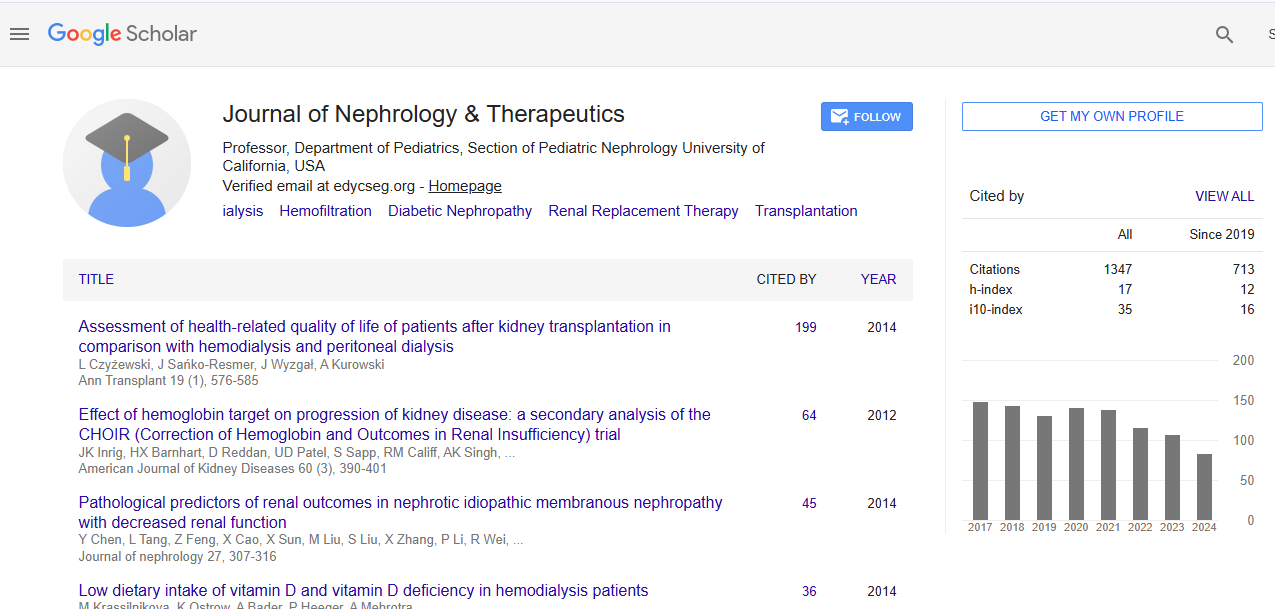
Journal of Nephrology & Therapeutics received 784 citations as per Google Scholar report