Opinion - (2025) Volume 16, Issue 2
Received: 28-Mar-2025, Manuscript No. gjto-25-175400;
Editor assigned: 31-Mar-2025, Pre QC No. P-175400;
Reviewed: 14-Apr-2025, QC No. QC-175400;
Revised: 21-Apr-2025, Manuscript No. R-175400;
Published:
28-Apr-2025
, DOI: 10.37421/2229-8711.2025.16.441
Citation: El-Masri, Yara. âSystems Engineering: Trends, Challenges, Future Directions.â Global J Technol Optim 16 (2025): 441.
Copyright: 2025 El-Masri Y. This is an open-access article distributed under the terms of the Creative Commons Attribution License, which permits unrestricted use,
distribution and reproduction in any medium, provided the original author and source are credited.
The complex landscape of modern systems engineering consistently presents unique challenges and demands innovative solutions. Diverse areas, from foundational methodologies to advanced technological integrations, shape how practitioners approach system design, development, and maintenance. Understanding these evolving dynamics is crucial for effective project outcomes. This survey digs into the current landscape of Model-Based Systems Engineering, pointing out prevalent trends, the practical hurdles engineers face, and what's really needed next for wider adoption. It highlights a clear gap between MBSE's theoretical promise and its everyday application [1]. This article defines Digital Engineering within the Systems Engineering context, diving into its foundational ideas and identifying significant hurdles in real-world application. Think about challenges like seamlessly integrating data, making different tools talk to each other, and handling organizational shifts [2].
This paper looks at how agile methods fit into Systems Engineering. It maps out common approaches, the unique problems that pop up when you scale agile to big, complex systems, and suggests future directions to really boost agility in those large projects [3]. This systematic review explores where AI and Machine Learning fit across different stages of Systems Engineering. It pinpoints the upsides, current limits, and promising avenues for deeper integration, from nailing down requirements all the way to system upkeep [4]. The paper reviews how Human Systems Integration plays out in complex systems engineering. It pulls together findings on getting human factors into design, identifying top practices, and showing where better integration really boosts how a system performs and feels to use [5]. This study shows how a thorough Systems Engineering approach can build more resilient systems. It focuses on practical ways to spot weaknesses, design for toughness, and put in place strategies that help systems handle and bounce back from disruptions [6]. This paper surveys the distinct design hurdles and effective methods in Cyber-Physical Systems Engineering. It talks about how computing and physical parts interact and outlines ways to make sure these integrated systems are secure, safe, and perform well [7].
This review digs into requirements engineering practices specifically for Complex Adaptive Systems. It spotlights the tough part of capturing their dynamic and emergent behaviors and explores how to properly define, analyze, and handle requirements in such unpredictable settings [8]. This paper gives an overview of the big challenges in testing and evaluating complex systems in engineering. It tackles things like managing ever-growing system complexity, making sure you test everything thoroughly, and bringing together different testing methods effectively [9]. This systematic review looks at how Product Lifecycle Management (PLM) and Model-Based Systems Engineering (MBSE) can work together. It details how bringing these two approaches can really smooth out development, keep data consistent, and overall improve how complex products are managed throughout their entire lifespan [10]. Together, these diverse areas of inquiry underscore the multidisciplinary nature of Systems Engineering. They highlight a continuous effort to overcome obstacles, embrace technological advancements, and refine methodologies to build more effective, adaptable, and robust systems for the future. The collective insights from these studies contribute significantly to a deeper understanding of the field's current state and its future trajectory.
The realm of Systems Engineering is continually grappling with fundamental challenges and evolving methodologies. Model-Based Systems Engineering (MBSE) faces a significant gap between its conceptual benefits and practical implementation, underscoring critical needs for broader adoption and the hurdles engineers encounter in daily application [1]. Similarly, Digital Engineering, while defining core concepts, struggles with real-world issues like data integration, interoperability between diverse tools, and organizational resistance to change [2]. Agile methods are being actively adapted for Systems Engineering, examining common approaches and the specific difficulties of scaling agile practices to extensive, intricate projects, while also suggesting future directions to enhance overall project agility [3]. In parallel, Artificial Intelligence (AI) and Machine Learning (ML) are becoming integral to Systems Engineering processes. A systematic review explores their advantages, current limitations, and future potential for deeper integration across all system development stages, from initial requirements definition to ongoing maintenance [4].
Human Systems Integration (HSI) is another vital area, especially within complex systems engineering. Reviews in this field synthesize insights on incorporating human factors into design, identifying leading practices, and demonstrating how improved HSI can substantially boost both system performance and user experience [5]. Building resilient systems is also a key objective, achieved through a comprehensive Systems Engineering approach. This involves practical strategies for identifying vulnerabilities, designing for inherent robustness, and implementing measures that enable systems to effectively manage and recover from various disruptions [6]. Cyber-Physical Systems Engineering presents unique design challenges and requires specialized methodologies due to the intricate interaction of computational and physical components. Research outlines ways to guarantee the security, safety, and optimal performance of these integrated systems [7]. Furthermore, Requirements Engineering for Complex Adaptive Systems focuses on the difficulties of capturing dynamic and emergent behaviors. It explores how to accurately define, analyze, and manage requirements within these inherently unpredictable settings, which is crucial for successful system development [8]. The testing and evaluation of complex systems also pose substantial challenges. This includes managing ever-increasing system complexity, ensuring thorough testing coverage, and effectively integrating various testing methods [9]. Finally, the integration of Product Lifecycle Management (PLM) and Model-Based Systems Engineering (MBSE) offers significant benefits. A systematic review reveals how combining these two approaches can streamline product development, maintain data consistency, and generally enhance the management of complex products throughout their entire lifespan [10]. This collaborative approach promises to optimize efficiency and effectiveness in large-scale engineering endeavors.
Systems Engineering is a dynamic field addressing a wide range of complexities in modern system development. Key areas of focus include Model-Based Systems Engineering (MBSE), where researchers are examining the practical hurdles and needs for wider adoption, pointing out the gap between its theoretical potential and real-world application. Digital Engineering is another crucial aspect, defining foundational concepts while grappling with challenges in data integration, tool interoperability, and organizational adaptation. Agile methods are increasingly integrated into Systems Engineering, with studies mapping common approaches and addressing the unique problems of scaling agility in large-scale projects.
Technological advancements like Artificial Intelligence (AI) and Machine Learning (ML) are being systematically reviewed for their application across all stages of Systems Engineering, identifying both benefits and limitations. Human Systems Integration is also vital, focusing on embedding human factors into design to enhance system performance and user experience. Building system resilience is a recurring theme, with research outlining approaches to identify weaknesses, design for toughness, and implement recovery strategies against disruptions. Specialized domains like Cyber-Physical Systems Engineering present distinct design challenges, requiring methodologies to ensure security, safety, and performance of integrated computing and physical components. Requirements Engineering for Complex Adaptive Systems addresses the difficulty in capturing dynamic behaviors, seeking ways to define and manage requirements in unpredictable settings. Furthermore, testing and evaluation of complex systems face issues of escalating complexity and effective method integration. The synergy between Product Lifecycle Management (PLM) and MBSE is explored as a means to streamline development, ensure data consistency, and improve overall product management throughout its lifecycle, offering a holistic perspective on future systems engineering practices.
None
None
Malte S, Martin EBW, Julian W. "Model-Based Systems Engineering (MBSE) in Practice: A Survey on Trends, Challenges, and Needs".Sys Eng 26 (2023):440-459.
Indexed at, Google Scholar, Crossref
William BR, Robert JS, David AB. "Digital Engineering for Systems Engineering: Definitions and Challenges".IEEE Syst J 14 (2020):3672-3683.
Indexed at, Google Scholar, Crossref
Jan JK, Simon R, Alexander S. "Agile Systems Engineering: Practices, Challenges, and Future Directions".Sys Eng 25 (2022):228-245.
Indexed at, Google Scholar, Crossref
Muhammad I, Faheem K, Syed MU. "Artificial Intelligence (AI) and Machine Learning (ML) in Systems Engineering: A Systematic Literature Review".IEEE Access 9 (2021):66904-66922.
Indexed at, Google Scholar, Crossref
Christopher LD, Susan MS, Robert GS. "Human Systems Integration in Complex Systems Engineering: A Systematic Review".Sys Eng 24 (2021):663-680.
Indexed at, Google Scholar, Crossref
Ali MA, Mohamed AS, Abdulrahman MA. "Enhancing System Resilience Through a Systems Engineering Approach".Int J Syst Assur Eng Manag 14 (2023):1121-1133.
Indexed at, Google Scholar, Crossref
Md AS, M. MR, A. KMAH. "Cyber-Physical Systems Engineering: A Survey on Design Challenges and Methodologies".IEEE Access 8 (2020):114878-114897.
Indexed at, Google Scholar, Crossref
Eduardo F, Andreia NSdSG, Ricardo PG. "Requirements Engineering for Complex Adaptive Systems: A Systematic Literature Review".Comput Ind 139 (2022):103657.
Indexed at, Google Scholar, Crossref
Stephen EJ, Mary AF, David CJ. "Test and Evaluation Challenges in Complex Systems Engineering: An Overview".J Def Model Simul 17 (2020):3-15.
Indexed at, Google Scholar, Crossref
Ahmed E, Mohamed AE, Mohamed ET. "Product Lifecycle Management and Model-Based Systems Engineering Integration: A Systematic Review".Procedia CIRP 119 (2023):569-574.
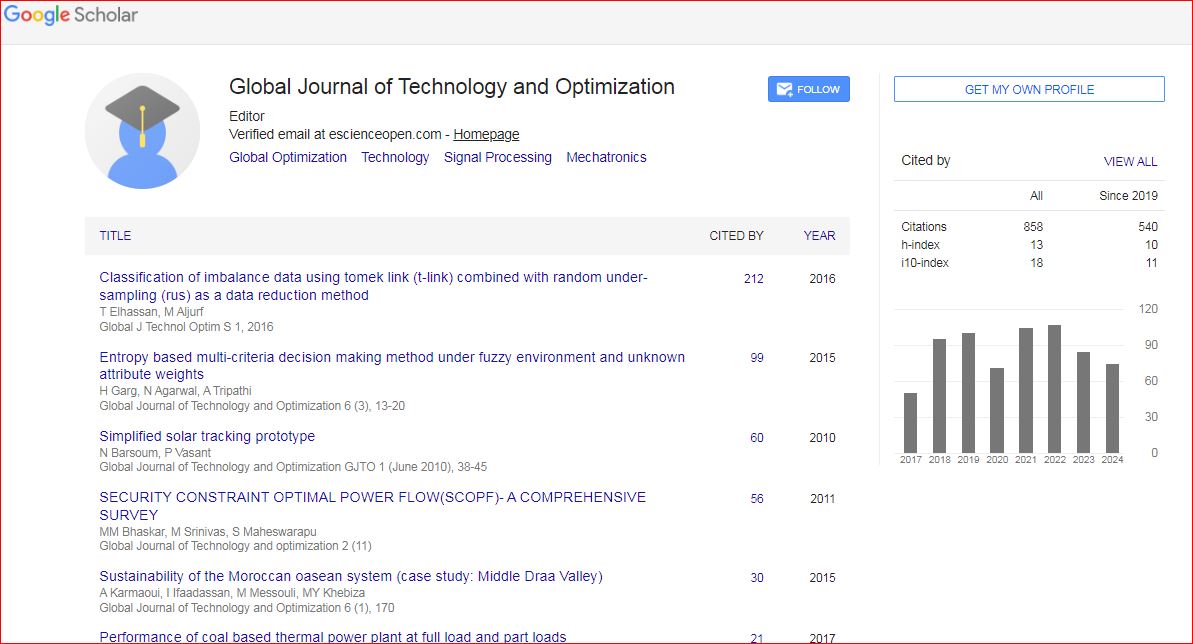
Global Journal of Technology and Optimization received 847 citations as per Google Scholar report