Research Article - (2026) Volume 15, Issue 1
Received: 13-Nov-2024, Manuscript No. PBT-24-152532;
Editor assigned: 18-Nov-2024, Pre QC No. PBT-24-152532 (PQ);
Reviewed: 03-Dec-2024, QC No. PBT-24-152532;
Revised: 04-Feb-2026, Manuscript No. PBT-24-152532 (R);
Published:
11-Feb-2026
, DOI: 10.37421/2167-7689.2026.15.408
Citation: Yadav, Prateek. "Standard Formats Used in Drug Regulatory Submissions and Software Used." Pharmaceut Reg Affairs 15 (2026): 408.
Copyright: © 2026 Yadav P. This is an open-access article distributed under the terms of the creative commons attribution license which permits unrestricted use, distribution and reproduction in any medium, provided the original author and source are credited.
The submission of regulatory information to health authorities is a critical process within the pharmaceutical, biotechnology, and life sciences industries. To streamline this process, various standardized formats and specialized software solutions have been developed. These tools ensure compliance with international regulatory standards, facilitate efficient document management, and enhance submission accuracy. Below is an overview of common submission formats and the leading software tools used in regulatory processes.
Pharmaceutical • Biotechnology • eCTD (Electronic Common Technical Document) • Mac OS • VNeeS
Regulatory submissions in the pharmaceutical and life sciences sectors adhere to various formats, such as eCTD (electronic Common Technical Document), NeeS (Non-eCTD Electronic Submissions), VNeeS (veterinary NeeS), and traditional paper CTDs. eCTD, utilized globally by major authorities like the FDA and EMA, includes five modules covering administrative, summary, and detailed clinical and nonclinical data. NeeS and VNeeS are common in the EU, differing in electronic format specifications:
Standard formats for submitting regulatory information:
• eCTD (Electronic Common Technical Document)
• NeeS (Non-eCTD Electronic Submissions)
• VNeeS (Veterinary NeeS)
• Paper CTD
Several software solutions facilitate regulatory processes, each tailored to different organizational needs. Key tools include:
• eCTD Office
• Certara’s CoAuthor
• PharmaREADY eCTD
• MasterControl
• Lorenz DocuBridge
• EXTEDO eCTDmanager
• Veeva R and D Vault
• eWAY-eCTD SOLUTIONS
• Phlex Global
• Freyr SUBMIT PRO
These solutions play an essential role in ensuring regulatory submissions are prepared, managed, and reviewed efficiently, aligning with the requirements of various international health authorities.
Standard formats for submitting regulatory information to health authorities
The eCTD (Electronic Common T echnical Document)
• Includes five modules: Administrative information, summaries, quality, nonclinical study reports, and clinical study reports.
• Regularly utilized by major regulatory authorities, including FDA and EMA.
NeeS (Non-eCTD Electronic Submissions)
• Key features include PDF files, electronic table of contents, and bookmarks instead of XML.
• Adoption is primarily in the European Union. VNeeS (Veterinary NeeS)
• Features: Adapted NeeS criteria for veterinary medical goods.
Paper CTD
• The traditional paper-based version is organized similarly to eCTD but lacks electronic navigation.
• Adoption: Some regulatory authorities still accept paper filings, although electronic submissions are becoming more common.
List of software used for drug regulatory processes
eCTD Office: Mono d.o.o. developed eCTD Office, a powerful, private software solution. It focuses on electronic Common Technical Document (eCTD) submission handling [1].
• Known for its intuitive design, making it accessible to people with different technical knowledge. Ensures all submissions meet regulatory standards from FDA, EMA, and WHO-PQT etc.
• Allows for quick creation, editing, annotation, and digital signing of PDF files (Figure 1). Facilitates teamwork by enabling many users to edit and combine submissions.
• Ideal for small and mid-sized pharmaceutical enterprises. Supports multiple systems, including Windows and Mac OS (via virtualization).
• Compared to competing eCTD software solutions, it stands out for its low cost and ease of use, while yet providing a complete feature set.
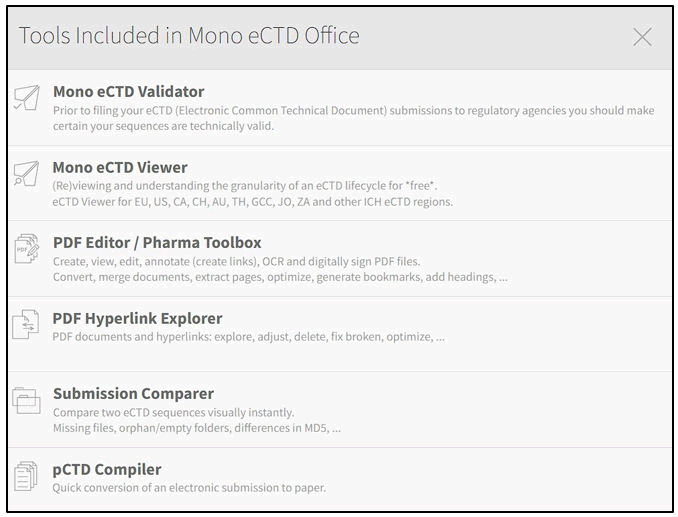
Figure 1. Mono eCTD Office tools for validating, viewing, editing, and comparing eCTD regulatory submissions.
Certara’s coauthor: Certara’s coauthor is an advanced, generative AI-powered software tool specifically designed to streamline the regulatory writing process within the pharmaceutical and biotech industries. It combines generative AI with Certara's structured content authoring, tailored templates, and a customizable suite for electronic Common Technical Document (eCTD) submissions [2].
• Unlike generic language models, CoAuthor is engineered with regulatory expertise to avoid "hallucinations" (inaccurate or irrelevant information) and aligns closely with the standards and rigor required for regulatory compliance [3,4].
• It integrates a “human-in-the-loop” approach, enabling writers to use AI-generated content as a starting point, which can then be refined and validated, ensuring accuracy and reducing manual effort.
• Additionally, CoAuthor's Retrieval-Augmented Generation (RAG) feature focuses on domain-specific content, limiting information sources to only those that meet compliance and relevancy standards.
• This enables writers to maintain consistency across documents like clinical study reports, patient narratives, and protocols while leveraging AI to assist with formatting, terminology, and regulatory structure.
• By integrating into common tools like Microsoft Word, CoAuthor fits smoothly into existing workflows without requiring substantial adjustments from medical writers, supporting Certara's broader goal of accelerating drug development timelines and regulatory submissions through technology (Figure 2).
Figure 2. Logos of P21, GlobalSubmit, CoAuthor, and SEND Explorer® showcasing regulatory and medical writing software solutions.
PharmaREADY eCTD: PharmaREADY eCTD is a web-based regulatory submission and document management solution developed by Navitas Life Sciences, specifically for life sciences companies. It provides a streamlined system for creating, managing, and submitting eCTD-compliant regulatory documents to health authorities around the world. Designed to be both user-friendly and compliant, PharmaREADY is compatible with FDA 21 CFR Part 11 and other international regulations, making it ideal for pharmaceutical, biotechnology, and medical device companies [5,6].
• It facilitates the creation and management of submissionready documents by providing tools for document assembly, roadmap creation, and structure-based organization. Users can manage document lifecycles from creation to final approval and submission.
• It includes a Document Management System (DMS) that allows easy access to submission documents, version control, and rolebased access, helping teams manage the document lifecycle seamlessly.
• PharmaREADY eCTD supports regulatory requirements for major global markets, including the U.S., EU, Canada, and several others. It includes templates for country-specific submissions, such as those required by the FDA and EMA, which streamline regional compliance.
• PharmaREADY promotes collaboration by allowing multiple users to work on submissions simultaneously with features like sequential and parallel approval processes. This ensures that all stakeholders, from authors to approvers, can contribute effectively.
• PharmaREADY eCTD is offered either as a standalone product or integrated with other tools in the PharmaREADY Suite, which includes Structured Product Labeling (SPL), Training Records Management, and other regulatory compliance solutions. The suite is available both on-premise and as a cloud-hosted solution, offering flexibility for companies with varied IT infrastructure and compliance needs.
• This solution has been especially valuable for small to mid-sized life sciences companies due to its affordability, ease of installation, and minimal maintenance requirements [5,6].
Master control: Master Control's eCTD (Electronic Common Technical Document) software is a comprehensive solution for managing electronic regulatory submissions, primarily used by pharmaceutical and biotech companies. The software helps streamline the process of compiling, managing, and submitting eCTD-compliant dossiers, which are essential for regulatory approvals across different global markets, including the U.S. FDA, EMA in Europe, and regulatory agencies in other countries [7].
• Master Control eCTD software allows organizations to automate the collection, tracking, and control of documents related to regulatory submissions. This automation reduces the likelihood of errors and ensures compliance with the stringent eCTD format required by regulatory agencies. The centralized electronic platform integrates all submission documents, making it easier for regulatory teams to manage documents throughout the submission lifecycle, from creation to approval.
• The software provides a centralized repository for storing and accessing submission documents, ensuring secure and compliant document management. It supports version control, audit trails, and user access control, enabling companies to maintain a clear record of submission activities and document changes, which is essential for regulatory audits (Figure 3).
• Master Control’s eCTD module meets the requirements set by multiple regulatory agencies, facilitating global product registrations. The software aligns with international guidelines and supports country-specific modules, such as those required by the FDA, EMA, and other major regulators, allowing companies to prepare and submit region-specific dossiers efficiently.
• Master Control improves cross-functional collaboration by providing real-time visibility into submission processes, timelines, and document statuses. This transparency helps regulatory, quality, and R and D teams work together effectively to meet submission deadlines and ensures that documents are accurate and complete before submission.
• By digitizing and automating the regulatory submission process, MasterControl helps reduce the time and resources needed to prepare and submit dossiers. This efficiency is particularly beneficial for companies aiming to bring products to market faster in a highly regulated industry [8].
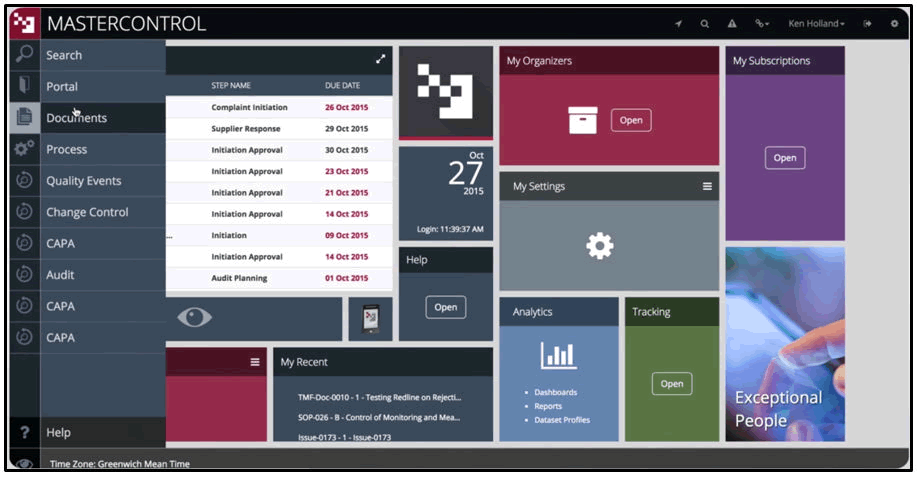
Figure 3. Dashboard interface of MasterControl software displaying document management, quality events, and compliance tracking modules.
Lorenz DocuBridge: Lorenz DocuBridge is a comprehensive software suite designed for managing and publishing regulatory submissions, such as electronic Common Technical Document (eCTD) submissions, in the pharmaceutical and life sciences industries. It supports various submission formats, including eCTD, NeeS, and even paper submissions, making it highly versatile for different regulatory requirements worldwide [9].
• The system comes in multiple configurations, such as DocuBridge ONE for single users, and DocuBridge FIVE for teams that require multi-user access and advanced Regulatory Information Management (RIM) capabilities. These versions allow organizations to choose a configuration that best fits their needs and scale.
• DocuBridge supports features like submission tracking, built-in validation through Lorenz eValidator, and integration with thirdparty applications, enhancing the flexibility and compliance of regulatory submissions. Additionally, its modular design allows companies to add functionalities like LORENZ iSubmit for document structuring and LORENZ docuRender for PDF rendering, which streamline document preparation and ensure regulatory compliance.
• This software is praised for helping reduce time-to-market by simplifying the regulatory submission process, improving team collaboration, and providing real-time updates on submission status and regulatory compliance. Its web-based access options also allow users to view, share, and review submissions remotely, a crucial feature for organizations with geographically dispersed teams (Figure 4).
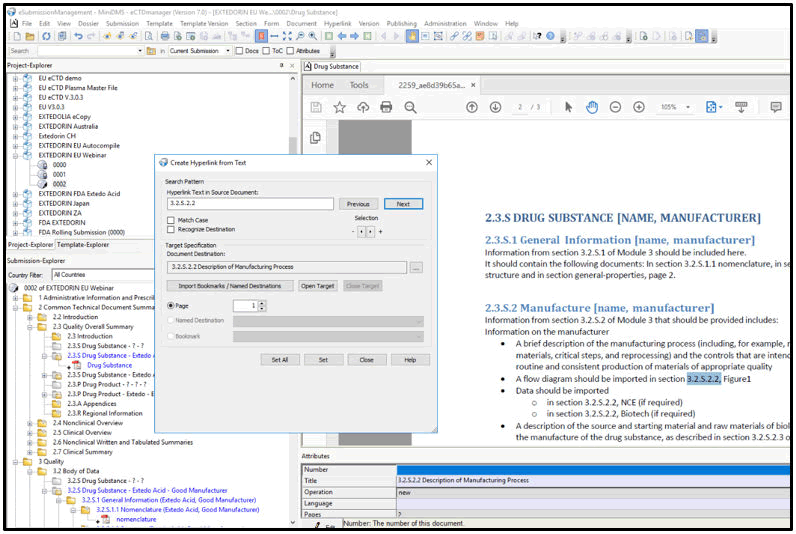
Figure 4. Screenshot of a document management software interface showing a structured outline on the left, a cover letter preview in the center, and document properties/settings panels on the right.
EXTEDO eCTD manager: EXTEDO's eCTD manager is a specialized electronic Common Technical Document (eCTD) software that enables life sciences organizations to streamline their regulatory submissions for pharmaceuticals, biologics, and other healthcare products. eCTDmanager is primarily designed to help companies comply with the eCTD standard for submitting regulatory information, as required by agencies like the FDA, EMA, and others worldwide.
• eCTDmanager allows users to prepare, manage, and validate submissions based on the eCTD standard. This involves organizing documents into a hierarchical format that meets regulatory requirements.
• The tool ensures that submissions are compliant with the International Council for Harmonisation (ICH) eCTD specifications, which have been adopted by multiple regulatory agencies.
• eCTDmanager supports different regional standards within the eCTD framework, making it adaptable to the requirements of various agencies such as the EMA (Europe), FDA (USA), PMDA (Japan), and Health Canada.
• Users can easily arrange and structure documents within the software, leveraging drag-and-drop functionality to organize modules and sections.
• eCTDmanager offers built-in validation tools that check for compliance with regional and technical specifications before submission, helping reduce the risk of rejection.
• The software handles document lifecycles, ensuring that any updates to documents or submissions are tracked and logged for regulatory transparency.
• Team members can collaborate on submissions in real time, reducing delays and improving coordination across departments.
• EXTEDO regularly updates eCTDmanager to ensure ongoing compliance with the latest regulatory standards and technical requirements.
• While there are several eCTD software options available, eCTDmanager is noted for its user-centered design, frequent compliance updates, and customer support from EXTEDO. It’s especially popular among small to medium-sized organizations looking for a cost-effective yet robust solution (Figure 5).
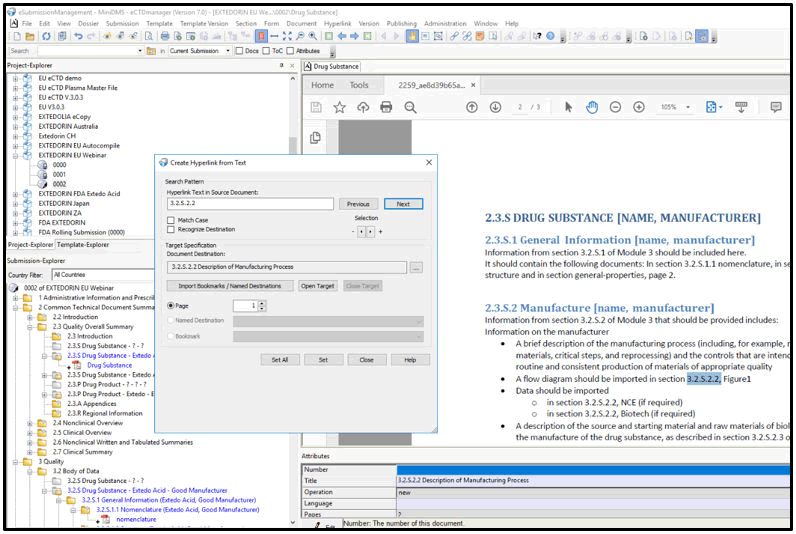
Figure 5. Screenshot of eCTDManager (v7.0) showing the “Create Hyperlink from Text” dialog, with section 3.2.S.2.2 selected in a Drug Substance document and the project submission structure displayed in the left panel.
Veeva R and D vault: Veeva R and D Vault eCTD is a software solution designed to streamline the regulatory submission process within life sciences organizations. Built on Veeva's cloud-based Vault platform, it allows companies to manage regulatory documents, authoring, submissions, and eCTD (electronic common technical document) requirements in a unified environment. This integration supports regulatory teams in efficiently preparing, reviewing, and publishing submissions for global health authorities, aiming to reduce time-to-market for new drugs and therapies.
• The software’s core functionalities include regulatory content management, document versioning, and automated workflows that align with industry standards for regulatory submissions. It features tools for tracking submission timelines, managing content approval, and ensuring compliance with eCTD and noneCTD requirements across different regulatory bodies.
• Additionally, Vault eCTD offers publishing capabilities that integrate with Health Authority Gateways, facilitating direct electronic submissions to agencies such as the FDA and EMA. By using Veeva Vault’s comprehensive ecosystem, companies can achieve faster, more transparent, and compliant submission processes.
• Another key benefit of Vault eCTD is its integration within Veeva's Development Cloud, which connects with other tools like Vault Quality and Vault Clinical, creating a seamless data and document flow across the drug development lifecycle. This integration helps unify regulatory, quality, and clinical data, providing crossfunctional insights and operational efficiency in R and D.
• Overall, Veeva Vault eCTD helps pharmaceutical and biotech companies reduce compliance risks and streamline regulatory workflows, enabling more efficient product lifecycle management and smoother interactions with regulatory bodies (Figure 6).
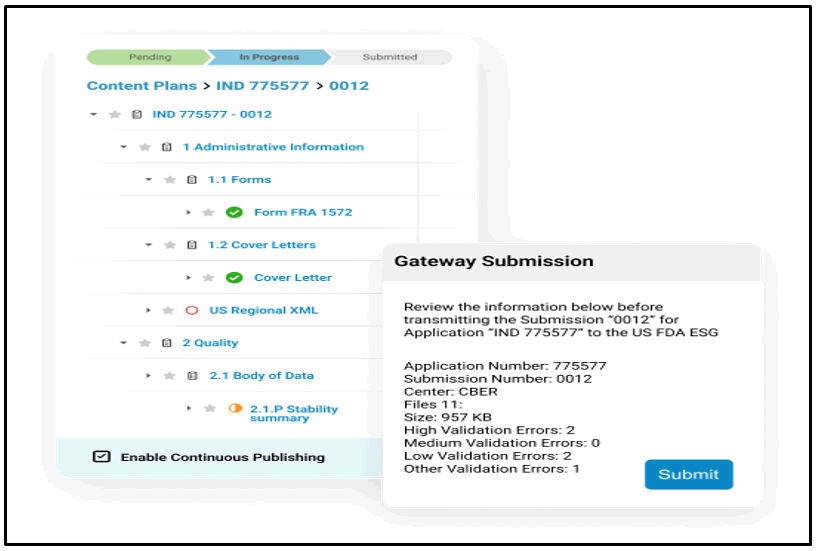
Figure 6. Regulatory submission dashboard displaying IND 775577–0012 content plan with validation summary and gateway submission review panel.
eWAY-eCTD solutions: eWAY-eCTD SOLUTIONS is a comprehensive, web-based software suite designed for regulatory submissions within the pharmaceutical, biopharmaceutical, healthcare, and life sciences industries. It facilitates the creation, management, and submission of documents in the electronic Common Technical Document (eCTD) format, as well as NeeS (noneCTD electronic submission) and paper formats.
• The software supports fully compliant eCTD submissions tailored for various regulatory agencies, including the FDA (U.S.), EMA (European Union), TGA (Australia), and other international bodies.
• It offers tools for managing Drug Master Files (DMF), Active Substance Master Files (ASMF), and submission types related to Investigational New Drug (IND) and New Drug Applications (NDA).
• The platform simplifies complex processes involved in submission preparation, allowing users to create, view, and organize their dossiers efficiently.
• It includes features like XML conversion, submission-level publishing, and structured product labelling, catering to different client needs across scales.
• The platform is tailored for clients ranging from large pharmaceutical enterprises to smaller biopharma and healthcare firms, supporting them with high-quality services and regulatory compliance.
Phlex Global: Phlex Global, now a part of PharmaLex, offers an advanced electronic Common Technical Document (eCTD) solution tailored for pharmaceutical regulatory submissions. eCTD software is integral to the regulatory submission process as it streamlines the compilation, review, and electronic submission of data to health authorities, in compliance with regulatory standards such as FDA, EMA, and other global health agencies.
• Phlex Global’s eCTD solution is designed to improve compliance, efficiency, and speed in regulatory submissions by automating processes that historically required substantial manual effort. Their software supports various document types, including ASMFs (Active Substance Master Files), DMFs (Drug Master Files), CTAs (Clinical Trial Applications), and INDs (Investigational New Drug applications). The system allows organizations to easily convert, compile, and submit required documentation electronically, aiding in the lifecycle management of regulatory filings.
• One of the major upcoming developments in eCTD is the transition from version 3.2.2 to eCTD v4.0, which is expected to significantly impact regulatory submission practices. This new version will enhance data management capabilities, interoperability, and usability of eCTD documents across different regulatory systems. Phlex Global has been involved in discussions and development to ensure their eCTD solution aligns with these evolving requirements.
• Phlex Global also provides services to help manage the entire submission lifecycle, offering tools to ensure data accuracy and meet regulatory deadlines. Their platform is part of a broader suite that includes tools like the Trial Master File (TMF) for clinical documentation management, which also benefits from AI-driven features for efficiency and compliance, making Phlex Global a comprehensive option for regulatory submission management (Figure 7).
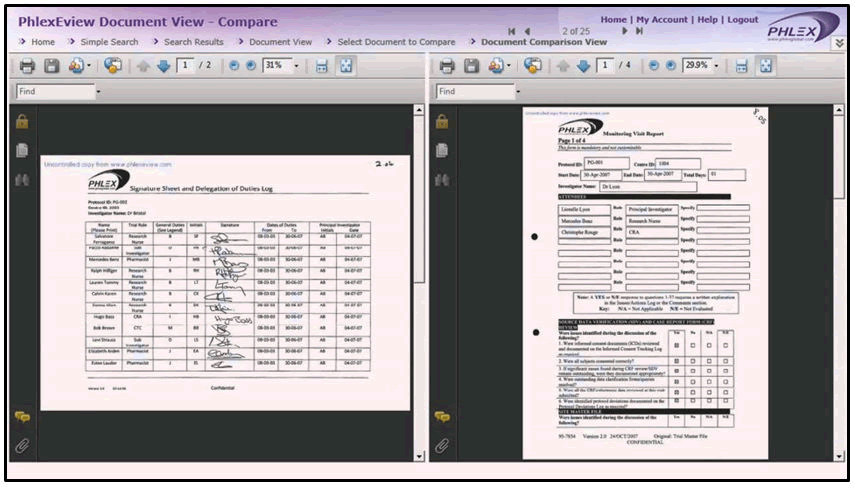
Figure 7. The image shows a side-by-side comparison of two documents in a document viewer, displaying a "Signature Sheet and Delegation of Duties Log" on the left and a "Monitoring visit report" on the right.
Freyr SUBMIT PRO: Freyr SUBMIT PRO is an advanced software solution designed for regulatory submissions in the life sciences sector, specifically focusing on the electronic Common Technical Document (eCTD) format. This tool streamlines the submission process, ensuring compliance with various regulatory standards while enhancing overall efficiency (Figure 8).
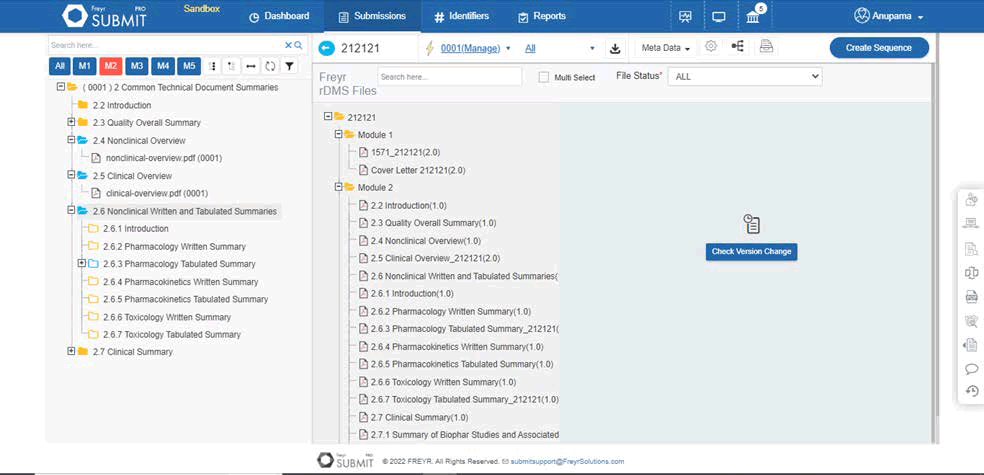
Figure 8. The image shows a document management interface, displaying a file structure with various sections and documents related to a clinical submission, including summaries and overviews.
• Freyr SUBMIT PRO offers a comprehensive document management system, enabling users to manage documents efficiently throughout the submission lifecycle (Figure 8).
• The software includes an inbuilt eCTD validator that checks submissions against the latest regulatory requirements, ensuring that all documents meet the necessary standards.
• Users can track their submissions in real-time, managing deadlines and monitoring the status of each regulatory application effectively.
• The platform provides tools to manage queries from health authorities, facilitating smooth communication and response management.
• Freyr SUBMIT PRO supports various submission formats beyond eCTD, including NeeS (Non-eCTD Electronic Submission) and ASEAN standards, making it versatile for global submissions.
• Designed for ease of use, the software offers intuitive navigation and functionalities that cater to users with varying levels of technical expertise.
• Comprehensive training is provided to users, along with ongoing technical support to assist with any challenges during the submission process.
• The platform emphasizes data security and compliance, ensuring that all user information and submitted documents are protected against unauthorized access.
• Freyr SUBMIT PRO offers flexible pricing options tailored to different organizational needs. Plans range from a starter pack for small teams to comprehensive packages for larger enterprises. For example, the SUBMIT PRO GEO plan starts at $3,750 per user per year.
• Freyr SUBMIT PRO is designed for global usage, compatible with the regulatory frameworks of various regions, including the U.S. FDA, Health Canada, the European Medicines Agency, and authorities in countries across Asia and the Middle East.
In conclusion, standardized formats such as the Common Technical Document (CTD) developed by the International Council for Harmonisation of Technical Requirements for pharmaceuticals for human use and the electronic Common Technical Document (eCTD) have significantly streamlined global drug regulatory submissions. These harmonized structures improve consistency, transparency, and review efficiency across agencies like the U.S. Food and Drug Administration and the European Medicines Agency. Supporting software solutions further enhance document management, validation, and lifecycle tracking, ensuring compliance, accuracy, and faster approval processes in an increasingly digital regulatory environment.
[Crossref] [Google Scholar] [PubMed]
[Crossref] [Google Scholar] [PubMed]
[Crossref] [Google Scholar] [PubMed]
[Crossref] [Google Scholar] [PubMed]
[Crossref] [Google Scholar] [PubMed]
[Crossref] [Google Scholar] [PubMed]
Pharmaceutical Regulatory Affairs: Open Access received 533 citations as per Google Scholar report