Opinion - (2025) Volume 14, Issue 4
Received: 03-Aug-2025, Manuscript No. jsp-26-182263;
Editor assigned: 05-Aug-2025, Pre QC No. P-182263;
Reviewed: 19-Aug-2025, QC No. Q-182263;
Revised: 21-Aug-2025, Manuscript No. R-182263;
Published:
30-Aug-2025
, DOI: 10.37421/2165-7939.2025.14.732
Citation: Collins, Andrew T.. ”Spine Surgery Rehabilitation: Path to Recovery.” J Spine 14 (2025):732.
Copyright: © 2025 Collins T. Andrew This is an open-access article distributed under the terms of the Creative Commons Attribution License, which permits unrestricted use, distribution and reproduction in any medium, provided the original author and source are credited.
Rehabilitation after spine surgery is a crucial phase that significantly influences patient outcomes, aiming to restore function, alleviate pain, and prevent further complications. It encompasses a multi-faceted approach designed to guide patients through their recovery journey. Early mobilization, a cornerstone of this process, is vital for preventing adverse events such as deep vein thrombosis and improving respiratory function. This involves a gradual increase in physical activity, starting with gentle movements and progressing to more demanding exercises as tolerated, under the guidance of the surgical team and physical therapists. The overarching goal is to facilitate a safe and efficient return to daily activities. [1] Targeted exercise programs are fundamental to regaining lost strength and flexibility following spinal procedures. These programs are individualized, taking into account the specific surgical intervention and the patient's unique needs. They typically focus on core stabilization, strengthening of back extensors, and enhancement of the range of motion. Careful selection and progressive implementation of exercises are paramount to avoiding re-injury and achieving optimal functional recovery. [2] Patient education serves as a foundational element for successful postoperative spine care. Providing patients with comprehensive information about their condition, the surgical procedure, expected recovery timelines, and guidelines for safe activities empowers them to actively engage in their rehabilitation. This includes detailed instruction on proper body mechanics, lifting techniques, posture, and strategies for managing everyday tasks, all of which contribute to a safer and more effective recovery process. [3] Pain management strategies are intrinsically linked to the success of rehabilitation efforts. A multimodal approach, combining pharmacological interventions, physical therapy modalities, and psychological support, is employed to effectively address pain. By controlling pain levels, patients are better able to participate in rehabilitation exercises and activities, thereby promoting a faster functional recovery and reducing the likelihood of developing chronic pain. [4] Physical therapy plays a pivotal role in postoperative spine care by guiding patients through a progressive exercise regimen. This regimen is designed to address specific deficits in strength, limitations in mobility, and persistent pain. A thorough assessment is conducted to identify individual issues and develop a personalized plan that incorporates therapeutic exercises, manual therapy techniques, and education on self-management strategies. [5] Psychological factors profoundly impact the recovery trajectory after spine surgery. Addressing patient concerns such as anxiety, depression, and fear of movement through psychological support and cognitive-behavioral techniques can significantly enhance engagement in rehabilitation and lead to improved overall outcomes. A holistic approach that acknowledges and prioritizes mental well-being is thus essential for comprehensive postoperative care. [6] The timing and intensity of rehabilitation interventions are critical determinants of success. While early initiation of gentle exercises and mobilization is generally recommended, followed by a progressive increase in load and complexity, the optimal timeline can be variable. This variation is influenced by factors such as the type of surgery performed, the presence of patient comorbidities, and individual healing capacities. [7] Returning to work and resuming daily activities represents a significant milestone in postoperative spine rehabilitation. A structured approach that gradually reintroduces physical demands, coupled with appropriate modifications and support, is essential for patients to safely reintegrate into their pre-surgical roles. This process often necessitates close collaboration among the patient, healthcare providers, and employers. [8] Long-term management strategies, including continued exercise and lifestyle modifications, are vital for sustaining the benefits achieved through spine surgery and preventing recurrence of symptoms. Patients are encouraged to adopt and maintain healthy habits, adhere to ongoing maintenance exercise programs, and remain diligent about their posture and lifting techniques to ensure sustained functional improvement. [9] The fundamental components of rehabilitation after spine surgery are focused on restoring function, minimizing pain, and preventing further injury. This involves early mobilization, targeted exercises aimed at enhancing strength and flexibility, comprehensive patient education on proper body mechanics, and effective pain management strategies. A well-designed rehabilitation program can markedly improve recovery speed, decrease complication rates, and elevate the long-term quality of life for individuals undergoing spinal procedures. [10]
Rehabilitation following spine surgery is indispensable for optimizing patient outcomes, with a primary focus on restoring functional capacity, mitigating pain, and preventing subsequent injuries. Key elements of this process include initiating early mobilization, implementing targeted exercises to enhance strength and flexibility, providing patient education on appropriate body mechanics, and employing effective strategies for pain management. A thoughtfully structured rehabilitation program has the potential to substantially accelerate recovery, reduce the incidence of complications, and improve the overall quality of life for individuals who have undergone spinal procedures. [1] Early post-operative mobilization is paramount in preventing potential complications such as deep vein thrombosis and in enhancing respiratory function. This involves a gradual escalation of physical activity, beginning with gentle movements and progressing to walking and specific exercises as the patient's tolerance allows, all under the supervision of the surgical team and physical therapists. The ultimate aim is to enable patients to return to their daily routines safely and efficiently. [2] Targeted exercise programs are fundamental for regaining strength and flexibility after undergoing spine surgery. These programs are meticulously tailored to the specific surgical procedure and the individual patient's unique requirements, with a strong emphasis on core stabilization, strengthening of the back extensor muscles, and improving the overall range of motion. The appropriate selection and progression of exercises are critical to preclude re-injury and achieve optimal functional recovery. [3] Patient education constitutes a cornerstone of successful postoperative spine care. By informing patients thoroughly about their condition, the surgical procedure undertaken, the anticipated recovery timeline, and guidelines for safe activity, they are empowered to actively participate in their rehabilitation process. This educational component includes detailed instruction on proper lifting techniques, maintaining good posture, and effective strategies for managing daily tasks, all of which contribute to a safer and more efficacious recovery. [4] Pain management strategies are integral to facilitating a patient's rehabilitation progress. This necessitates a multimodal approach that integrates pharmacological interventions, various physical therapy modalities, and essential psychological support to effectively manage pain. Adequate pain control allows patients to engage more robustly in their rehabilitation exercises and activities, thereby promoting a more rapid functional recovery and diminishing the risk of developing chronic pain syndromes. [5] The role of physical therapy in the postoperative management of spinal conditions is to guide patients through a systematically progressive exercise regimen. This regimen is designed to address identified strength deficits, mobility limitations, and discomfort. It commences with a comprehensive assessment to pinpoint specific issues, leading to the development of a personalized plan that incorporates therapeutic exercises, manual therapy techniques, and educational components on self-management strategies. [6] Psychological factors exert a significant influence on the recovery process following spine surgery. Addressing patient concerns such as anxiety, depression, and a fear of movement through dedicated psychological support and cognitive-behavioral techniques can markedly enhance their willingness to participate in rehabilitation and ultimately improve overall outcomes. A holistic approach that considers and supports mental well-being is therefore considered essential for comprehensive postoperative care. [7] The precise timing and appropriate intensity of rehabilitation interventions are critical factors for achieving successful outcomes. Generally, the early initiation of gentle exercises and mobilization is recommended, followed by a gradual and progressive increase in the intensity and complexity of these interventions. However, it is important to note that the optimal timeline can vary considerably depending on the specific type of surgery, the patient's existing comorbidities, and their individual capacity for healing. [8] Facilitating a patient's return to work and engagement in daily activities is a primary objective of postoperative spine rehabilitation. A well-structured approach that systematically reintroduces physical demands, complemented by appropriate modifications and supportive measures, assists patients in safely resuming their pre-surgical roles and responsibilities. This often requires effective collaboration between the patient, their healthcare providers, and their employers. [9] Long-term management strategies, which include ongoing exercise routines and sustained lifestyle modifications, are vital for preserving the positive outcomes achieved through spine surgery and for preventing the recurrence of symptoms. Patients are strongly encouraged to adopt and maintain healthy habits, continue with prescribed maintenance exercise programs, and remain vigilant regarding their posture and safe lifting techniques to ensure the long-term sustainability of their functional improvement. [10]
Spine surgery rehabilitation is critical for recovery, focusing on restoring function, reducing pain, and preventing injury. Key components include early mobilization to prevent complications, targeted exercises for strength and flexibility, patient education on body mechanics, and effective pain management. Physical therapy guides patients through personalized exercise regimens, while psychological support addresses mental well-being, which significantly impacts recovery. The timing and intensity of interventions are tailored to individual needs. A structured approach helps patients return to work and daily activities. Long-term adherence to exercise and healthy lifestyle modifications is vital for sustained improvement and preventing recurrence.
None
None
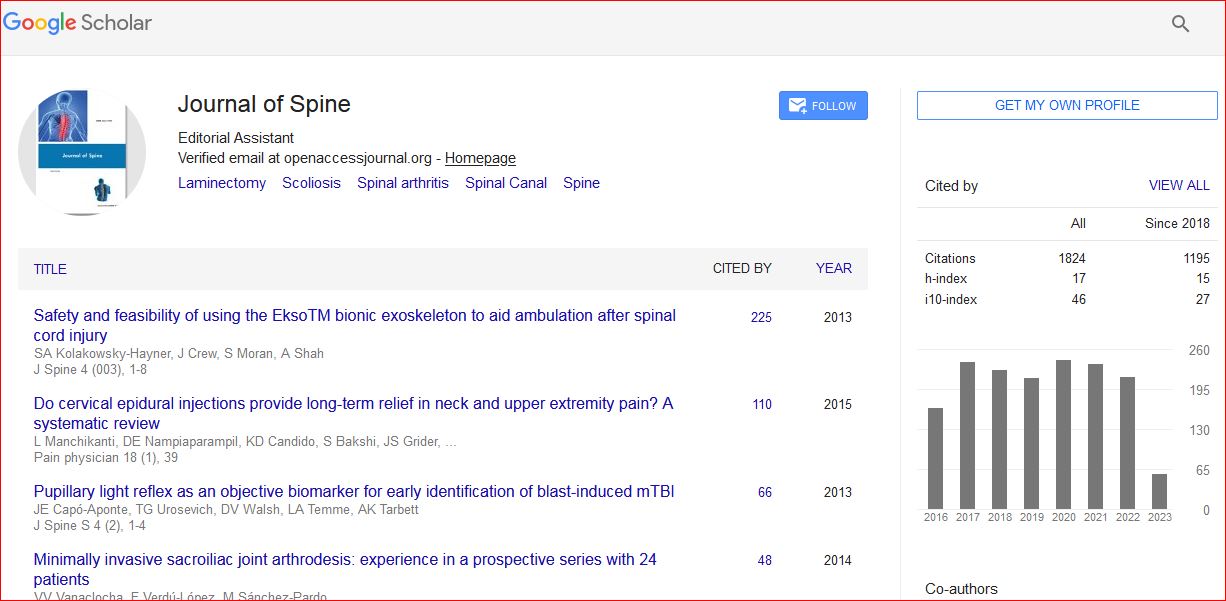
Journal of Spine received 2022 citations as per Google Scholar report