Opinion - (2025) Volume 9, Issue 4
Received: 01-Oct-2025, Manuscript No. jeh-26-180009;
Editor assigned: 03-Oct-2025, Pre QC No. P-180009;
Reviewed: 15-Oct-2025, QC No. Q-180009;
Revised: 22-Oct-2025, Manuscript No. R-180009;
Published:
29-Oct-2025
, DOI: 10.37421/2684-4923.2025.9.285
Citation: Kim, Daniel. ”Smart Waste Solutions for Urbanizing Developing Cities.” J Environ Hazard 09 (2025):285.
Copyright: © 2025 Kim D. This is an open-access article distributed under the terms of the Creative Commons Attribution License, which permits unrestricted use, distribution
and reproduction in any medium, provided the original author and source are credited.
Rapid urbanization is a pervasive global phenomenon, particularly pronounced in developing cities, presenting substantial challenges in waste management. These urban centers often grapple with the formation of waste accumulation hotspots, areas where solid waste congregates in unmanaged and detrimental ways. Understanding the root causes of these hotspots is paramount for developing effective mitigation strategies. This research delves into the critical factors contributing to these problematic accumulations, identifying inadequate infrastructure as a significant impediment. The lack of sufficient and appropriate facilities for waste collection, transportation, and processing directly fuels the uncontrolled dumping and accumulation of waste. This deficiency in infrastructure creates an environment where waste management systems are overwhelmed or non-existent, leading to visible and hazardous accumulations [1]. Limited public awareness regarding the consequences of improper waste disposal and the importance of waste segregation further exacerbates the issue. When citizens are not adequately informed about the environmental and health risks associated with accumulating waste, or the correct procedures for waste management, they are less likely to engage in responsible practices. This gap in understanding and knowledge contributes to indiscriminate dumping and a general disregard for waste management protocols, fostering the growth of hotspots [1].
Complementing the issues of infrastructure and awareness, ineffective policy implementation plays a crucial role in the persistence of waste accumulation hotspots. Even when policies and regulations are in place, their inadequate enforcement, lack of political will, or inherent design flaws can render them ineffective. This leads to a situation where rules are not followed, and accountability for improper waste disposal is minimal, allowing hotspots to persist and expand [1]. The study conducted in a rapidly growing Asian city, specifically Dhaka, Bangladesh, investigated the spatial distribution and influencing factors of waste accumulation hotspots. Utilizing advanced tools like Geographic Information Systems (GIS) and remote sensing technologies, this research pinpointed specific areas within the metropolis characterized by high waste density. The analysis then correlated these high-density zones with various urban characteristics, including the city's morphology, population density, and accessibility. These findings underscore the critical need for interventions precisely targeted at these identified zones to effectively mitigate the environmental and health risks they pose [2].
In a Latin American megacity, the research examined the socio-economic drivers underpinning waste accumulation hotspots, revealing a complex web of interconnected factors. A significant contributor identified is poverty, which often correlates with informal settlements that lack access to formal waste collection services. The lack of access to these essential services forces residents into informal disposal methods, leading to significant waste accumulations. The paper consequently proposes community-based waste management models and enhanced governance structures as indispensable elements for addressing these deeply entrenched issues [3]. In sub-Saharan African cities, the research explored the significant impact of policy and regulatory frameworks on the prevalence of waste accumulation hotspots. This investigation highlighted how weak enforcement mechanisms, coupled with corruption and a deficit in political will, critically amplify the waste management problem. The study strongly advocates for strengthening institutional capacity, fostering robust public-private partnerships, and actively integrating circular economy principles to cultivate more sustainable and resilient waste management systems within these urban environments [4].
The environmental and public health consequences stemming from unmanaged waste accumulation in urban centers are severe and far-reaching. This research systematically details how such accumulations lead to the contamination of vital soil and water sources, creating a breeding ground for disease vectors. Furthermore, the open burning of waste contributes significantly to air pollution. The study unequivocally emphasizes the urgent necessity for immediate and effective interventions to safeguard both human health and the integrity of the ecological systems within these urban areas [5]. To address the growing challenge of waste accumulation hotspots, the exploration of smart waste management systems has become increasingly vital. This research investigates the potential of leveraging advanced sensor technologies and sophisticated data analytics to revolutionize waste management practices. The findings demonstrate how real-time monitoring of waste levels can significantly optimize collection routes and improve the allocation of resources, ultimately leading to more efficient and responsive urban waste management operations [6]. Focusing on informal urban settlements, this study highlights the crucial role of community engagement strategies in mitigating waste accumulation hotspots. It underscores the efficacy of participatory approaches, emphasizing waste segregation at the source and the promotion of local waste entrepreneurship. These strategies not only improve waste management outcomes but also foster a sense of community ownership and responsibility, contributing to more sustainable solutions [7].
Finally, the significant contribution of informal waste pickers to urban waste management is examined, particularly in the context of addressing waste accumulation hotspots. This research emphasizes their vital role in recycling and waste diversion efforts. The study advocates for their formal integration into existing waste management systems, recognizing that this not only improves their livelihoods but also enhances the overall efficiency and effectiveness of urban waste management practices [8]. The pervasive issue of waste accumulation hotspots in developing cities stems from a complex interplay of factors, including inadequate infrastructure and limited public engagement. As urbanization accelerates, the strain on existing waste management systems intensifies, leading to the formation of these detrimental sites [1].
The lack of robust infrastructure, encompassing collection, transportation, and disposal facilities, directly contributes to the uncontrolled proliferation of waste in urban areas. This deficiency creates an environment where waste management becomes an insurmountable challenge for many municipalities [1]. Public awareness and participation are equally critical elements in the fight against waste accumulation. When citizens lack a thorough understanding of the environmental and health implications of improper waste disposal, or are not actively involved in waste management initiatives, the problem is compounded. This absence of informed public action can lead to indiscriminate dumping and a general disregard for waste segregation and disposal protocols, thereby fostering the growth of waste hotspots [1]. Ineffective policy implementation and enforcement further entrench the problem. Even well-intentioned waste management policies can falter if they are not adequately enforced or if there is a lack of political commitment to their execution. This can result in a regulatory vacuum where improper waste disposal continues unabated, allowing hotspots to persist and expand within urban landscapes [1]. A specific investigation into a rapidly developing Asian metropolis revealed the spatial patterns and contributing factors behind waste accumulation hotspots. By employing Geographic Information Systems (GIS) and remote sensing, researchers were able to precisely identify areas with high waste density. These findings were then analyzed in relation to urban characteristics such as morphology, population density, and accessibility, highlighting the necessity of tailored interventions in these critical zones to mitigate significant environmental and health risks [2].
In a Latin American context, socio-economic determinants were found to be central to the formation of waste accumulation hotspots. Key contributors included poverty and the prevalence of informal settlements, which often lack access to formal waste collection services. This absence of formal support compels residents to resort to informal disposal methods, leading to significant accumulations and presenting unique challenges that require community-based solutions and improved governance [3]. Research in sub-Saharan African cities underscored the profound influence of governance and policy on waste accumulation. Weak enforcement, corruption, and a lack of political will were identified as significant factors exacerbating the problem. The study consequently called for enhanced institutional capacity, the establishment of public-private partnerships, and the adoption of circular economy principles to create more sustainable waste management systems [4]. The environmental and public health ramifications of unmanaged waste accumulation are substantial. Studies have documented the contamination of soil and water resources, the proliferation of disease vectors, and the contribution to air pollution from open burning. These impacts underscore the critical need for immediate and effective interventions to protect both human health and ecological integrity in urban areas [5]. In response to these challenges, the application of smart waste management systems, utilizing advanced sensor technologies and data analytics, presents a promising avenue. This approach allows for real-time monitoring of waste levels, enabling the optimization of collection routes and resource allocation. Such technological integration can lead to more efficient and responsive urban waste management operations, directly addressing the formation of accumulation hotspots [6].
Community engagement strategies have proven particularly effective in informal urban settlements for mitigating waste accumulation hotspots. Participatory approaches, coupled with waste segregation at the source and the encouragement of local waste entrepreneurship, have shown significant success. These initiatives not only improve waste management outcomes but also cultivate a sense of community ownership and responsibility, crucial for long-term sustainability [7]. Furthermore, the role of informal waste pickers in managing urban waste deserves significant attention. Their contributions to recycling and waste diversion are substantial, and integrating them into formal waste management systems is advocated as a means to improve their livelihoods and enhance overall waste management efficiency. This integration is key to a more holistic approach to tackling waste accumulation [8]. Waste accumulation hotspots are a critical issue in rapidly urbanizing areas, stemming from a confluence of inadequate infrastructure, insufficient public awareness, and flawed policy implementation. These factors create environments where waste management systems are overwhelmed, leading to significant environmental and health hazards. Addressing this challenge requires integrated strategies that consider local contexts and promote active community participation for sustainable outcomes [1]. The proliferation of informal settlements in many developing cities, often driven by poverty, exacerbates the waste accumulation problem. Without access to formal waste collection services, residents resort to informal disposal methods, contributing to the formation of uncontrolled waste sites. Effective solutions must therefore address socio-economic disparities and enhance governance structures to provide essential services to these vulnerable populations [3].
Policy and regulatory frameworks play a pivotal role in managing waste accumulation. Weak enforcement, corruption, and a lack of political will can undermine even the most well-designed policies, perpetuating the problem in urban areas, particularly in sub-Saharan Africa. Strengthening institutional capacity and fostering public-private partnerships are essential steps towards more effective waste management [4]. The environmental and public health consequences of unmanaged waste are severe, including contamination of water sources, proliferation of disease vectors, and air pollution. These impacts highlight the urgent need for immediate and effective interventions to safeguard both human well-being and ecological integrity within urban centers [5]. Smart waste management systems, leveraging technologies like IoT and data analytics, offer innovative solutions for optimizing waste collection and resource allocation. Real-time monitoring of waste levels can lead to more efficient and responsive urban waste management, directly addressing the formation of accumulation hotspots [6]. Community-based approaches and waste segregation at the source are vital for successful waste management in informal settlements. These strategies, along with fostering local waste entrepreneurship, improve waste management outcomes and promote community ownership, leading to more sustainable practices [7].
The integration of informal waste pickers into formal waste management systems is crucial. Their significant contributions to recycling and waste diversion can be further enhanced, improving their livelihoods and the overall efficiency of urban waste management practices [8]. Waste-to-energy technologies also present a potential solution for reducing waste volume and mitigating accumulation hotspots. Evaluating the feasibility of various approaches is important for policymakers to select appropriate technologies for their specific urban contexts [9]. Understanding and influencing public perception and behavior are key to effective waste management. Assessing public awareness, attitudes, and practices related to waste disposal and recycling can help identify barriers and develop strategies for behavior change and increased participation [10]. Finally, the spatial analysis of waste accumulation hotspots, using tools like GIS, allows for the precise identification of problem areas and informs targeted interventions to mitigate environmental and health risks in rapidly developing urban environments [2].
Rapid urbanization presents a complex set of challenges for waste management, particularly in developing cities where the uncontrolled accumulation of solid waste forms significant hotspots. This research identifies several critical factors contributing to these problematic accumulations. Foremost among these is inadequate infrastructure; the lack of sufficient and appropriate facilities for waste collection, transportation, and final disposal directly fuels the uncontrolled dumping and accumulation of waste in urban areas. This deficiency creates an environment where existing waste management systems are frequently overwhelmed or entirely absent, leading to the visible and hazardous accumulation of waste materials [1]. Beyond infrastructural deficiencies, limited public awareness plays a substantial role in perpetuating waste accumulation hotspots. When citizens are not adequately informed about the environmental and health risks associated with improper waste disposal, or the importance of waste segregation and responsible waste management practices, they are less likely to engage in behaviors that mitigate the problem. This knowledge gap contributes to indiscriminate dumping and a general disregard for established waste management protocols, thus fostering the growth and expansion of waste hotspots [1].
Furthermore, ineffective policy implementation and enforcement represent a significant hurdle in addressing waste accumulation hotspots. Even when waste management policies and regulations are established, their impact can be severely diminished by inadequate enforcement mechanisms, a lack of political will, or inherent design flaws. This leads to a situation where rules are not consistently followed, and accountability for improper waste disposal remains low, allowing these problem areas to persist and grow within urban landscapes [1]. A specific study focused on a rapidly developing Asian metropolis, investigating the spatial distribution and influencing factors of waste accumulation hotspots. Employing advanced tools such as Geographic Information Systems (GIS) and remote sensing technologies, the research successfully pinpointed areas within the city characterized by high waste density. The analysis then correlated these identified high-density zones with various urban characteristics, including urban morphology, population density, and accessibility. These findings underscore the critical importance of implementing targeted interventions specifically within these identified hotspots to effectively mitigate the significant environmental and health risks they pose [2].
In a Latin American context, research delving into the socio-economic drivers behind waste accumulation hotspots revealed a complex interplay of interconnected factors. A significant contributor identified is poverty, which often correlates with the prevalence of informal settlements. These settlements frequently lack access to formal waste collection services, compelling residents to resort to informal disposal methods, which inevitably leads to substantial waste accumulations. The paper consequently proposes community-based waste management models and enhanced governance structures as indispensable elements for addressing these deeply entrenched socio-economic issues [3]. In the context of sub-Saharan African cities, an investigation into the role of governance and policy frameworks highlighted their significant impact on the management of solid waste accumulation hotspots. The research emphasized how weak enforcement of existing regulations, coupled with issues of corruption and a deficit in political will, critically exacerbate the waste management problem. Consequently, the study strongly advocates for strengthening institutional capacity, fostering robust public-private partnerships, and actively integrating circular economy principles to cultivate more sustainable and resilient waste management systems within these urban environments [4].
The environmental and public health consequences stemming from unmanaged waste accumulation in urban centers are severe and far-reaching. This research systematically details how such accumulations lead to the contamination of vital soil and water sources, creating breeding grounds for disease vectors. Furthermore, the practice of open burning of waste contributes significantly to air pollution within these areas. The study unequivocally emphasizes the urgent necessity for immediate and effective interventions to safeguard both human health and the integrity of the ecological systems within these urban settings [5]. To address the growing challenge of waste accumulation hotspots, the exploration and implementation of smart waste management systems have become increasingly vital. This research investigates the potential of leveraging advanced sensor technologies and sophisticated data analytics to revolutionize current waste management practices. The findings demonstrate how real-time monitoring of waste levels can significantly optimize collection routes and improve the allocation of resources, ultimately leading to more efficient and responsive urban waste management operations capable of tackling accumulation hotspots [6].
Focusing on informal urban settlements, this study highlights the crucial role of community engagement strategies in the mitigation of waste accumulation hotspots. It underscores the significant efficacy of participatory approaches, emphasizing practices such as waste segregation at the source and the promotion of local waste entrepreneurship. These combined strategies not only improve waste management outcomes but also foster a crucial sense of community ownership and responsibility, contributing to more sustainable and effective solutions [7]. Finally, the significant contribution of informal waste pickers to urban waste management is examined, particularly in the context of addressing waste accumulation hotspots. This research emphasizes their vital role in recycling and waste diversion efforts within urban environments. The study advocates for their formal integration into existing waste management systems, recognizing that this approach not only improves their livelihoods but also enhances the overall efficiency and effectiveness of urban waste management practices, contributing to the reduction of accumulation hotspots [8].
Rapid urbanization in developing cities creates significant waste accumulation hotspots due to inadequate infrastructure, limited public awareness, and ineffective policy implementation. Studies in Asia, Latin America, and Africa highlight socio-economic drivers, governance issues, and spatial correlations contributing to these hotspots. The environmental and health impacts, including contamination and disease vector proliferation, are severe, necessitating urgent interventions. Smart waste management systems utilizing advanced technology, community engagement strategies, and the integration of informal waste pickers offer promising solutions for efficient and sustainable waste management. Waste-to-energy technologies and public behavior change initiatives are also crucial components in addressing this global urban challenge.
None
None
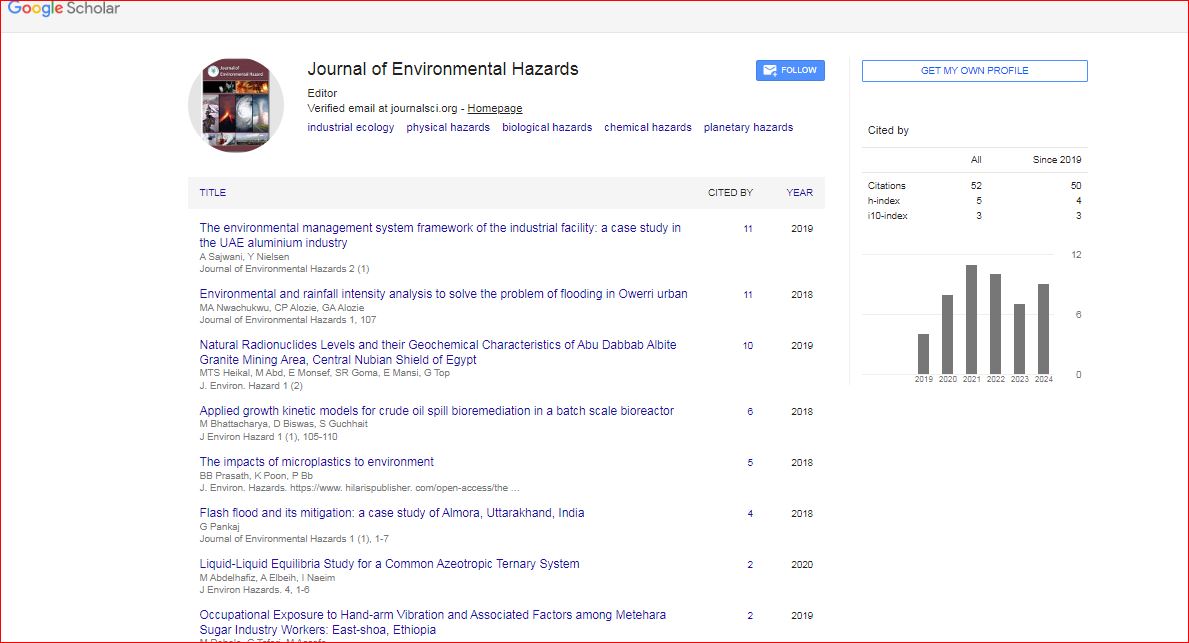
Journal of Environmental Hazards received 51 citations as per Google Scholar report