Perspective - (2026) Volume 16, Issue 1
Received: 01-Jan-2026
Editor assigned: 05-Jan-2026
Reviewed: 19-Jan-2026
Revised: 22-Jan-2026
Published:
29-Jan-2026
, DOI: 10.37421/2165-7920.2026.16.1707
Citation: Rossi, Isabella. ”Severe Dengue: Managing Multi-Organ Dysfunction.” J Clin Case Rep 16 (2026):1707.
Copyright: © 2026 Rossi I. This is an open-access article distributed under the terms of the Creative Commons Attribution License, which permits unrestricted use, distribution and reproduction in any medium, provided the original author and source are credited.
Severe dengue represents a critical global health challenge, characterized by its potential to cause severe multi-organ dysfunction. This complex presentation necessitates a thorough understanding of its underlying mechanisms and clinical manifestations. Recent case reports have highlighted the systemic nature of severe dengue, detailing instances where hepatic, renal, and hematological systems are compromised, underscoring the urgency for early recognition and aggressive management strategies [1].
The pathophysiology of dengue virus infection, particularly how it leads to severe disease and organ involvement, is an active area of research. Studies are exploring the intricate interplay between viral factors, host immune responses, and the subsequent impact on vital organs such as the liver, kidneys, and central nervous system, aiming to elucidate pathways crucial for developing targeted therapies [2].
Clinical investigations focusing on patients admitted with severe dengue requiring intensive care reveal a broad spectrum of organ dysfunction, including acute kidney injury, liver failure, and shock. These studies emphasize the indispensable role of a multidisciplinary approach and intensive supportive care in navigating the complexities of these critical cases [3].
Diagnostic challenges and therapeutic advancements in managing dengue hemorrhagic fever, especially in cases with severe complications like multi-organ dysfunction, are continuously being refined. Research is examining the utility of various laboratory markers and imaging techniques for early detection, alongside emerging treatment modalities that promise improved outcomes [4].
Meta-analyses are instrumental in synthesizing existing data to provide a comprehensive overview of the incidence and risk factors associated with multi-organ dysfunction in adult severe dengue patients. By identifying key predictors of organ failure, these analyses aid in risk stratification and the development of preventative strategies, crucial for public health interventions [5].
Clinical guidelines play a pivotal role in standardizing care for severe dengue, with a specific focus on the recognition and management of multi-organ dysfunction. These guidelines outline essential diagnostic criteria, fluid resuscitation strategies, organ-specific support, and the management of associated complications, aiming to enhance patient outcomes globally [6].
Immunological research delves into the complex immune responses in patients experiencing severe dengue with multi-organ failure. Investigations into cytokine profiles, T-cell activation, and antibody production provide critical insights into the pathogenesis of severe disease and may unlock potential targets for immunomodulatory therapies [7].
Neurological complications, such as encephalitis and encephalopathy, frequently arise in the context of severe dengue and multi-organ dysfunction. Understanding the clinical spectrum, diagnostic approaches, and management strategies for these neurological sequelae is vital for comprehensive patient care [8].
The management of dengue shock syndrome with multi-organ failure presents a significant therapeutic challenge. Retrospective analyses are crucial for evaluating the effectiveness of different fluid management strategies and vasopressor support, with the ultimate goal of defining optimal resuscitation protocols for this high-mortality condition [9].
Cardiovascular manifestations, including myocarditis and arrhythmias, are significant contributors to or consequences of multi-organ dysfunction in severe dengue. Recognizing the importance of cardiac monitoring and tailored management is paramount for improving the prognosis of patients with severe dengue [10].
Severe dengue presents a complex clinical picture often characterized by multi-organ dysfunction, posing significant challenges in diagnosis and management. Case reports detail critical scenarios involving hepatic, renal, and hematological compromise, underscoring the systemic impact of the virus and the imperative for prompt clinical intervention and meticulous monitoring of vital organ functions [1].
The intricate pathophysiology of dengue virus infection, leading to severe disease and widespread organ involvement, is a key focus of current research. Understanding the mechanisms by which viral factors and host immune responses interact to affect organs like the liver, kidneys, and central nervous system is fundamental for the development of effective therapeutic strategies [2].
Observational studies in intensive care settings highlight the diverse manifestations of organ dysfunction in severe dengue, encompassing acute kidney injury, liver failure, and shock. These clinical observations reinforce the necessity of a coordinated, multidisciplinary approach and robust supportive care for patients in critical condition [3].
Addressing the diagnostic hurdles and advancing therapeutic interventions for severe dengue with multi-organ dysfunction remains a priority. Research is exploring the efficacy of various laboratory markers and imaging modalities for early detection, alongside the evaluation of novel treatment approaches to mitigate severe complications [4].
Meta-analyses provide a crucial synthesized view of the epidemiological landscape of severe dengue, quantifying the incidence and identifying key risk factors for multi-organ dysfunction in adult populations. This evidence-based approach informs risk stratification and the design of preventative public health measures [5].
Established clinical guidelines offer a framework for the standardized management of severe dengue, with a particular emphasis on identifying and treating multi-organ dysfunction. These recommendations encompass diagnostic criteria, fluid resuscitation protocols, and organ-specific support to optimize patient care pathways [6].
The immunological underpinnings of severe dengue and its associated multi-organ failure are being investigated through detailed analyses of cytokine profiles and cellular immune responses. This research seeks to elucidate pathogenic mechanisms and identify potential targets for immunomodulatory therapies to alter disease trajectory [7].
Neurological sequelae, such as encephalitis and encephalopathy, are recognized complications of severe dengue that often accompany multi-organ dysfunction. A comprehensive understanding of their clinical presentation, diagnostic workup, and management strategies is essential for improving neurological outcomes [8].
The management of dengue shock syndrome, particularly when complicated by multi-organ failure, necessitates optimized resuscitation strategies. Retrospective analyses are employed to assess the impact of different fluid and vasopressor interventions, aiming to establish evidence-based protocols for resuscitation in this high-risk patient group [9].
Cardiovascular complications, including myocarditis and arrhythmias, can significantly exacerbate the severity of dengue illness and contribute to multi-organ dysfunction. Vigilant cardiac monitoring and appropriate management are integral to the care of patients with severe dengue, influencing overall prognosis [10].
Severe dengue is a critical illness characterized by multi-organ dysfunction affecting the liver, kidneys, and hematological system. Early recognition, aggressive fluid management, and close monitoring of vital organ function are crucial for improving patient outcomes. Research into the pathophysiology of dengue virus infection focuses on viral factors, host immune responses, and their impact on various organs, aiming to develop targeted therapies. Clinical studies emphasize the need for multidisciplinary approaches and intensive supportive care in managing patients with severe dengue. Diagnostic challenges are being addressed by exploring novel laboratory markers and imaging techniques, alongside emerging treatment modalities. Meta-analyses are vital for identifying risk factors and incidence rates of multi-organ dysfunction, informing preventative strategies. Clinical guidelines provide standardized recommendations for management, including fluid resuscitation and organ-specific support. Immunological research investigates cytokine profiles and cellular responses to identify therapeutic targets. Neurological and cardiovascular complications are significant concerns requiring specialized monitoring and management. Retrospective analyses aim to optimize fluid resuscitation and vasopressor support for dengue shock syndrome with multi-organ failure.
None
None
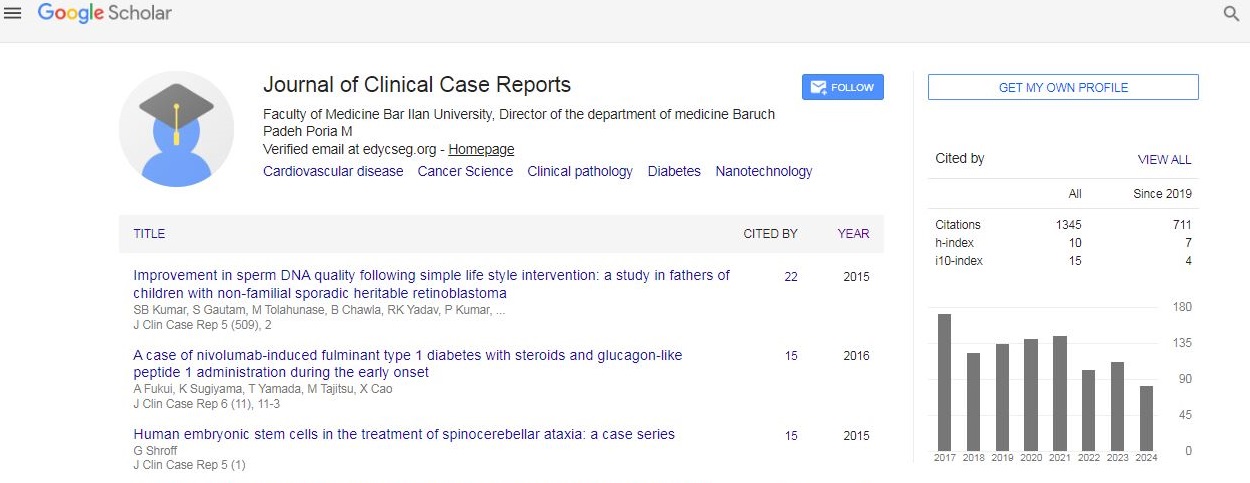
Journal of Clinical Case Reports received 1345 citations as per Google Scholar report