Perspective - (2025) Volume 9, Issue 4
Received: 01-Aug-2025, Manuscript No. cmcr-25-178312;
Editor assigned: 04-Aug-2025, Pre QC No. P-178312;
Reviewed: 18-Aug-2025, QC No. Q-178312;
Revised: 22-Aug-2025, Manuscript No. R-178312;
Published:
29-Aug-2025
, DOI: 10.37421/2684-4915.2025.9.389
Citation: Carter, Julian. ”Rescue Therapy: Critical Last-Resort Interventions.” Clin Med Case Rep 09 (2025):389.
Copyright: © 2025 Carter J. This is an open-access article distributed under the terms of the Creative Commons Attribution License, which permits unrestricted use, distribution and reproduction in any medium, provided the original author and source are credited.
When children experience refractory status epilepticus, standard anti-seizure medications often fall short. This review digs into current evidence on various rescue therapies for these tough cases, like ketamine, lidocaine, inhaled anesthetics, and even immunotherapy. What it really means is finding the best way to stop prolonged seizures quickly and safely in kids when first-line treatments just aren't cutting it [1].
This study looks at how effective budesonide-formoterol is as a rescue inhaler for children dealing with asthma. It's about seeing if this combination medication helps reduce symptoms and improve lung function when an asthma attack flares up, providing a better alternative for quick relief compared to traditional short-acting bronchodilators alone [2].
For patients with ulcerative colitis who haven't responded to other biologic treatments, ustekinumab is explored here as a rescue option. The idea is to understand its effectiveness and safety in these particularly challenging cases where other therapies have failed, offering insight into a new pathway for managing severe, treatment-resistant disease [3].
This systematic review and meta-analysis investigates using high-dose-rate brachytherapy as a salvage or rescue treatment for prostate cancer when it recurs after initial external beam radiotherapy. It's about evaluating whether this targeted radiation approach can effectively control localized recurrence and improve outcomes for men facing this difficult situation [4].
Here's the thing about daratumumab: this study examines its use as a last-resort or salvage therapy for patients with relapsed or refractory multiple myeloma, meaning their disease has come back or isn't responding to prior treatments. It sheds light on how effective this monoclonal antibody is in these difficult scenarios, offering hope for patients with limited options [5].
This real-world experience report focuses on gilteritinib as a rescue therapy for acute myeloid leukemia (AML) that has relapsed or become resistant to treatment, specifically in patients with FLT3 mutations. It provides practical insights into how well this targeted therapy works outside of clinical trials, showing its potential to change outcomes for a very challenging patient population [6].
When acute heart failure becomes critical, sometimes patients need a rescue. This article explores the use of inotropic agents in such situations. It's really about understanding how these medications can temporarily boost the heart's pumping ability to stabilize patients in severe cardiac distress, and the delicate balance involved in their application [7].
This systematic review looks at continuous renal replacement therapy (CRRT) as a rescue for children with septic shock that just won't respond to other treatments. What this means is investigating if CRRT can help stabilize these critically ill kids by cleaning their blood and managing fluid balance when their organs are failing due to severe infection [8].
This article explores the best strategies for rescue therapy in kidney transplant patients experiencing antibody-mediated rejection. It's about determining the most effective treatments when the body's immune system attacks the transplanted kidney, aiming to save the organ and ensure long-term transplant success [9].
When severe acute respiratory distress syndrome (ARDS) pushes patients to their limits, extracorporeal membrane oxygenation (ECMO) can be a rescue. This review goes over how ECMO acts as a life support system outside the body, giving the lungs a chance to rest and heal when conventional ventilation methods are simply not enough to maintain oxygenation [10].
Rescue therapy represents a critical intervention for conditions where initial standard treatments fail, aiming to prevent further deterioration and improve patient outcomes. For children experiencing refractory status epilepticus, standard anti-seizure medications often fall short. This necessitates a review of various rescue therapies, including ketamine, lidocaine, inhaled anesthetics, and even immunotherapy, to quickly and safely stop prolonged seizures when first-line treatments are insufficient [1]. Similarly, in pediatric asthma, exploring the effectiveness of budesonide-formoterol as a rescue inhaler is vital. This combination medication seeks to reduce symptoms and improve lung function during an asthma attack, offering a potentially superior alternative for rapid relief compared to traditional short-acting bronchodilators alone [2].
In the challenging field of oncology, rescue therapies offer renewed hope for patients facing treatment resistance or disease recurrence. For instance, daratumumab is examined as a last-resort therapy for patients with relapsed or refractory multiple myeloma, shedding light on its effectiveness for those with limited options [5]. Another significant area is acute myeloid leukemia (AML), particularly in patients with FLT3 mutations. Gilteritinib serves as a rescue therapy for AML that has relapsed or become resistant, providing practical insights into this targeted therapy's real-world efficacy [6]. Furthermore, high-dose-rate brachytherapy is being investigated as a salvage or rescue treatment for prostate cancer that recurs after initial external beam radiotherapy. This targeted radiation approach aims to effectively control localized recurrence and improve outcomes for men facing this difficult situation [4].
Beyond cancer, inflammatory and immune-mediated conditions also benefit from rescue approaches. Patients with ulcerative colitis who have not responded to other biologic treatments may find ustekinumab to be a viable rescue option. Understanding its effectiveness and safety in these particularly challenging cases, where other therapies have failed, provides insight into new pathways for managing severe, treatment-resistant disease [3]. In the complex realm of organ transplantation, optimal strategies for rescue therapy are crucial for kidney transplant patients experiencing antibody-mediated rejection. Determining the most effective treatments is paramount when the body's immune system attacks the transplanted kidney, as the goal is to save the organ and ensure long-term transplant success [9].
Critical care settings frequently call for advanced rescue interventions to stabilize patients in severe distress. When acute heart failure becomes critical, the use of inotropic agents is explored. These medications temporarily boost the heart's pumping ability, stabilizing patients in severe cardiac distress, requiring a delicate balance in their application [7]. For critically ill children with septic shock that remains unresponsive to conventional treatments, continuous renal replacement therapy (CRRT) is investigated as a rescue option. CRRT can help stabilize these children by cleaning their blood and managing fluid balance when severe infection leads to organ failure [8]. Lastly, in cases of severe acute respiratory distress syndrome (ARDS) where conventional ventilation is insufficient, extracorporeal membrane oxygenation (ECMO) acts as a critical life support system. This allows the lungs to rest and heal by maintaining oxygenation outside the body, offering a vital rescue for patients pushed to their limits [10].
Rescue therapy encompasses a broad range of critical medical interventions applied when standard treatments prove insufficient for severe or life-threatening conditions. In pediatric care, this includes specialized anti-seizure medications and immunotherapies for refractory status epilepticus, and budesonide-formoterol as an effective rescue inhaler for asthma. For various cancers, such as relapsed or refractory multiple myeloma and FLT3-mutated Acute Myeloid Leukemia, targeted monoclonal antibodies like daratumumab and specific kinase inhibitors like gilteritinib offer crucial salvage options. High-dose-rate brachytherapy is also used for recurrent prostate cancer, providing a targeted approach when external beam radiotherapy fails. Patients with inflammatory conditions like ulcerative colitis that are resistant to other biologics may benefit from ustekinumab. In critical care, Extracorporeal Membrane Oxygenation (ECMO) serves as life support for severe Acute Respiratory Distress Syndrome (ARDS), while Continuous Renal Replacement Therapy (CRRT) is a vital intervention for children with refractory septic shock. Acute heart failure patients in critical condition may require inotropic agents to temporarily boost cardiac function. Furthermore, complex scenarios like antibody-mediated rejection in kidney transplant recipients necessitate optimized rescue strategies to preserve organ function and ensure long-term transplant success. Across these diverse medical fields, the overarching goal of rescue therapy remains consistent: to provide rapid, effective, and often last-resort interventions to stabilize patients, mitigate disease progression, and improve outcomes where conventional approaches have reached their limits.
None
None
Indexed at, Google Scholar, Crossref
Indexed at, Google Scholar, Crossref
Indexed at, Google Scholar, Crossref
Indexed at, Google Scholar, Crossref
Indexed at, Google Scholar, Crossref
Indexed at, Google Scholar, Crossref
Indexed at, Google Scholar, Crossref
Indexed at, Google Scholar, Crossref
Indexed at, Google Scholar, Crossref
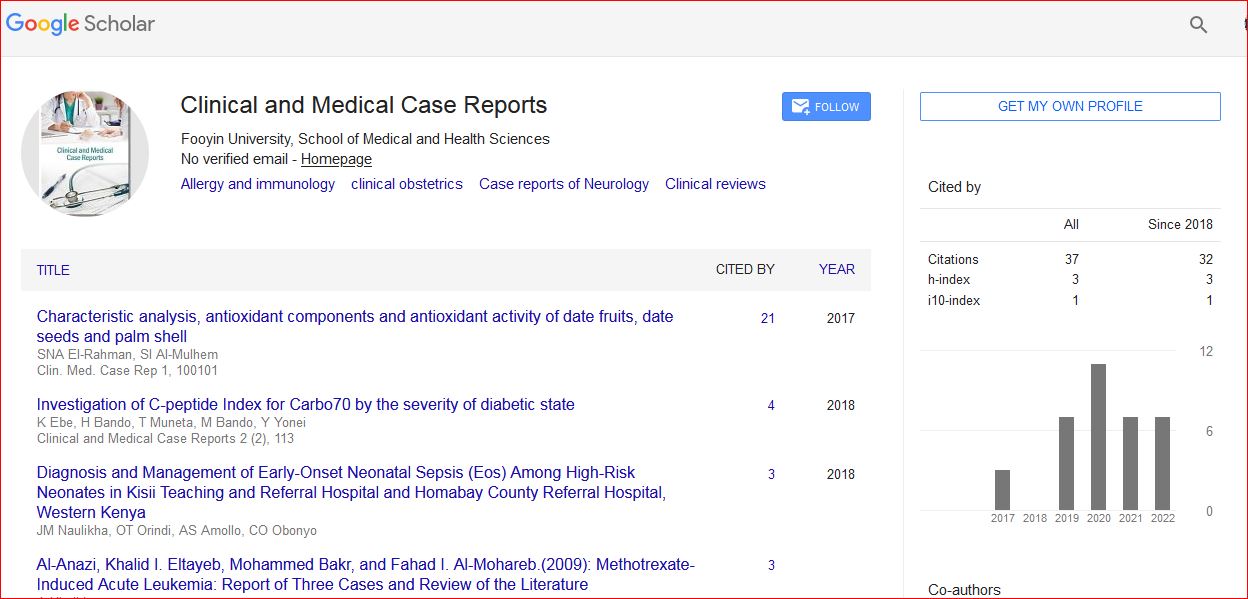
Clinical and Medical Case Reports received 53 citations as per Google Scholar report