Opinion - (2025) Volume 11, Issue 4
Received: 01-Jul-2025, Manuscript No. ldt-25-178439;
Editor assigned: 03-Jul-2025, Pre QC No. P-178439;
Reviewed: 17-Jul-2025, QC No. Q-178439;
Revised: 22-Jul-2025, Manuscript No. R-178439;
Published:
29-Jul-2025
, DOI: 10.37421/2472-1018.2025.11.315
Citation: Mansour, Khaled. ”Pulmonary Rehabilitation: Sustained Benefits Through Adherence And Support.” J Lung Dis Treat 11 (2025):315.
Copyright: © 2025 Mansour K. This is an open-access article distributed under the terms of the Creative Commons Attribution License, which permits unrestricted use, distribution and reproduction in any medium, provided the original author and source are credited.
Pulmonary rehabilitation is a cornerstone of managing chronic respiratory diseases, offering significant improvements in patient well-being. It is widely recognized for its ability to enhance exercise capacity, alleviate dyspnea, and elevate health-related quality of life. These benefits have been shown to be long-lasting, provided that patients maintain consistent adherence to prescribed exercise programs and engage in ongoing self-management strategies. A critical long-term advantage of pulmonary rehabilitation is its demonstrable impact on reducing hospital readmissions and overall healthcare utilization, thereby offering a cost-effective approach to chronic disease management [1].
The effectiveness of pulmonary rehabilitation is significantly amplified when exercise prescriptions are personalized to meet individual patient needs. Tailoring the intensity, duration, and specific types of exercises to a patient's unique circumstances and goals is paramount for fostering long-term adherence and achieving optimal functional improvements. Beyond the physical gains, the psychological benefits, including reductions in anxiety and depression, play a crucial role in sustaining patient engagement and adherence to rehabilitation programs [2].
The long-term sustainability of the positive effects derived from pulmonary rehabilitation is intrinsically linked to the availability of accessible community-based exercise programs and continuous support systems. The transition from supervised, clinical settings to unsupervised, independent exercise requires robust self-management skills that patients must develop. Multidisciplinary teams play an indispensable role in facilitating this critical transition, ensuring patients are well-equipped to continue their progress independently [3].
While the primary focus of pulmonary rehabilitation has often been on Chronic Obstructive Pulmonary Disease (COPD), its benefits extend to other chronic lung conditions, such as interstitial lung diseases. In these patient populations, pulmonary rehabilitation has been shown to significantly improve exercise tolerance and reduce breathlessness. Although the magnitude of improvement might differ from that observed in COPD, the benefits are still substantial and contribute to better long-term functional status and enhanced quality of life [4].
The integration of telehealth has emerged as a promising avenue for maintaining the long-term outcomes achieved through pulmonary rehabilitation. Remote monitoring technologies and virtual exercise sessions offer a practical means to support patient adherence and provide continuous guidance. This approach is particularly beneficial for individuals who face geographical barriers or mobility limitations, thereby extending the reach and impact of rehabilitation services [5].
A comprehensive meta-analysis has definitively confirmed that pulmonary rehabilitation yields significant and sustained improvements in both quality of life and exercise capacity for patients with COPD. These benefits have been observed to persist for at least 12 months post-intervention, firmly establishing pulmonary rehabilitation as a vital long-term management strategy. The findings underscore the importance of carefully considering program intensity and duration to maximize these long-term gains [6].
The application of pulmonary rehabilitation is also proving beneficial for patients undergoing treatment for lung cancer. Emerging evidence suggests that rehabilitation can effectively enhance physical function, mitigate debilitating fatigue, and improve overall quality of life. Crucially, some of these improvements demonstrate long-term persistence, aiding patients in their recovery process and in managing the adverse side effects associated with cancer treatments [7].
Beyond the clinical benefits, the cost-effectiveness of pulmonary rehabilitation programs has also been a subject of investigation. While initial investments are required, the long-term reduction in hospitalizations, emergency department visits, and the enhancement of functional capacity ultimately lead to significant cost savings for the healthcare system. This economic advantage further solidifies the value proposition of pulmonary rehabilitation [8].
Adherence to the exercise components of pulmonary rehabilitation plays a pivotal role in determining long-term outcomes. Studies examining this association reveal that patients who maintain regular exercise routines following their formal rehabilitation period demonstrate better sustained improvements in both exercise capacity and quality of life. This highlights the indispensable role of ongoing self-management support in achieving enduring benefits [9].
For patients with severe COPD, pulmonary rehabilitation offers substantial long-term advantages that extend beyond the initial treatment phase. Research in this area confirms sustained improvements in functional status and a significant reduction in the frequency of exacerbations. These findings reinforce the critical role of pulmonary rehabilitation as an integral component of comprehensive chronic care for individuals with advanced lung disease [10].
Pulmonary rehabilitation is a multidisciplinary intervention designed to improve the physical and psychological condition of people with chronic respiratory diseases. It has been established that this form of rehabilitation significantly enhances exercise capacity, reduces the sensation of breathlessness, and improves the overall health-related quality of life for individuals suffering from chronic respiratory conditions. The positive effects of pulmonary rehabilitation are not transient; they extend well into the long term, provided that patients remain committed to their exercise regimens and actively engage in self-management strategies. Furthermore, a significant long-term benefit observed is the reduction in hospital readmissions and the overall utilization of healthcare services, indicating its value in managing chronic disease costs [1].
A key factor in maximizing the efficacy of pulmonary rehabilitation is the personalization of exercise prescriptions. This involves carefully tailoring the intensity, duration, and nature of the exercises to align with each patient's unique physical capabilities, medical history, and personal goals. Such individualized approaches are essential for fostering sustained adherence to exercise programs and for achieving optimal improvements in functional capacity. The psychological benefits, including a reduction in symptoms of anxiety and depression, also contribute significantly to a patient's ability to remain engaged and committed to their rehabilitation journey [2].
The enduring benefits of pulmonary rehabilitation are significantly influenced by the availability of community-based exercise programs and the provision of ongoing support. Facilitating a smooth transition from supervised rehabilitation settings to independent exercise requires patients to develop strong self-management skills. In this regard, multidisciplinary teams are crucial in empowering patients with the necessary tools and confidence to manage their condition effectively long-term [3].
While COPD is a primary focus, pulmonary rehabilitation also offers significant benefits for patients with other severe lung conditions, such as interstitial lung diseases. Studies in this area indicate that rehabilitation can lead to notable improvements in exercise tolerance and a reduction in breathlessness. Although the degree of improvement may vary compared to COPD patients, the gains are still substantial and contribute to enhanced long-term functional status and an improved quality of life for these individuals [4].
Telehealth is emerging as a valuable tool for maintaining the long-term positive outcomes of pulmonary rehabilitation. Through remote monitoring and virtual exercise sessions, patients can receive continued support and guidance, which is particularly beneficial for those who face challenges related to distance or mobility. This technological integration holds promise for expanding the accessibility and impact of rehabilitation programs, ensuring that benefits can be sustained beyond traditional clinical settings [5].
Extensive meta-analyses have provided strong evidence that pulmonary rehabilitation leads to significant and sustained improvements in both the quality of life and exercise capacity of COPD patients. The positive effects have been shown to last for at least 12 months following the completion of the rehabilitation program, reinforcing its status as a critical long-term management strategy. The intensity and duration of the rehabilitation programs appear to be important determinants of these sustained benefits [6].
For patients battling lung cancer, pulmonary rehabilitation offers a range of benefits that can positively impact their treatment journey and long-term recovery. Research indicates that rehabilitation can enhance physical function, reduce feelings of fatigue, and improve overall quality of life. Importantly, some of these benefits demonstrate long-term persistence, assisting patients in their recovery from treatment-related side effects and in managing their condition more effectively [7].
An examination of the economic aspects of pulmonary rehabilitation reveals its cost-effectiveness. Although there is an initial financial outlay for rehabilitation programs, the long-term reduction in hospital admissions, emergency room visits, and the improvement in patients' functional capacity ultimately result in significant cost savings for the healthcare system. This economic advantage further supports the widespread implementation of pulmonary rehabilitation [8].
The degree to which patients adhere to the exercise components of pulmonary rehabilitation is a strong predictor of their long-term outcomes. Evidence suggests that patients who consistently engage in regular exercise after completing their formal rehabilitation program experience more sustained improvements in exercise capacity and quality of life. This underscores the vital importance of ongoing support for self-management to ensure lasting benefits [9].
In patients with severe COPD, pulmonary rehabilitation has demonstrated significant long-term benefits, particularly concerning functional status and the frequency of exacerbations. The sustained improvements in exercise tolerance and the marked reduction in hospitalizations highlight the indispensable role of pulmonary rehabilitation as a key element in the comprehensive chronic care management of these individuals [10].
Pulmonary rehabilitation significantly improves exercise capacity, reduces dyspnea, and enhances quality of life in patients with chronic respiratory diseases, with benefits extending long-term. Consistent adherence to exercise and self-management strategies are crucial for sustained outcomes, leading to reduced hospital readmissions and healthcare utilization. Personalized exercise prescriptions are essential for optimizing adherence and functional improvement, with psychological benefits also contributing to sustained engagement. The long-term sustainability of benefits is influenced by community-based programs and ongoing support, emphasizing the role of multidisciplinary teams in facilitating the transition to self-management. Telehealth shows promise for maintaining outcomes by supporting adherence and providing guidance. Improvements are observed in conditions beyond COPD, including interstitial lung diseases and lung cancer, aiding in recovery and management of side effects. Pulmonary rehabilitation is also cost-effective due to reduced hospitalizations and improved functional capacity. Adherence to exercise post-rehabilitation is strongly associated with sustained improvements.
None
None
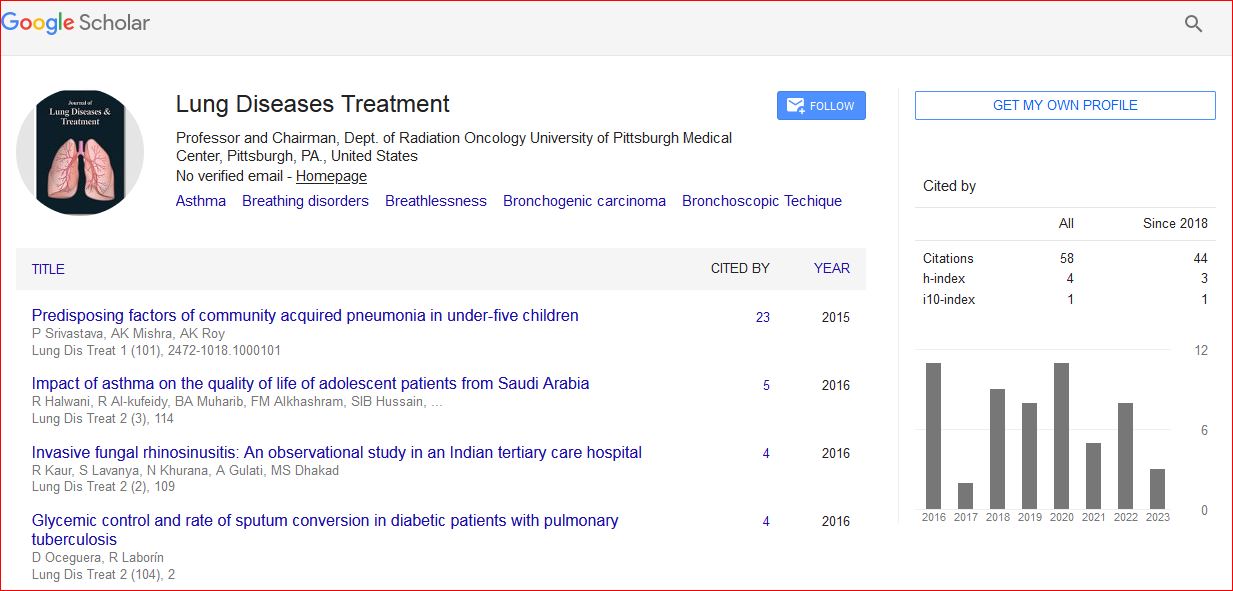
Journal of Lung Diseases & Treatment received 247 citations as per Google Scholar report