Short Communication - (2025) Volume 16, Issue 4
Received: 02-Nov-2025, Manuscript No. hgec-25-174753;
Editor assigned: 01-May-0010, Pre QC No. P-174753;
Reviewed: 19-Nov-2025, QC No. Q-174753;
Revised: 24-Nov-2025, Manuscript No. R-174753;
Published:
29-Nov-2025
, DOI: 10.37421/2161-0436.2025.16.307
Citation: DuMont, Claire. ”Prenatal Genetics: Technology, Ethics, and Counseling.” Human Genet Embryol 16 (2025):307.
Copyright: © 2025 DuMont C. This is an open-access article distributed under the terms of the Creative Commons Attribution License, which permits unrestricted use, distribution and reproduction in any medium, provided the original author and source are credited.
This article explains how non-invasive prenatal testing, or NIPT, is being used in clinical settings. It covers the evolution and current applications of NIPT, highlighting its effectiveness in screening for common chromosomal aneuploidies. Essentially, it details why NIPT has become a preferred initial screening method due to its high accuracy and safety compared to traditional invasive tests [1].
Here's the thing about prenatal genetic testing: it raises several ethical considerations. This paper delves into the moral complexities surrounding genetic screening and diagnostic tests, exploring issues like informed consent, the potential for unintended findings, and questions of reproductive autonomy. It really encourages a thoughtful approach to how these powerful technologies are integrated into healthcare [2].
This piece discusses prenatal whole-exome sequencing, outlining its capabilities and the hurdles involved. What this really means is that while it offers an unprecedented ability to detect genetic disorders, there are significant challenges concerning variant interpretation and managing incidental findings. It highlights both the promise and the practical difficulties of using such comprehensive genomic tools prenatally [3].
Let's break down the clinical utility of chromosomal microarray analysis in prenatal diagnosis. This meta-analysis confirms that microarray offers significant advantages over traditional karyotyping by detecting smaller chromosomal imbalances. It provides evidence for its increased diagnostic yield, making it an essential tool for identifying genetic conditions in fetuses with structural anomalies or unexplained ultrasound findings [4].
This comprehensive review focuses on the prenatal diagnosis of rare genetic diseases. It compiles current methods and strategies, explaining how advanced genetic technologies are increasingly effective in identifying conditions that were previously difficult to diagnose before birth. The paper really highlights the importance of early detection for better management and family counseling [5].
The paper explores the current advances in prenatal genetic diagnosis, tracing the shift from invasive to non-invasive techniques. It describes how methods like cell-free DNA analysis are transforming the field by offering safer and earlier screening options. It's a clear look at how technology is moving towards less risk and higher efficiency in diagnosing fetal conditions [6].
This review provides an overview of preimplantation genetic testing (PGT), a method used in assisted reproductive technologies. It clarifies the different types of PGT, like PGT-A for aneuploidy and PGT-M for monogenic diseases, and discusses their role in improving IVF outcomes. The article helps you understand the current scope and limitations of testing embryos before implantation [7].
The article reviews emerging technologies in prenatal diagnosis, particularly focusing on cell-free DNA sequencing. It explains how these innovations are expanding the range of detectable conditions and improving the accuracy of prenatal screening. Essentially, it's about looking beyond current methods to see what's next in non-invasive fetal genetic assessment [8].
This paper tackles the ethical challenges and implications of non-invasive prenatal testing (NIPT). It examines how the widespread adoption of NIPT brings forth new moral dilemmas, especially concerning the scope of conditions screened and the potential for increased anxiety or difficult reproductive decisions for parents. It emphasizes the need for careful ethical guidance as NIPT becomes more common [9].
This article discusses the evolving landscape of prenatal diagnosis and genetic counseling, especially with the advent of new genomic technologies. It highlights how these advanced tools provide more detailed genetic information, requiring genetic counselors to adapt their approach to explaining complex findings and supporting informed decision-making. It's really about the crucial interplay between technology and compassionate patient care in this rapidly changing field [10].
This field of prenatal genetic testing has undergone a significant transformation, with non-invasive prenatal testing (NIPT) emerging as a preferred initial screening method. NIPT effectively screens for common chromosomal aneuploidies due to its high accuracy and safety, a notable advancement over traditional invasive tests [1]. The general trend in prenatal genetic diagnosis is a decisive shift from invasive to non-invasive techniques. This includes methodologies such as cell-free DNA analysis, which are revolutionizing the field by providing safer and earlier screening options for fetal conditions, showcasing how technology is progressing towards reduced risk and increased efficiency [6]. What this really means is that emerging technologies, particularly cell-free DNA sequencing, are actively broadening the spectrum of detectable conditions and simultaneously enhancing the precision of prenatal screening, pushing beyond existing methods for non-invasive fetal genetic assessment [8].
Beyond initial screenings, more advanced diagnostic tools offer deeper insights. For instance, prenatal whole-exome sequencing, while offering an unprecedented ability to detect a wide array of genetic disorders, also presents significant challenges. These include the complexities of variant interpretation and the careful management of incidental findings, underscoring both the immense promise and practical difficulties of comprehensive genomic tools in a prenatal context [3]. Similarly, chromosomal microarray analysis has demonstrated substantial advantages over traditional karyotyping. This meta-analysis confirms its capability to detect smaller chromosomal imbalances, leading to an increased diagnostic yield. This makes it an indispensable tool for identifying genetic conditions in fetuses, especially those presenting with structural anomalies or unexplained ultrasound findings [4].
A focused effort is being made on the prenatal diagnosis of rare genetic diseases. Current methods and strategies are continually compiled, illustrating how advanced genetic technologies are becoming increasingly effective at identifying conditions that were previously challenging to diagnose before birth. This work highlights the critical importance of early detection, which paves the way for better management strategies and more effective family counseling [5]. Additionally, preimplantation genetic testing (PGT) plays a crucial role within assisted reproductive technologies. This comprehensive review clarifies the different types, such as PGT-A for aneuploidy screening and PGT-M for monogenic diseases, and thoroughly discusses their contribution to improving In Vitro Fertilization (IVF) outcomes. It provides a clear understanding of the current scope and limitations associated with testing embryos prior to implantation [7].
However, it's important to acknowledge that prenatal genetic testing invariably raises several profound ethical considerations. This involves grappling with moral complexities surrounding genetic screening and diagnostic tests, specifically addressing issues like securing informed consent, navigating the potential for unexpected or unintended findings, and exploring fundamental questions of reproductive autonomy. This perspective strongly encourages a thoughtful and deliberate approach to integrating these powerful technologies into routine healthcare practices [2]. Moreover, the widespread adoption of non-invasive prenatal testing (NIPT) itself introduces new moral dilemmas. These particularly concern the expanded scope of conditions that can be screened for and the potential for heightened parental anxiety or the need for difficult reproductive decisions. What this means is that as NIPT becomes more common, there's a growing need for robust and careful ethical guidance to navigate these complex scenarios [9].
Finally, the evolving landscape of prenatal diagnosis, profoundly shaped by the advent of new genomic technologies, places a significant emphasis on genetic counseling. These advanced tools offer increasingly detailed genetic information, which in turn requires genetic counselors to adapt their methodologies. They must be proficient in explaining complex genetic findings and adept at supporting families through informed decision-making processes. This really underscores the crucial interplay between technological advancement and compassionate patient care in this rapidly changing medical field [10].
Prenatal diagnosis has rapidly evolved with advanced genetic technologies offering new capabilities and ethical considerations. Non-invasive prenatal testing (NIPT) is now a preferred initial screening method for chromosomal aneuploidies, valued for its accuracy and safety compared to invasive tests [1]. This shift towards non-invasive approaches is a major trend, with methods like cell-free DNA analysis improving safety and efficiency in detecting fetal conditions [6, 8]. Beyond screening, comprehensive tools like prenatal whole-exome sequencing and chromosomal microarray analysis provide unprecedented detection of genetic disorders and smaller chromosomal imbalances, respectively, though they bring challenges in interpretation and incidental findings [3, 4]. These advancements also extend to identifying rare genetic diseases prenatally, underscoring the importance of early detection for management and counseling [5]. Preimplantation genetic testing (PGT) is crucial in assisted reproductive technologies, helping screen embryos for aneuploidy and monogenic diseases to improve IVF outcomes [7]. Here's the thing, these powerful technologies raise significant ethical questions regarding informed consent, unintended findings, and reproductive autonomy, particularly with the widespread use of NIPT [2, 9]. As genomic technologies advance, genetic counselors play a vital role in interpreting complex information and supporting families in their decision-making process, highlighting the interplay between technology and compassionate care [10].
None
None
Indexed at, Google Scholar, Crossref
Indexed at, Google Scholar, Crossref
Indexed at, Google Scholar, Crossref
Indexed at, Google Scholar, Crossref
Indexed at, Google Scholar, Crossref
Indexed at, Google Scholar, Crossref
Indexed at, Google Scholar, Crossref
Indexed at, Google Scholar, Crossref
Indexed at, Google Scholar, Crossref
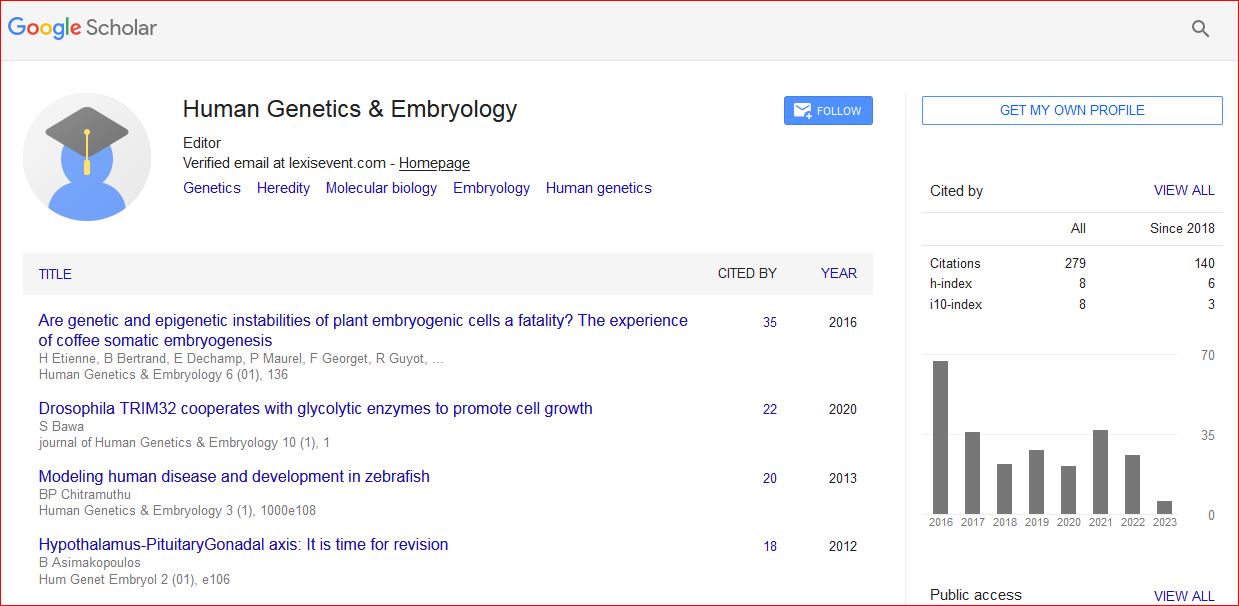
Human Genetics & Embryology received 309 citations as per Google Scholar report