Opinion - (2025) Volume 8, Issue 3
Received: 01-Sep-2025, Manuscript No. pollution-25-176604;
Editor assigned: 03-Sep-2005, Pre QC No. P-176604;
Reviewed: 17-Sep-2025, QC No. Q-176604;
Revised: 22-Sep-2025, Manuscript No. R-176604;
Published:
29-Sep-2025
, DOI: 10.37421/2684-4958.2025.8.383
Citation: Abdulaziz Abdulrahman A. AlMulla. ”Plastic & E-Waste: Global Crisis, Circular Solutions.” Pollution 08 (2025):383.
Copyright: © 2025 A. A. Abdulrahman Abdulaziz This is an open-access article distributed under the terms of the Creative Commons Attribution License, which permits
unrestricted use, distribution and reproduction in any medium, provided the original author and source are credited.
This review highlights how non-biodegradable plastic waste contributes significantly to microplastic pollution in urban areas. It discusses the various sources, transport pathways, and environmental impacts, emphasizing the urgent need for better waste management and mitigation strategies to reduce ecological and human health risks [1].
This paper explores the significant challenges faced in managing non-biodegradable waste, like plastics and electronic waste, emphasizing their environmental impact. It also points out various opportunities for sustainable solutions, including advanced recycling technologies, waste-to-energy conversion, and policy interventions to foster a circular economy [2].
This systematic review examines various policy tools designed to foster circular economy principles in managing plastic waste, a significant non-biodegradable component. It identifies effective legislative frameworks, economic incentives, and educational campaigns that can reduce plastic consumption, increase recycling rates, and promote sustainable product design globally [3].
This review details the severe environmental consequences of plastic pollution, a major non-biodegradable waste type, on marine ecosystems. It covers topics like plastic ingestion by marine life, entanglement, habitat degradation, and the role of microplastics in food webs, underscoring the urgency for global action to mitigate this growing crisis [4].
This comprehensive review explores the latest innovations in recycling technologies specifically for non-biodegradable plastic waste. It discusses mechanical recycling, chemical recycling (e.g., pyrolysis, gasification), and emerging techniques, highlighting their efficiency, economic viability, and environmental benefits in transforming waste into valuable resources [5].
This study investigates public perception and the inherent challenges in managing non-biodegradable plastic waste, particularly in developing countries like Pakistan. It reveals gaps in awareness, behavioral barriers, and infrastructural deficiencies, suggesting that effective public engagement and targeted educational programs are crucial for improving waste management practices [6].
This review provides a comprehensive overview of global e-waste management, a critical component of non-biodegradable waste. It outlines current generation rates, highlights the significant challenges in collection, recycling, and disposal, and proposes future perspectives for sustainable management, emphasizing resource recovery and minimizing environmental harm [7].
This systematic review synthesizes current research on the adverse health effects associated with exposure to non-biodegradable plastic pollution. It discusses how microplastics and associated chemicals can enter the human body through various pathways, potentially causing inflammation, oxidative stress, and endocrine disruption, highlighting a critical area for public health concern [8].
This review examines biodegradable polymers as promising alternatives to conventional, non-biodegradable plastics. It discusses various types of biodegradable materials, their properties, applications, and limitations, emphasizing their potential to alleviate plastic pollution while highlighting the need for rigorous testing and clear labeling to ensure genuine environmental benefits [9].
This review delves into the application of circular economy principles for managing non-biodegradable plastic waste. It outlines various strategies, including product redesign, extended producer responsibility, and innovative recycling, discussing their potential to reduce virgin material use and waste generation while addressing the systemic challenges in transitioning to a truly circular system [10].
Non-biodegradable plastic waste significantly contributes to microplastic pollution, particularly in urban environments. This pollution involves various sources and transport pathways, leading to substantial environmental impacts. Urgent needs exist for improved waste management and mitigation strategies to reduce both ecological damage and potential human health risks [1]. The pervasive nature of plastic pollution extends dramatically to marine ecosystems, detailing severe environmental consequences. These include the widespread ingestion of plastic by marine life, entanglement leading to injury or death, significant habitat degradation, and the integration of microplastics into marine food webs. Such widespread issues underscore the critical urgency for global action to mitigate this rapidly growing crisis [4]. Furthermore, the adverse health effects associated with exposure to non-biodegradable plastic pollution are a critical area of public health concern. Systematic reviews synthesize current research, discussing how microplastics and their associated chemicals can enter the human body through multiple pathways. This exposure potentially leads to serious conditions such as inflammation, oxidative stress, and endocrine disruption, emphasizing the direct human impact of this environmental problem [8].
The management of non-biodegradable waste materials, such as plastics and electronic waste, presents considerable challenges, but also offers significant opportunities for sustainable solutions. The environmental impact of these materials is a primary concern, driving the exploration of advanced recycling technologies, waste-to-energy conversion, and robust policy interventions. The ultimate goal here is to foster a comprehensive circular economy [2]. Focusing on a specific, yet critical, component of non-biodegradable waste, global e-waste management requires a detailed overview. This involves understanding current generation rates and acknowledging the substantial challenges inherent in its collection, recycling, and ultimate disposal. Looking forward, future perspectives propose sustainable management approaches that prioritize resource recovery and aim to minimize environmental harm, highlighting a strategic shift towards more responsible handling of electronic waste [7].
To address the vast challenge of plastic waste, effective policy tools are being designed to promote circular economy principles. A systematic review identifies a range of effective legislative frameworks, economic incentives, and educational campaigns. These tools aim to reduce plastic consumption, increase recycling rates, and promote sustainable product design on a global scale, thereby moving towards a more circular system [3]. However, the success of such initiatives often hinges on public engagement and understanding. Studies investigating public perception and inherent challenges in managing non-biodegradable plastic waste, particularly in developing countries, reveal significant gaps in awareness, behavioral barriers, and infrastructural deficiencies. This suggests that effective public engagement and targeted educational programs are crucial for substantially improving waste management practices [6]. In practice, applying circular economy principles for managing non-biodegradable plastic waste involves outlining various strategies. These include fundamental product redesign, implementing extended producer responsibility schemes, and utilizing innovative recycling techniques. These approaches aim to reduce virgin material use and overall waste generation, while simultaneously addressing the systemic challenges inherent in transitioning to a truly circular economy [10].
Recent advancements in recycling technologies offer significant promise for handling non-biodegradable plastic waste. Comprehensive reviews highlight innovations across various methods, including mechanical recycling, diverse chemical recycling processes like pyrolysis and gasification, and a range of emerging techniques. These advancements are critical for their demonstrated efficiency, economic viability, and the environmental benefits they provide in transforming waste materials into valuable resources [5]. Parallel to recycling efforts, biodegradable polymers are emerging as promising alternatives to conventional, non-biodegradable plastics. Reviews explore various types of these biodegradable materials, detailing their properties, diverse applications, and inherent limitations. The emphasis is on their considerable potential to alleviate plastic pollution, though the importance of rigorous testing and clear labeling is stressed to ensure these alternatives deliver genuine environmental benefits and do not inadvertently create new problems [9].
Non-biodegradable waste, predominantly plastic and e-waste, poses significant global environmental and public health challenges. Plastic waste contributes heavily to microplastic pollution in urban and marine environments, impacting ecosystems and entering food webs, with documented adverse health effects on humans, including inflammation and endocrine disruption. Managing these materials is complex, particularly in developing countries, due to issues with public perception, awareness gaps, and inadequate infrastructure. However, various opportunities exist for sustainable solutions. Policy tools that promote circular economy principles, such as legislative frameworks, economic incentives, and educational campaigns, are crucial for reducing consumption, increasing recycling, and encouraging sustainable product design. Innovations in recycling technologies, including mechanical and chemical methods, are transforming waste into valuable resources. Furthermore, the development and careful implementation of biodegradable polymers offer promising alternatives to conventional plastics, although thorough testing is essential to ensure their environmental benefits. Transitioning to a circular system involves strategies like product redesign and extended producer responsibility, addressing systemic challenges while aiming to minimize virgin material use and waste generation. Overall, effective waste management and mitigation strategies are urgently needed to address this growing crisis.
None
None
Indexed at, Google Scholar, Crossref
Indexed at, Google Scholar, Crossref
Indexed at, Google Scholar, Crossref
Indexed at, Google Scholar, Crossref
Indexed at, Google Scholar, Crossref
Indexed at, Google Scholar, Crossref
Indexed at, Google Scholar, Crossref
Indexed at, Google Scholar, Crossref
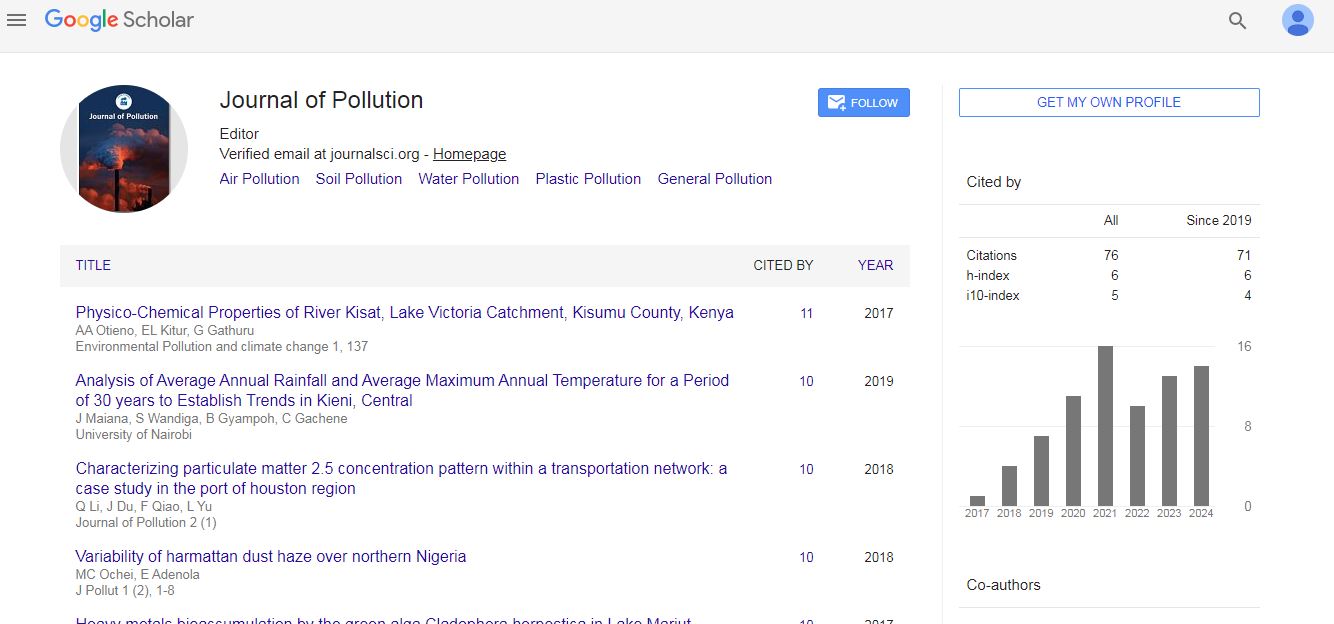
Journal of Pollution received 64 citations as per Google Scholar report