Perspective - (2025) Volume 13, Issue 3
Received: 01-Jun-2025, Manuscript No. JCMG-26-185539;
Editor assigned: 03-Jun-2025, Pre QC No. P-185539;
Reviewed: 17-Jun-2025, QC No. Q-185539;
Revised: 23-Jun-2025, Manuscript No. R-185539;
Published:
30-Jun-2025
, DOI: 10.37421/2472-128X.2025.13.342
Citation: Tanaka, Yuki. ”Pharmacogenomics: Personalizing Drug Therapy for Better Outcomes.” J Clin Med Genomics 13 (2025):342.
Copyright: © 2025 Tanaka Y. This is an open-access article distributed under the terms of the Creative Commons Attribution License, which permits unrestricted use, distribution and reproduction in any medium, provided the original author and source are credited.
Pharmacogenomics is fundamentally transforming the landscape of drug therapy by enabling the development and implementation of personalized treatment strategies. This revolutionary approach empowers clinicians to predict an individual's likely response to specific medications based on their unique genetic makeup, thereby optimizing treatment efficacy and substantially minimizing the incidence of adverse drug reactions. The impact of pharmacogenomics is particularly pronounced and evident in critical medical disciplines such as oncology, cardiology, and psychiatry, where its application has consistently led to demonstrably improved patient outcomes and fostered a more efficient and effective healthcare system overall [1].
The integration of pharmacogenomic testing into the standard framework of routine clinical care, however, is not without its inherent challenges. These obstacles encompass significant considerations such as the substantial cost associated with testing, issues related to equitable accessibility for all patient populations, and the pressing need for comprehensive and ongoing clinician education to ensure proper interpretation and application of the data. Despite these hurdles, the relentless pace of ongoing research and rapid technological advancements is actively paving the way for its broader and more widespread adoption across diverse clinical settings [2].
Within the realm of oncology, pharmacogenomics plays an absolutely crucial role in the precise selection of targeted therapies and the accurate prediction of patient response to various chemotherapy regimens. For instance, the identification of specific genetic mutations present within a patient's tumors can provide invaluable guidance for the appropriate use of highly targeted drugs like imatinib or trastuzumab, leading to significant improvements in treatment efficacy and a notable increase in patient survival rates [5].
Cardiovascular pharmacogenomics is of paramount importance in the optimization of anticoagulant therapy and the effective management of hypertension. The presence of specific genetic variations that significantly affect a patient's response to commonly prescribed medications such as clopidogrel or warfarin, for example, can directly inform and guide essential dosing strategies. This informed approach is critical for substantially reducing the risk of bleeding complications and ensuring the maintenance of therapeutic effectiveness [6].
The rapidly advancing field of psychiatric pharmacogenomics is now offering highly personalized and tailored treatment options for a range of complex mood disorders and schizophrenia. A deeper understanding of the intricate genetic influences that underpin neurotransmitter pathways within the brain can provide invaluable insights for predicting an individual patient's response to widely prescribed medications such as selective serotonin reuptake inhibitors (SSRIs), antipsychotics, and other psychotropic drugs, ultimately leading to more effective and better-tolerated treatments [7].
Specific and well-defined gene-drug interactions, particularly those involving the cytochrome P450 (CYP) enzyme family, have been subjected to extensive and rigorous study over many years. For example, documented variations in the activity of the CYP2D6 enzyme can profoundly alter the metabolic pathways of numerous antidepressants and opioids, frequently necessitating careful dose adjustments or the strategic selection of alternative drug options. This clearly highlights the profound practical utility of pharmacogenomics in the proactive prevention of both treatment failure and the occurrence of drug-induced toxicity [3].
The development and widespread availability of comprehensive pharmacogenomic panels represent a significant advancement, enabling the simultaneous testing of multiple genes that are known to be relevant to a wide variety of drug classes. This holistic and comprehensive testing approach serves to streamline the entire testing process and provides clinicians with a much broader and more detailed profile of a patient's inherent genetic predispositions, thereby facilitating more informed and evidence-based prescribing decisions across an extensive array of therapeutic areas [4].
Pharmacogenomic databases and sophisticated clinical decision support systems are now recognized as indispensable and crucial tools for the effective translation of complex genetic information into practical and actionable clinical recommendations. These invaluable resources function by meticulously integrating detailed genetic data with comprehensive drug information, thereby providing essential assistance to healthcare providers in making well-informed, evidence-based prescribing decisions that are tailored to the individual patient [8].
The ethical considerations that inherently surround the practice of pharmacogenomic testing, including the critical aspects of data privacy and the necessity of obtaining fully informed consent from patients, are of paramount importance. Ensuring equitable access to these advanced testing technologies and promoting the responsible and judicious use of an individual's genetic information are absolutely vital for fostering patient trust and for maximizing the profound potential benefits of personalized medicine for all diverse patient populations [9].
Looking towards the future, emerging directions in the field of pharmacogenomics involve the strategic expansion of genetic testing to encompass a much wider array of drug classes and the sophisticated incorporation of multi-omics data, such as epigenomics and proteomics. This integration of diverse biological data aims to facilitate the creation of even more precise and highly individualized therapeutic strategies. Continued dedication to rigorous research and ongoing innovation remains absolutely key to fully realizing the immense and transformative promise of pharmacogenomics in the ongoing evolution of healthcare [10].
Pharmacogenomics is revolutionizing drug therapy by enabling personalized treatment strategies. By analyzing an individual's genetic makeup, clinicians can predict how they will respond to specific medications, optimizing efficacy and minimizing adverse drug reactions. This approach is particularly impactful in areas like oncology, cardiology, and psychiatry, leading to improved patient outcomes and more efficient healthcare [1].
The integration of pharmacogenomic testing into routine clinical care faces challenges including cost, accessibility, and the need for clinician education. However, ongoing research and technological advancements are paving the way for broader adoption. Understanding genetic variations that influence drug metabolism and target engagement is key to unlocking the full potential of personalized medicine [2].
In oncology, pharmacogenomics plays a crucial role in selecting targeted therapies and predicting response to chemotherapy. For instance, identifying specific genetic mutations in tumors can guide the use of drugs like imatinib or trastuzumab, significantly improving treatment efficacy and patient survival rates [5].
Cardiovascular pharmacogenomics is essential for optimizing anticoagulant therapy and managing hypertension. Genetic variations affecting drug response to clopidogrel or warfarin, for example, can inform dosing strategies to reduce bleeding risk and ensure therapeutic effectiveness [6].
The field of psychiatric pharmacogenomics is rapidly advancing, offering personalized treatment options for mood disorders and schizophrenia. Understanding genetic influences on neurotransmitter pathways can help predict response to SSRIs, antipsychotics, and other psychotropic medications, leading to more effective and tolerable treatments [7].
Specific gene-drug interactions, such as those involving CYP enzymes, have been extensively studied. For example, variations in CYP2D6 can significantly alter the metabolism of many antidepressants and opioids, necessitating dose adjustments or alternative drug selection. This highlights the practical application of pharmacogenomics in preventing treatment failure and toxicity [3].
The development of pharmacogenomic panels allows for the simultaneous testing of multiple genes relevant to various drug classes. This comprehensive approach streamlines testing and provides clinicians with a broader profile of a patient's genetic predispositions, facilitating more informed prescribing decisions across a range of therapeutic areas [4].
Pharmacogenomic databases and clinical decision support systems are crucial tools for translating genetic information into actionable clinical recommendations. These resources integrate genetic data with drug information to assist healthcare providers in making evidence-based prescribing decisions [8].
The ethical considerations surrounding pharmacogenomic testing, including data privacy and informed consent, are paramount. Ensuring equitable access and responsible use of genetic information is vital for building trust and maximizing the benefits of personalized medicine for all patient populations [9].
Future directions in pharmacogenomics involve the expansion of testing to more drug classes and the incorporation of multi-omics data, such as epigenomics and proteomics, to create even more precise therapeutic strategies. Continuous research and innovation are key to realizing the full promise of pharmacogenomics in healthcare [10].
Pharmacogenomics revolutionizes drug therapy by personalizing treatments based on an individual's genetic makeup, aiming to optimize efficacy and reduce adverse reactions. While impactful in oncology, cardiology, and psychiatry, its clinical integration faces challenges like cost and education. However, research and technology are advancing its adoption. Specific gene-drug interactions, especially involving CYP enzymes, are well-studied, guiding dose adjustments for medications like antidepressants and opioids. Comprehensive testing panels and clinical decision support systems aid clinicians in making informed prescribing choices. Ethical considerations regarding data privacy and access are crucial for trust and equitable benefits. Future directions include expanding testing to more drug classes and incorporating multi-omics data for even greater precision in therapeutic strategies.
None
None
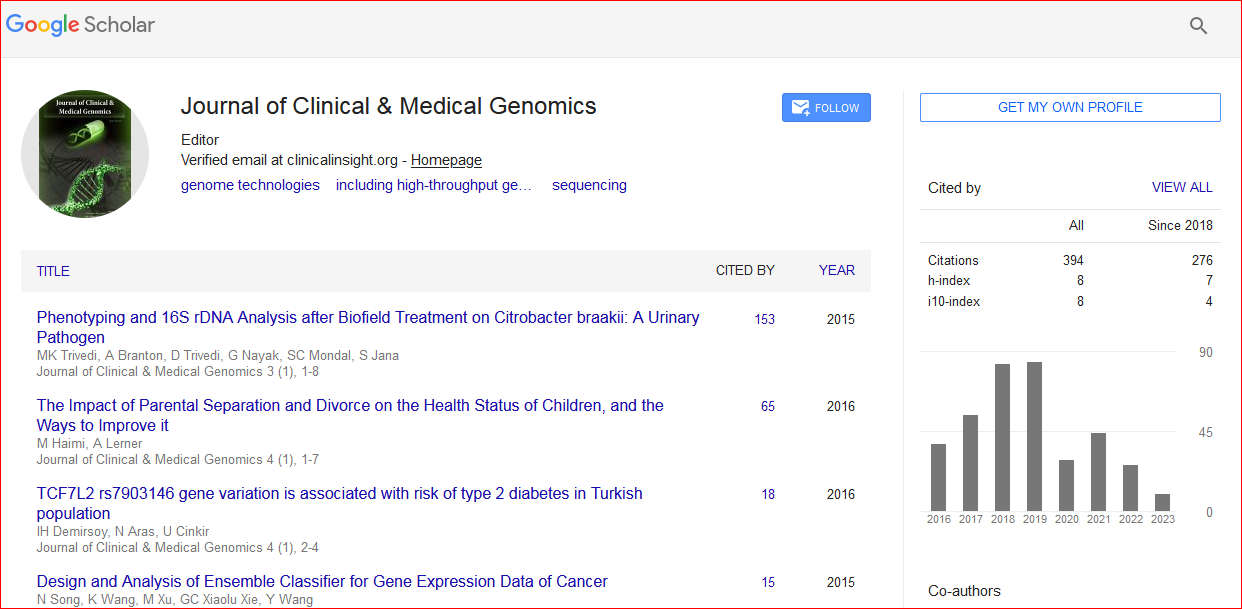
Journal of Clinical & Medical Genomics received 391 citations as per Google Scholar report