Perspective - (2025) Volume 10, Issue 5
Received: 01-Sep-2025, Manuscript No. JPNM-26-185760;
Editor assigned: 03-Sep-2025, Pre QC No. P-185760;
Reviewed: 17-Sep-2025, QC No. Q-185760;
Revised: 22-Sep-2025, Manuscript No. R-185760;
Published:
29-Sep-2025
, DOI: 10.37421/2472-100X.2025.10.363
Citation: Petrov, Viktor. ”Pediatric Neuropathy: Causes, Diagnosis, and Treatment.” J Pediatr Neurol Med 10 (2025):363.
Copyright: © 2025 Petrov V. This is an open-access article distributed under the terms of the Creative Commons Attribution License, which permits unrestricted use, distribution and reproduction in any medium, provided the original author and source are credited.
Pediatric neuropathy represents a complex spectrum of disorders affecting the peripheral nervous system in children, manifesting through diverse clinical presentations including muscle weakness, diminished sensation, and pain [1].
Guillain-Barré syndrome (GBS) is a significant cause of acute inflammatory demyelinating polyneuropathy in pediatric populations, characterized by a rapid onset of limb weakness and sensory disturbances, often following an infection [2].
Diabetic neuropathy, a common complication of diabetes mellitus in children and adolescents, primarily presents as distal symmetric polyneuropathy with sensory symptoms and potential motor involvement, emphasizing the need for stringent glycemic control [3].
Beyond diabetes, a range of metabolic neuropathies stemming from rare genetic disorders affecting amino acid or lipid metabolism can lead to peripheral nerve damage in children, underscoring the importance of early metabolic screening and intervention [4].
Charcot-Marie-Tooth disease (CMT) constitutes a group of inherited peripheral neuropathies characterized by progressive distal muscle weakness and sensory deficits, with various genetic subtypes impacting pediatric patients and necessitating symptomatic management and supportive therapies [5].
Toxic neuropathies in children can be attributed to exposures such as certain medications, environmental agents, or heavy metals, with chemotherapeutic agents being a notable iatrogenic cause requiring identification and removal of the causative agent [6].
Abnormalities in myelin protein structure or function can result in diverse forms of pediatric neuropathy, stemming from genetic mutations that impair myelin production or maintenance, leading to reduced nerve conduction velocities and functional deficits [7].
Inflammatory neuropathies, including multifocal motor neuropathy (MMN), can emerge in childhood, presenting as progressive, asymmetric limb weakness, often driven by an autoimmune response targeting motor axons and responsive to treatments like intravenous immunoglobulin (IVIg) [8].
The diagnostic journey for children with rare neuropathies is frequently protracted and complex, though advancements in genetic sequencing technologies are significantly enhancing the ability to identify causative mutations and expedite diagnoses [9].
Rehabilitation is an indispensable component of pediatric neuropathy management, with multidisciplinary teams collaborating to optimize motor function, balance, and mobility through individualized treatment plans tailored to each child's specific needs [10].
Pediatric neuropathy encompasses a broad array of conditions impacting the peripheral nervous system in young individuals, leading to a variety of symptoms such as weakness, sensory alterations, and pain, with an etiology that spans genetic disorders, metabolic disturbances, autoimmune conditions, and toxic exposures [1].
Guillain-Barré syndrome (GBS) is recognized as an acute inflammatory demyelinating polyneuropathy that can affect children, typically presenting with a swift escalation of weakness and sensory impairments. The underlying pathophysiology involves an autoimmune reaction against peripheral nerve components, often triggered by antecedent infections, with treatment strategies including IVIg and plasma exchange [2].
Diabetic neuropathy presents as a significant complication of type 1 and type 2 diabetes in pediatric patients, primarily manifesting as distal symmetric polyneuropathy characterized by sensory symptoms like burning, tingling, and numbness, and potentially progressing to motor weakness. Effective glycemic control is paramount for prevention and slowing its progression, complemented by pharmacologic management for symptom relief [3].
Metabolic neuropathies in children extend beyond diabetes and include a spectrum of rare genetic disorders affecting amino acid or lipid metabolism, which can precipitate peripheral nerve damage. Early diagnosis through newborn screening and comprehensive metabolic profiling is crucial for prompt intervention and the avoidance of severe neurological sequelae [4].
Charcot-Marie-Tooth disease (CMT) represents a category of inherited peripheral nerve disorders distinguished by progressive distal muscle weakness and sensory impairment. Numerous genetic subtypes exist, exhibiting varying severity and inheritance patterns, and impacting children. Current management primarily focuses on symptomatic relief, physical therapy, and orthopedic interventions to address deformities and gait issues [5].
Toxic neuropathies in the pediatric population can originate from exposure to certain medications, environmental toxins, or heavy metals. Chemotherapeutic agents are a frequent iatrogenic source, inducing sensory and motor deficits. Management centers on the identification and cessation of the offending agent, coupled with supportive care and rehabilitation [6].
Abnormalities in myelin protein structure or production can result in various forms of pediatric neuropathy. Genetic mutations that compromise myelin synthesis or maintenance lead to reduced nerve conduction velocities and substantial neurological dysfunction. Ongoing research aims to develop therapies that promote myelin repair or regeneration [7].
Inflammatory neuropathies, such as multifocal motor neuropathy (MMN), can manifest in childhood, presenting with progressive, asymmetric limb weakness often without accompanying sensory loss. This condition is believed to be an autoimmune disorder targeting motor axons, and treatment with IVIg frequently leads to improvements in strength and function [8].
The diagnostic pathway for children with rare neuropathies can be exceptionally lengthy and intricate. However, significant progress in genetic sequencing technologies, including whole exome and whole genome sequencing, has greatly improved the identification of causative mutations, thereby facilitating earlier and more precise diagnoses [9].
Rehabilitation is integral to the management of pediatric neuropathy, with a focus on preserving and enhancing motor function, balance, and mobility. Multidisciplinary teams, comprising physical therapists, occupational therapists, and orthotists, collaborate to formulate personalized treatment plans designed to meet the specific requirements of each child [10].
Pediatric neuropathy encompasses diverse conditions affecting children's peripheral nervous systems, causing symptoms like weakness and pain. Causes are varied, including genetic disorders such as Charcot-Marie-Tooth disease, metabolic conditions like diabetes, autoimmune diseases including Guillain-Barré syndrome, and toxic exposures. Diagnosis involves clinical examination, nerve conduction studies, electromyography, and genetic testing. Treatment is multifaceted, aiming to address the underlying cause, manage symptoms, and improve function through therapies like physical and occupational therapy. Advances in genetic sequencing are aiding in earlier and more accurate diagnoses. Rehabilitation plays a crucial role in managing motor function and mobility. Management strategies are tailored to the specific neuropathy and individual needs of the child.
None
None
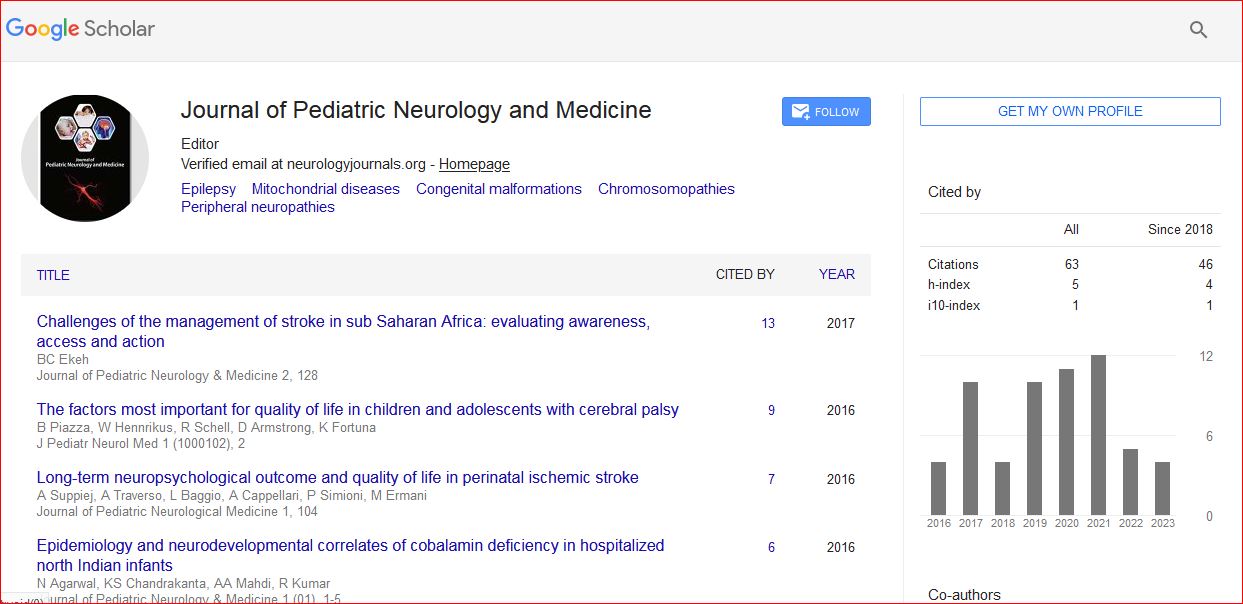
Journal of Pediatric Neurology and Medicine received 68 citations as per Google Scholar report