Short Communication - (2025) Volume 14, Issue 6
Received: 31-Oct-2025, Manuscript No. jio-26-184843;
Editor assigned: 03-Nov-2025, Pre QC No. P-184843;
Reviewed: 17-Nov-2025, QC No. Q-184843;
Revised: 21-Nov-2025, Manuscript No. R-184843;
Published:
28-Nov-2025
, DOI: DOI: 10.37421/2329-6771.2025.14.592
Citation: Foster, Benjamin. ”Patient Perspective: Embracing Integrative Cancer Care.” J Integr Onco 14 (2025):592.
Copyright: © 2025 Foster B. This is an open-access article distributed under the terms of the Creative Commons Attribution License, which permits unrestricted use, distribution and reproduction in any medium, provided the original author and source are credited.
The landscape of cancer care is increasingly embracing integrative approaches, aiming to enhance patient well-being alongside conventional treatments. Understanding how patients perceive and experience these integrative strategies is paramount to their successful implementation. Eleanor Vance and colleagues explored patient perceptions of integrative oncology, highlighting the critical roles of patient education, transparent communication regarding the integration of conventional and complementary therapies, and the healthcare team's efforts in building trust and fostering comprehension. Their findings underscore the necessity of a patient-centered strategy for optimizing the benefits of integrative oncology. [1] Further investigation into the patient perspective reveals specific barriers and facilitators influencing the adoption of integrative cancer care. Research by Sophia Lee and associates identified a lack of clear information, concerns about treatment efficacy, and challenges in integrating these therapies with conventional medicine as significant impediments. Conversely, positive patient encounters, strong endorsements from physicians, and the perceived enhancement of quality of life emerged as crucial factors promoting acceptance and sustained engagement with integrative approaches. [2] The lived experiences of patients undergoing integrative care offer valuable insights into their satisfaction and expectations. Emily Carter and her team's phenomenological inquiry emphasized the significance of holistic care, which extends to emotional support and symptom management in conjunction with medical treatment. Patients reported greater satisfaction when they viewed integrative therapies as complementary to, rather than a replacement for, standard medical care. [3] A systematic review by Daniel Evans and colleagues synthesized existing evidence on patient-reported outcomes in integrative oncology. While many patients reported positive outcomes such as improved quality of life and reduced symptom burden, the review highlighted a need for more standardized measurement tools. The study also emphasized the growing demand for evidence-based integrative interventions that can be seamlessly incorporated into routine cancer treatment protocols. [4] Communication about integrative cancer care is a key area of patient concern. A qualitative exploration by Sarah Miller and collaborators revealed that patients desire open and honest dialogue with their oncologists regarding the role, benefits, and limitations of complementary therapies. The findings suggest that enhanced communication strategies are vital for bolstering patient trust and improving adherence to integrative treatment plans. [5] Patient education plays a significant role in shaping the acceptance and utilization of integrative oncology services. Andrew White and his research team found that comprehensive educational materials and interactive workshops considerably improved patients' understanding of integrative therapies, leading to increased confidence and a greater willingness to engage with these services. The authors stressed the importance of evidence-based education for enabling informed decision-making. [6] For patients with advanced cancer, the perceived value and impact of integrative oncology can be substantial. Rebecca Hall and her co-authors reported that these therapies assisted patients in managing treatment side effects, fostered a greater sense of control, and improved their overall well-being. The study specifically highlighted the importance of incorporating psychological and emotional support within the framework of integrative care. [7] Assessing patient satisfaction with integrated cancer care models provides a quantitative perspective on their effectiveness. William Green and his team conducted a mixed-methods study that indicated high levels of patient satisfaction, particularly concerning the multidisciplinary approach and the availability of complementary therapies alongside conventional treatments. Their research suggests that successful integration hinges on effective team communication and a unified commitment to patient-centered care. [8] The rationale and perceptions behind cancer patients' use of both conventional and complementary therapies are complex. Sophia King and her colleagues' qualitative study revealed that participants desired an active role in their treatment and sought therapies that could alleviate symptoms and enhance their quality of life. The findings underscored the necessity for healthcare providers to be receptive to discussing and supporting patients' choices regarding integrative care. [9] Finally, the influence of trust and the therapeutic relationship is a critical determinant in the acceptance of integrative cancer care. Michael Lewis and associates emphasized that a strong, trusting relationship with healthcare providers, characterized by empathy and transparent communication, is fundamental for patients to feel secure and confident in pursuing integrative therapies. This study underscored the indispensable nature of the 'human' element in care delivery for fostering acceptance. [10]
The multifaceted nature of integrative cancer care necessitates a thorough understanding of patient experiences, perceptions, and the factors influencing their engagement with these therapeutic modalities. Early research by Vance et al. laid a foundational understanding by exploring how patients perceive and experience integrative oncology, emphasizing the need for clear communication about therapy integration and the cultivation of trust within the healthcare team. Their work points to a patient-centered approach as central to maximizing the benefits of integrative oncology. [1] Building upon this, Lee et al. delved into the specific barriers and facilitators that impact patient acceptance of integrative cancer therapies. Their findings highlighted the critical role of clear informational pathways, addressing patient concerns about efficacy, and navigating the integration challenges with conventional treatments. Conversely, positive patient narratives, physician recommendations, and tangible improvements in quality of life were identified as significant facilitators for adoption and continued use of these services. [2] Carter et al.'s phenomenological inquiry provided a deeper dive into the lived realities of patients undergoing integrative care, focusing on their satisfaction and expectations. Their work underscored the importance of a holistic approach that encompasses emotional support and symptom management as integral components of care, rather than ancillary services. Patient satisfaction was found to be higher when integrative therapies were perceived as complementary, rather than substitutional, to conventional medicine. [3] The systematic review by Evans et al. synthesized the existing evidence on patient-reported outcomes in integrative oncology, offering a broad overview of benefits and areas for improvement. While acknowledging reported gains in quality of life and symptom reduction, the review critically pointed out the need for standardized outcome measures to ensure robust data collection and interpretation. It also highlighted the escalating demand for evidence-based integrative approaches within mainstream cancer care. [4] Communication remains a cornerstone of patient engagement, as evidenced by Miller et al.'s qualitative exploration of patient preferences regarding discussions about integrative cancer care. Their research revealed a strong patient desire for open and honest dialogue with oncologists about the specifics of complementary therapies, including their roles, benefits, and limitations. Effective communication strategies were thus identified as key to enhancing patient trust and improving adherence to treatment plans. [5] Complementing the focus on communication, White et al. investigated the impact of patient education on the acceptance and utilization of integrative oncology services. Their findings demonstrated that comprehensive educational programs and workshops significantly improved patient comprehension of integrative therapies, fostering greater confidence and a willingness to participate. The study strongly advocated for evidence-based education to support informed patient decision-making. [6] The perceived value and impact of integrative oncology, particularly for patients with advanced cancer, were explored by Hall et al. Patients reported that these therapies were instrumental in coping with treatment side effects, enhancing their sense of control over their illness, and improving their overall sense of well-being. This study emphasized the critical role of integrating psychological and emotional support within the comprehensive scope of integrative care. [7] From a service delivery perspective, Green et al. assessed patient satisfaction with an integrated model of cancer care using a mixed-methods approach. Their findings revealed high patient satisfaction, particularly with the multidisciplinary team structure and the co-availability of complementary therapies alongside conventional treatment. The study suggested that effective team communication and a shared vision for patient-centered care are pivotal for the success of such integrated models. [8] Delving into patient motivations, King et al. explored the reasons and perceptions of cancer patients who choose to utilize both conventional and complementary therapies. Participants expressed a desire for active involvement in their treatment and sought therapies that provided symptom relief and enhanced their quality of life. This research underscored the importance of healthcare providers being open and supportive of patients' choices in pursuing integrative care options. [9] Finally, Lewis et al. underscored the fundamental importance of trust and the therapeutic relationship in the acceptance of integrative cancer care. They emphasized that a strong, empathetic, and communicative relationship with healthcare providers is essential for patients to feel comfortable and confident in adopting integrative therapies, highlighting the profound impact of the human element in the healing process. [10]
This collection of research highlights the growing importance of integrative cancer care from the patient's perspective. Key themes include the critical role of patient education, clear and open communication with healthcare providers, and the establishment of trust to foster acceptance and engagement with complementary therapies. Patients express a desire for holistic care that addresses emotional well-being and symptom management, viewing integrative approaches as complementary to conventional treatments. Positive patient experiences, physician recommendations, and perceived improvements in quality of life are significant facilitators for adoption. While many patients report benefits, the need for standardized outcome measures and evidence-based integration into routine care is also emphasized.
None
None
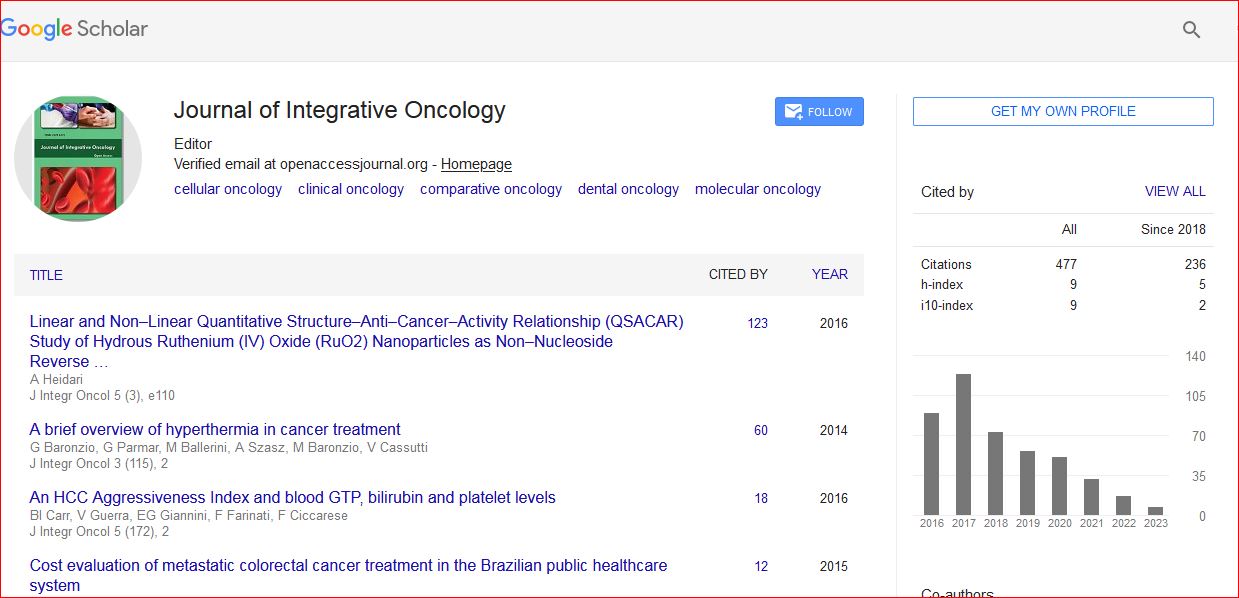
Journal of Integrative Oncology received 495 citations as per Google Scholar report