Opinion - (2025) Volume 14, Issue 6
Received: 01-Dec-2025, Manuscript No. jhoa-26-187878;
Editor assigned: 03-Dec-2025, Pre QC No. P-187878;
Reviewed: 17-Dec-2025, QC No. Q-187878;
Revised: 22-Dec-2025, Manuscript No. R-187878;
Published:
29-Dec-2025
, DOI: 10.37421/2167-1095.2025.14.551
Citation: Al-Khalifa, Noor. ”Patient Education: Key to Effective Hypertension Management.” J Hypertens 14 (2025):551.
Copyright: © 2025 Al-Khalifa N. This is an open-access article distributed under the terms of the Creative Commons Attribution License, which permits unrestricted use, distribution and reproduction in any medium, provided the original author and source are credited.
Patient education stands as a cornerstone in the effective management of hypertension, a widespread chronic condition. It is a vital process that empowers individuals with comprehensive knowledge about their health status, the intricacies of prescribed treatment regimens, and the profound impact of lifestyle modifications on their blood pressure control. This enhanced understanding fosters a greater sense of agency, leading to improved self-care practices, more consistent blood pressure regulation, and a significant reduction in the likelihood of developing severe complications associated with uncontrolled hypertension [1].
The significance of tailored educational approaches in enhancing medication adherence among individuals diagnosed with hypertension cannot be overstated. Such interventions provide personalized insights into the benefits of each prescribed medication, potential side effects to anticipate, and practical strategies for integrating medication intake into daily routines. This customized guidance cultivates a higher level of compliance, which directly translates into more effective blood pressure management and better overall health outcomes [2].
Research into the influence of educational interventions focused on lifestyle modifications has demonstrated notable success in community-based settings for improving blood pressure control. Comprehensive education encompassing dietary adjustments, the importance of regular physical activity, and effective stress management techniques, particularly when delivered by accessible community health workers, has been shown to result in sustained and meaningful reductions in blood pressure levels [3].
In the contemporary healthcare landscape, digital health platforms have emerged as a particularly promising avenue for delivering patient education related to hypertension management. These platforms, including mobile applications and various online resources, have been explored for their efficacy in disseminating educational content, boosting patient engagement with their health information, and facilitating the crucial aspect of remote blood pressure monitoring [4].
A fundamental prerequisite for effective patient education, especially concerning complex health conditions like hypertension, is a thorough understanding of health literacy levels. Studies examining the correlation between varying degrees of health literacy and a patient's capacity to comprehend and act upon hypertension management information highlight an indispensable need for educational materials that are exceptionally clear, easily accessible, and tailored to diverse comprehension abilities [5].
The role played by healthcare providers in the patient education process for hypertension is of paramount importance and cannot be diminished. This aspect of care involves the skillful application of effective communication strategies and the deliberate cultivation of trusting relationships between providers and patients. Such rapport is essential for ensuring patients feel adequately supported and are genuinely motivated to actively engage in managing their condition [6].
Group-based educational interventions have also emerged as a powerful modality for hypertension management, offering distinct advantages. These programs leverage the power of peer support and the dynamic of shared learning experiences within a group setting. This collaborative environment has been observed to significantly enhance patients' knowledge base, bolster their self-efficacy in managing their condition, and improve their adherence to prescribed treatment plans [7].
Patient education plays a critical role in addressing the often-overlooked psychosocial dimensions of living with hypertension. This includes educating patients about the intricate connections between stress, anxiety, and their direct impact on blood pressure regulation. By fostering a deeper understanding of these links, patients can develop more effective coping mechanisms, leading to improved overall management of their condition and enhanced emotional well-being [8].
The strategic utilization of visual aids and multimedia resources within patient education programs for hypertension has been found to substantially improve both the comprehension and long-term retention of complex health information. Studies specifically evaluating the efficacy of tools such as infographics and concise video content demonstrate their effectiveness in conveying critical health messages to a wide spectrum of patient populations with varying educational backgrounds [9].
Achieving long-term success in hypertension management strategies is intrinsically linked to the provision of continuous patient education and consistent reinforcement. This ongoing support, which can encompass regular follow-up educational sessions and the provision of readily accessible resources, plays a crucial role in maintaining sustained blood pressure control and promoting the overall well-being of patients over extended periods [10].
Patient education is universally recognized as a critical component for the effective and sustained management of hypertension. It serves to empower individuals by equipping them with essential knowledge regarding their specific condition, the nuances of their treatment plans, the importance of adopting healthy lifestyle modifications, and the critical role of adherence to medical advice. This informed approach leads directly to enhanced self-care capabilities, better control over blood pressure readings, and a marked reduction in the risk of developing serious health complications associated with prolonged high blood pressure [1].
The impact of precisely tailored educational interventions on improving medication adherence among hypertensive patients is a significant area of focus. By offering individualized information about the specific benefits of their medications, potential side effects that may arise, and practical, actionable tips for incorporating daily medication schedules, these programs foster greater patient compliance. This enhanced adherence is directly correlated with more favorable blood pressure outcomes and a better prognosis for managing the condition long-term [2].
Investigations into the effects of lifestyle modification education within community settings have yielded compelling evidence regarding its efficacy in improving blood pressure control. When individuals receive comprehensive education on crucial aspects of their lifestyle, including dietary patterns, the benefits of regular physical activity, and effective stress management techniques, particularly when delivered by accessible community health workers, the result is a sustained and measurable reduction in blood pressure [3].
Digital health platforms represent a rapidly growing and highly promising frontier for delivering patient education on hypertension management. The effectiveness of various digital tools, such as mobile health applications and comprehensive online resources, is being actively explored for their ability to deliver educational content, increase patient engagement with their health data, and facilitate convenient remote monitoring of blood pressure levels [4].
A fundamental prerequisite for delivering truly effective patient education, especially concerning the management of chronic conditions like hypertension, is a deep understanding of individual health literacy levels. Research examining how different levels of health literacy influence a patient's capacity to understand and act upon information related to hypertension management underscores the critical need for educational materials that are both clear and easily accessible to all patients [5].
The role of healthcare providers in the realm of patient education for hypertension is of immense importance and cannot be overstated. This involves not only the dissemination of information but also the implementation of effective communication strategies and the cultivation of a trusting, supportive relationship with patients. This foundation of trust is essential to ensure patients feel supported and motivated in their ongoing efforts to manage their condition [6].
Group-based educational interventions have demonstrated significant advantages in the management of hypertension. These programs leverage the power of peer support and the collaborative learning environment inherent in group settings. This shared experience has been shown to effectively enhance patients' knowledge, boost their self-efficacy in managing their health, and improve their adherence to prescribed treatment regimens [7].
Patient education is indispensable for effectively addressing the often-complex psychosocial aspects associated with living with hypertension. Educating patients about the interplay between psychological states, such as stress and anxiety, and their direct impact on blood pressure regulation is crucial. This knowledge empowers individuals to develop more effective coping mechanisms, leading to better overall management and improved quality of life [8].
The strategic incorporation of visual aids and multimedia content into patient education programs for hypertension has proven to be highly effective in enhancing both the comprehension and the long-term retention of critical health information. Studies evaluating the efficacy of resources like infographics and short educational videos highlight their value in conveying complex health messages to diverse patient populations with varying levels of health literacy [9].
Sustaining long-term adherence to hypertension management strategies is heavily reliant on the continuous provision of patient education and consistent reinforcement of learned behaviors. This paper examines the profound impact that ongoing educational support, including regular follow-up sessions and accessible informational resources, has on achieving and maintaining stable blood pressure control and enhancing the overall well-being of patients over time [10].
Effective hypertension management hinges on comprehensive patient education, empowering individuals with knowledge about their condition, treatment plans, lifestyle changes, and adherence. Tailored interventions significantly improve medication compliance by providing personalized information. Lifestyle modification education, focusing on diet, exercise, and stress management, leads to sustained blood pressure reductions, especially in community settings. Digital health platforms offer a promising avenue for delivering educational content and remote monitoring. Understanding health literacy is crucial for designing clear and accessible educational materials. Healthcare providers play a vital role through effective communication and building trust. Group-based interventions enhance knowledge and self-efficacy through peer support. Addressing psychosocial aspects like stress is essential for holistic management. Visual aids and multimedia improve information comprehension. Ongoing education and reinforcement are key to long-term adherence and sustained blood pressure control.
None
None
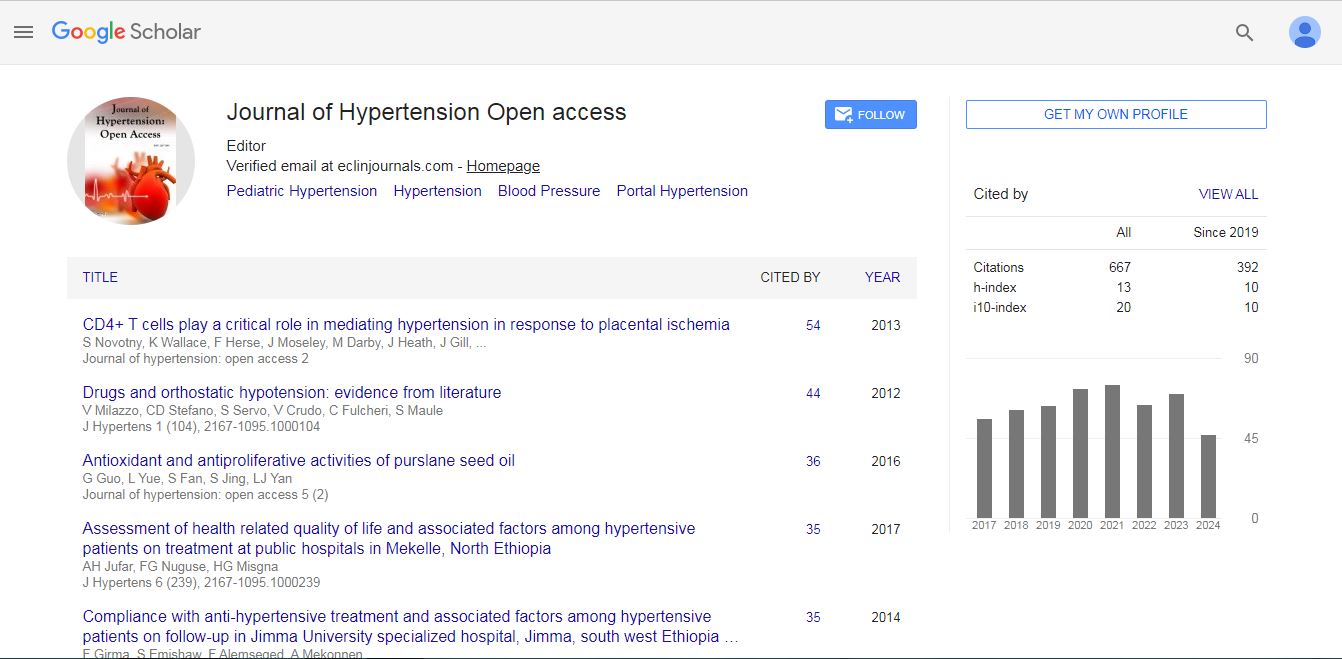
Journal of Hypertension: Open Access received 614 citations as per Google Scholar report