Brief Report - (2025) Volume 10, Issue 2
Received: 02-Mar-2025, Manuscript No. PE-26-179246;
Editor assigned: 04-Mar-2025, Pre QC No. P-179246;
Reviewed: 18-Mar-2025, QC No. Q-179246;
Revised: 24-Mar-2025, Manuscript No. R-179246;
Published:
31-Mar-2025
, DOI: 10.37421/2472-1042.2025.10.271
Citation: Whitcombe, Alan R.. ”Novel Therapies: Cost-Effective For Chronic Diseases.” Pharmacoeconomics 10 (2025):271.
Copyright: © 2025 Whitcombe R. Alan This is an open-access article distributed under the terms of the Creative Commons Attribution License, which permits unrestricted use, distribution and reproduction in any medium, provided the original author and source are credited.
The economic value of novel therapeutic interventions for managing chronic diseases is a critical area of exploration for healthcare decision-makers. Cost-effectiveness studies are paramount in understanding the long-term financial implications of adopting new treatments, necessitating a balance between upfront costs and the eventual benefits of improved patient outcomes and reduced downstream healthcare utilization. While novel therapies may present higher initial price tags, their effectiveness in disease management can ultimately lead to significant cost savings and an enhanced quality of life for patients, as demonstrated by analyses of various chronic conditions [1].
Investigating the cost-effectiveness of new biologics for rheumatoid arthritis management reveals a complex interplay between drug price, treatment adherence, and long-term joint damage reduction. The emphasis here is on the understanding that while these advanced therapies are expensive, they can substantially diminish the need for more costly interventions such as joint replacements and hospitalizations, thereby promoting overall economic efficiency in patient care [2].
Examining the economic implications of adopting innovative gene therapies for inherited metabolic disorders highlights the substantial upfront investment required for these one-time treatments. Crucially, this research underscores their potential to eliminate lifelong care costs and dramatically improve patient quality of life, advocating for a perspective shift from short-term expenditure to long-term societal benefit [3].
The cost-effectiveness of new oral anticoagulants in preventing stroke in patients with atrial fibrillation has been thoroughly analyzed. This study demonstrates that these newer agents, despite potentially higher costs than traditional warfarin, offer improved safety profiles and a reduction in major bleeding events, ultimately leading to lower overall healthcare costs associated with managing complications and hospital admissions [4].
Evaluating the cost-effectiveness of novel combination therapies for managing type 2 diabetes reveals that while these therapies involve a higher drug expenditure, they can achieve better glycemic control. This improved control subsequently reduces the risk of microvascular and macrovascular complications, leading to lower long-term costs related to diabetes-related morbidities and disabilities [5].
The economic impact of new targeted therapies for advanced non-small cell lung cancer has been assessed. The analysis suggests that despite their high price, these therapies can significantly extend progression-free survival and overall survival. This extension reduces the necessity for more aggressive and less effective treatments, thereby presenting a favorable cost-effectiveness profile within specific patient populations [6].
Studies examining the cost-effectiveness of novel immunotherapies for melanoma highlight their transformative impact on patient survival and disease management. The significant survival benefits and the potential for long-term remission are argued to justify the high treatment costs when compared to older, less effective treatment modalities, providing a compelling case for their adoption [7].
Investigating the cost-effectiveness of new treatments for cystic fibrosis emphasizes how therapies that enhance lung function and decrease exacerbations can lead to fewer hospitalizations and reduced reliance on supportive care. This ultimately translates to a reduction in the overall economic burden associated with managing this chronic, progressive disease [8].
An analysis of the cost-effectiveness of novel therapies for multiple sclerosis, with a focus on disease-modifying treatments, reveals their ability to slow disease progression and reduce relapse rates. This slowing of progression can prevent long-term disability, thereby decreasing the demand for expensive long-term care and assistive devices, and lessening the economic impact on both patients and healthcare systems [9].
Exploration into the cost-effectiveness of new regenerative medicine approaches for osteoarthritis management considers their potential to alleviate pain, improve joint function, and delay or prevent the need for joint replacement surgery. These potential outcomes suggest a favorable long-term economic outlook despite the initial treatment costs involved [10].
The economic value of novel therapeutic interventions for managing chronic diseases is a crucial consideration for healthcare decision-makers. Cost-effectiveness studies are essential for understanding the long-term financial ramifications of adopting new treatments, necessitating a careful evaluation of upfront costs against improved patient outcomes and reduced downstream healthcare utilization. It is evident that while novel therapies may carry higher initial price points, their efficacy in disease management can lead to substantial cost savings and an improved quality of life for patients [1].
Research into the cost-effectiveness of new biologics for rheumatoid arthritis management unveils a multifaceted relationship between drug expense, patient adherence, and the long-term preservation of joint health. The core argument presented is that despite the significant cost of these advanced therapies, they can considerably reduce the necessity for more expensive interventions, such as joint replacement surgeries and hospital admissions, thereby optimizing the economic efficiency of patient care [2].
Investigations into the economic implications of implementing innovative gene therapies for inherited metabolic disorders highlight the considerable initial investment required for these one-time interventions. Furthermore, this research underscores their capacity to obviate the need for lifelong care expenses and profoundly enhance patient well-being, advocating for a conceptual shift from short-term financial outlay to enduring societal advantages [3].
The cost-effectiveness of contemporary oral anticoagulants in mitigating stroke risk among individuals diagnosed with atrial fibrillation has been rigorously examined. This study substantiates that these advanced agents, while often commanding a higher price than warfarin, confer superior safety profiles and diminish the occurrence of serious bleeding episodes, consequently lowering the overall economic burden associated with managing treatment-induced complications and hospitalizations [4].
An assessment of the cost-effectiveness of novel combination therapies designed for the management of type 2 diabetes indicates that although these regimens involve greater drug expenditures, they can achieve superior glycemic control. This enhanced control subsequently curtails the incidence of microvascular and macrovascular complications, thereby reducing long-term healthcare expenditures linked to diabetes-related morbidities and functional impairments [5].
The economic ramifications of introducing new targeted therapies for advanced non-small cell lung cancer have been meticulously appraised. The analysis posits that despite their elevated cost, these therapies possess the capacity to significantly extend progression-free and overall survival. This extended survival curtails the utilization of more aggressive and less efficacious treatments, consequently presenting a favorable cost-effectiveness profile within distinct patient cohorts [6].
Studies focused on the cost-effectiveness of novel immunotherapies for melanoma underscore their profound impact on patient survival rates and the effective management of the disease. The substantial gains in survival and the potential for sustained remission are presented as justifications for the considerable treatment costs when contrasted with older, less effective therapeutic approaches [7].
The cost-effectiveness of emerging treatments for cystic fibrosis is examined with an emphasis on how therapies that improve lung capacity and reduce the frequency of exacerbations can lead to fewer hospital admissions and decreased reliance on supportive care measures. This ultimately contributes to an alleviation of the overall economic burden associated with managing this chronic and progressive illness [8].
An analysis of the cost-effectiveness of novel therapies for multiple sclerosis, specifically focusing on disease-modifying treatments, reveals their effectiveness in slowing disease advancement and decreasing the rate of relapses. This deceleration of disease progression can avert long-term disability, thereby lessening the demand for costly ongoing care and assistive technologies, and reducing the economic strain on both individuals and healthcare systems [9].
Research exploring the cost-effectiveness of novel regenerative medicine strategies for osteoarthritis management considers their potential to alleviate pain, enhance joint function, and postpone or eliminate the necessity for joint replacement surgery. These projected benefits suggest a positive long-term economic outcome, even in the face of initial treatment expenses [10].
This compilation of research highlights the cost-effectiveness of novel therapeutic interventions across various chronic diseases. Studies consistently demonstrate that despite higher upfront costs, advanced treatments such as biologics, gene therapies, targeted therapies, and immunotherapies offer significant long-term economic benefits. These benefits stem from improved patient outcomes, reduced hospitalizations, fewer complications, and enhanced quality of life. For conditions like rheumatoid arthritis, type 2 diabetes, lung cancer, melanoma, cystic fibrosis, multiple sclerosis, and osteoarthritis, these novel approaches can lead to substantial savings by preventing costly downstream interventions and improving overall patient well-being. Cost-effectiveness analyses are crucial for informing healthcare decisions and ensuring sustainable treatment strategies.
None
None
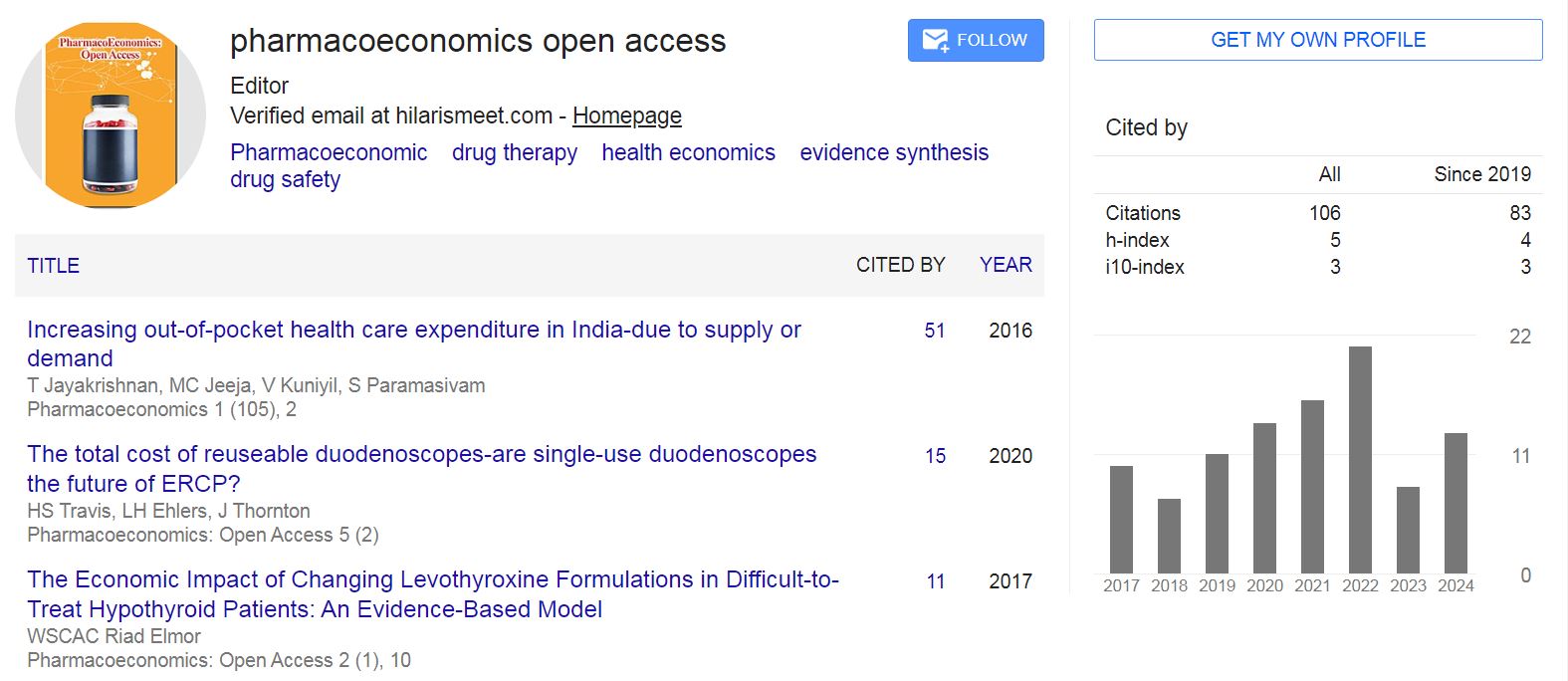
Pharmacoeconomics: Open Access received 106 citations as per Google Scholar report