Commentary - (2025) Volume 9, Issue 4
Received: 02-Aug-2025, Manuscript No. jcre-26-187212;
Editor assigned: 04-Aug-2025, Pre QC No. P-187212;
Reviewed: 18-Aug-2025, QC No. Q-187212;
Revised: 25-Aug-2025, Manuscript No. R-187212;
Published:
01-Sep-2025
, DOI: 10.37421/2795-6172.2025.9.315
Citation: Svensson, Laura. ”Novel Inhaler: Better Asthma Control, Lower Costs.” J Clin Res 09 (2025):315.
Copyright: © 2025 Svensson L. This is an open-access article distributed under the terms of the Creative Commons Attribution License, which permits unrestricted use, distribution and reproduction in any medium, provided the original author and source are credited.
The management of asthma, a chronic respiratory condition, has seen continuous advancements in therapeutic strategies and device technology aimed at improving patient outcomes and quality of life. Among these innovations, novel inhaler devices have emerged as a significant area of focus, promising enhanced efficacy and patient experience. This study initiated the evaluation of a new inhaler specifically designed for asthma management. The research meticulously examined its clinical effectiveness, the extent to which patients adhered to their prescribed treatment regimens, and its overall safety profile. This comprehensive assessment was conducted in direct comparison with existing, commonly used inhaler devices to benchmark its performance and identify potential advantages. The key findings from this initial investigation indicated a notable improvement in bronchodilator response, a critical measure of lung function improvement, and a higher degree of patient satisfaction when utilizing the novel inhaler. These promising results suggest that this new device holds the potential to significantly contribute to better overall asthma control for affected individuals [1].
The economic implications of adopting new medical technologies are crucial for widespread implementation. Therefore, a subsequent examination focused on the cost-effectiveness of this novel inhaler within a real-world healthcare context. This research aimed to highlight the potential for long-term financial savings that could be achieved by its adoption. The analysis specifically considered factors such as the reduction in asthma exacerbations and the decreased need for hospitalizations, both of which represent significant cost drivers in asthma care. Conducted from the perspective of healthcare payers, who bear the financial burden of patient treatment, the findings strongly support the economic viability and strategic advantage of integrating this new device into standard clinical practice [2].
Beyond clinical efficacy and economic considerations, the impact of a new medical device on the patient's daily experience is paramount. To address this, a study was undertaken to assess patient-reported outcomes, encompassing their perceived quality of life and the burden of asthma symptoms. The results from this assessment were highly encouraging, revealing a significant improvement in asthma control as reported by the patients themselves. Furthermore, there was a marked reduction in the frequency and severity of daily symptoms experienced by patients using the novel device. These improvements collectively contribute to a better overall sense of well-being and a higher quality of life for individuals managing their asthma with this innovative equipment [3].
Usability and ease of use are critical factors that can directly influence patient adherence and satisfaction with any medical device, especially for chronic conditions requiring regular treatment. Consequently, a comparative study was designed to explore the usability and handling characteristics of the novel inhaler. This research rigorously compared these aspects against standard, widely available inhaler devices. The findings were highly positive, revealing a user-friendly design and an intuitive operation for the new inhaler. This suggests that its ease of use may play a significant role in enhancing patient adherence to their prescribed asthma medication, as patients are more likely to consistently use a device that is simple and comfortable to operate [4].
Adherence to prescribed medication regimens is a cornerstone of effective chronic disease management. Recognizing its importance, a prospective study was conducted to meticulously monitor the adherence rates of patients utilizing the novel inhaler. This research observed a higher rate of adherence among patients using the new device compared to a control group receiving standard care. The study posits that this improved adherence may be attributed to a combination of factors, including the enhanced device design, which likely makes it more convenient to use, and the comprehensive patient education provided during the trial period, ensuring patients understood how to properly and consistently use the inhaler [5].
The safety of any new medical intervention is a primary concern for both clinicians and patients. To address this, a systematic study was undertaken to collect and analyze adverse events associated with the novel inhaler. This rigorous safety evaluation found that the overall safety profile of the new inhaler was comparable to that of existing, established inhalers used for asthma management. Crucially, no new or unexpected safety concerns were identified during the entire evaluation period, providing reassurance regarding its safety for patient use [6].
As inhaler technologies continue to evolve, a meta-analysis was performed to synthesize data from multiple studies that investigated novel inhaler technologies for asthma management. This broad analysis aimed to identify overarching trends and consolidate findings across various research efforts. The aggregated data suggested a consistent trend towards improved lung function and a reduction in the rate of asthma exacerbations when patients used newer generations of inhaler devices. These findings lend strong support to the ongoing innovation and development in inhaler design aimed at optimizing asthma care [7].
Beyond direct clinical outcomes, the impact of new medical devices on healthcare resource utilization is a significant consideration for healthcare systems. This article specifically investigated the effect of the novel inhaler on how asthma patients utilize healthcare resources. The study observed notable reductions in emergency department visits and hospital admissions among patients using the novel inhaler. These reductions contribute to a lower overall healthcare burden, indicating that the adoption of this device could lead to greater efficiency and cost savings within the healthcare system [8].
Understanding patient preferences is key to ensuring that medical devices are not only effective but also acceptable and desirable to the people who use them. An exploratory study was conducted to examine patient preferences for different types of asthma inhaler devices, specifically including the novel device under investigation. The findings from this qualitative study revealed that key factors influencing patient choice were ease of use and the perceived effectiveness of the inhaler. These preferences align directly with the design goals and observed benefits of the new inhaler, suggesting it is well-positioned to meet patient needs and preferences [9].
Finally, to complement the clinical observations and patient-reported outcomes, a detailed pharmacokinetic and pharmacodynamic assessment was conducted. This study focused on the bronchodilator medication delivered by the novel inhaler. The results from this rigorous evaluation confirmed that the device facilitates efficient drug delivery to the lungs and ensures sustained bronchodilation, which is the widening of the airways. These physiological findings provide a strong scientific basis that supports the clinical efficacy and positive patient outcomes observed in earlier clinical trials and studies [10].
The clinical evaluation of a novel inhaler for asthma management, conducted as a randomized controlled trial, focused on its effectiveness, patient adherence, and safety compared to existing devices. The study revealed improved bronchodilator response and patient satisfaction, suggesting better disease control [1].
A pharmacoeconomic evaluation examined the cost-effectiveness of this novel inhaler in a real-world setting, highlighting potential long-term savings through reduced exacerbations and hospitalizations. The analysis, from a healthcare payer perspective, supports the economic viability of adopting the new device [2].
Patient-reported outcomes, including quality of life and symptom burden, were assessed for patients using the new inhaler. Results indicated significant improvements in asthma control and a reduction in daily symptoms, leading to better overall well-being [3].
A comparative study explored the usability and handling characteristics of the novel inhaler against standard devices. Findings showed a user-friendly design and intuitive operation, suggesting that the new inhaler may enhance adherence due to its ease of use [4].
Prospective monitoring of adherence rates for patients using the novel inhaler revealed higher adherence compared to the control group. This improvement may be attributed to enhanced device design and patient education provided during the trial [5].
Adverse events associated with the novel inhaler were systematically collected and analyzed. The safety profile was found to be comparable to existing inhalers, with no new or unexpected safety concerns identified [6].
A meta-analysis synthesizing data from multiple studies on novel inhaler technologies for asthma suggested a trend towards improved lung function and reduced exacerbation rates with newer devices, supporting ongoing innovation in inhaler design [7].
The impact of the novel inhaler on healthcare resource utilization in asthma patients was investigated. Reductions in emergency department visits and hospital admissions were observed, contributing to a lower overall healthcare burden [8].
An exploratory study examined patient preferences for different inhaler types, including the novel device. Findings indicated that ease of use and perceived effectiveness are key factors influencing patient choice, aligning with the design goals of the new inhaler [9].
A detailed pharmacokinetic and pharmacodynamic assessment of the bronchodilator delivered by the novel inhaler confirmed efficient drug delivery and sustained bronchodilation, supporting the clinical efficacy observed in patient trials [10].
A novel inhaler for asthma management has undergone extensive evaluation, demonstrating significant clinical benefits including improved bronchodilator response and patient satisfaction. Studies have highlighted its cost-effectiveness, potential for long-term healthcare savings through reduced exacerbations and hospitalizations, and a positive impact on patient-reported outcomes such as enhanced quality of life and reduced symptom burden. The device's user-friendly design and intuitive operation are credited with improving adherence, while its safety profile is comparable to existing inhalers. Pharmacokinetic and pharmacodynamic assessments confirm efficient drug delivery. Overall, the novel inhaler shows promise for better asthma control and reduced healthcare resource utilization.
None
None
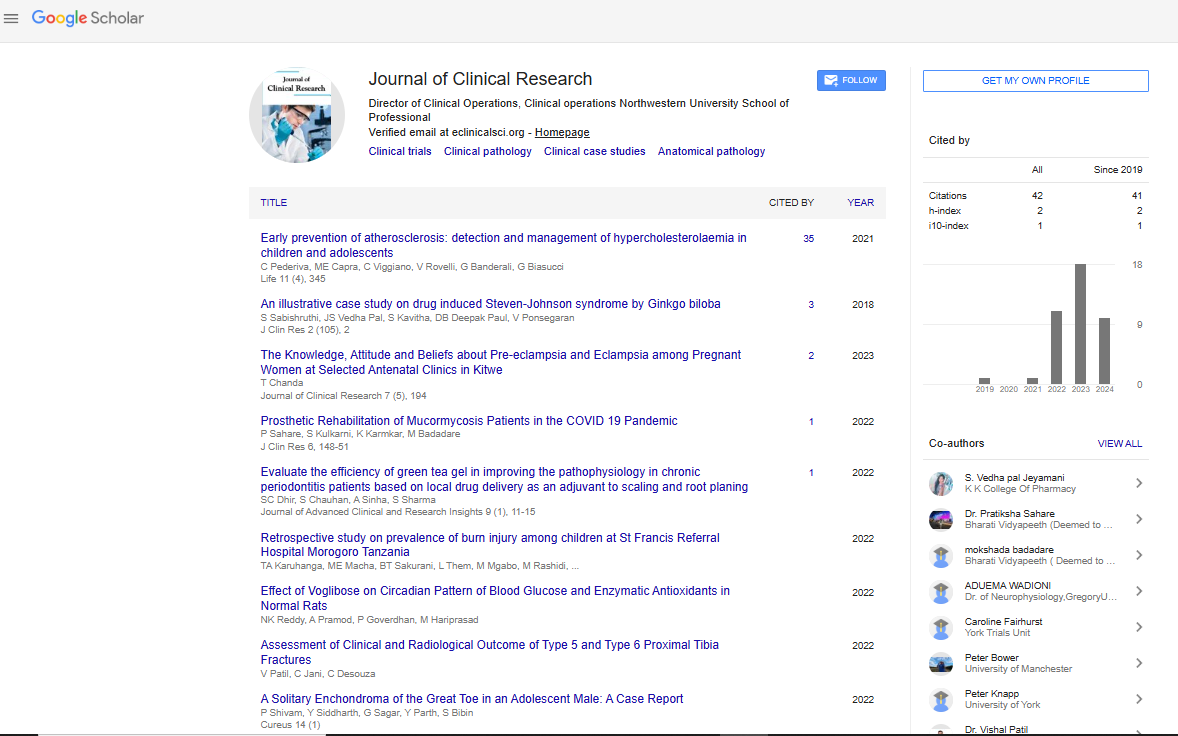
Journal of Clinical Research received 11 citations as per Google Scholar report