Brief Report - (2025) Volume 14, Issue 6
Received: 31-Oct-2025, Manuscript No. jio-26-184834;
Editor assigned: 03-Nov-2025, Pre QC No. P-184834;
Reviewed: 17-Nov-2025, QC No. Q-184834;
Revised: 21-Nov-2025, Manuscript No. R-184834;
Published:
28-Nov-2025
, DOI: 10.37421/2329-6771.2025.14.583
Citation: Bennett, Paul. ”Integrative Oncology: Optimizing Cancer Care and Outcomes.” J Integr Onco 14 (2025):583.
Copyright: © 2025 Bennett P. This is an open-access article distributed under the terms of the Creative Commons Attribution License, which permits unrestricted use, distribution and reproduction in any medium, provided the original author and source are credited.
The field of oncology is continuously evolving, with a growing emphasis on patient well-being and supportive care alongside conventional treatments. Integrative oncology has emerged as a crucial area, aiming to enhance treatment efficacy and improve the quality of life for cancer patients by incorporating complementary therapies [1].
Nutritional strategies play a significant role in this approach, with specific dietary patterns and micronutrients being investigated for their ability to modulate the immune system and influence inflammatory pathways relevant to cancer [2].
Physical activity, particularly exercise, is another cornerstone of integrative care. Research highlights its potential to positively impact immune function in cancer survivors, reducing inflammation and enhancing immune cell activity crucial for combating residual cancer cells [3].
Mind-body practices, such as mindfulness, are also gaining recognition for their immunomodulatory effects. These interventions can help reduce stress, which in turn may positively influence immune markers and support a patient's resilience during treatment [4].
The synergistic interaction between integrative therapies and conventional cancer treatments is a critical area of study. Evidence suggests that certain complementary approaches can enhance the effectiveness of treatments like chemotherapy and immunotherapy while mitigating their side effects [5].
The gut microbiome has been identified as a key player in immune system modulation and its impact on cancer and cancer immunotherapy is becoming increasingly clear. Interventions aimed at restoring a healthy gut microbiota are showing promise [6].
Phytochemicals, naturally occurring compounds found in fruits and vegetables, are being studied for their immunomodulatory properties. These compounds can influence immune cell activity and antioxidant pathways, contributing to both cancer prevention and therapy support [7].
Sleep quality is intrinsically linked to immune function, especially in cancer patients undergoing treatment. Disturbances in sleep can compromise immune surveillance, underscoring the importance of addressing sleep issues as part of a comprehensive care plan [8].
Acupuncture, a traditional therapy, is being explored for its potential to modulate the immune system in patients with cancer. While research is ongoing, it may offer benefits in managing treatment-related symptoms and supporting immune balance [9].
Yoga, as a mind-body practice, is also being investigated for its role in immune system modulation among cancer patients. Its potential to reduce stress and improve inflammatory markers suggests it can be a valuable component of supportive cancer care [10].
Integrative oncology represents a paradigm shift in cancer care, moving beyond solely eradicating disease to encompassing the holistic well-being of the patient. This approach leverages a range of complementary therapies alongside conventional treatments to optimize patient outcomes and minimize treatment burden [1].
Central to integrative oncology is the profound influence of nutrition on immune function. Specific dietary patterns, rich in essential micronutrients, are understood to directly impact immune cell behavior and inflammatory processes that are critical in the context of cancer, offering a tangible avenue for intervention [2].
Exercise is recognized not just for its physical benefits but for its potent immunomodulatory effects. In cancer survivors, tailored physical activity programs can significantly bolster immune defenses, enhancing the activity of key immune cells like natural killer cells and T-cells, which are vital for maintaining remission [3].
Mindfulness-based interventions offer a powerful tool for managing the psychological stress associated with cancer. By promoting relaxation and reducing stress hormone levels, these practices can positively influence immune markers, thereby strengthening the patient's ability to cope with illness and treatment [4].
The strategic integration of complementary therapies with standard cancer treatments is a key focus. Understanding how these modalities can work in concert to enhance therapeutic efficacy and ameliorate side effects is paramount for improving patient survival and quality of life [5].
The intricate relationship between the gut microbiome and the immune system is a rapidly advancing area of research in oncology. The composition of gut bacteria significantly influences systemic immunity and can impact the effectiveness of immunotherapies, highlighting the therapeutic potential of microbiome modulation [6].
Dietary sources of phytochemicals are being explored for their immune-boosting and anti-cancer properties. Compounds such as curcumin and resveratrol, found abundantly in plant-based foods, demonstrate the capacity to fine-tune immune responses and offer protective benefits [7].
Adequate sleep is fundamental for robust immune function, a fact particularly relevant for cancer patients. Disruptions in sleep patterns can lead to immune dysregulation and increased susceptibility to treatment-related complications, emphasizing the need for targeted sleep interventions [8].
Acupuncture, while requiring further rigorous investigation, shows promise as an adjunctive therapy for immune modulation in cancer care. Its potential to influence cytokine production and immune cell activity could help alleviate treatment-related symptoms and improve overall immune homeostasis [9].
Yoga offers a multifaceted approach to supporting cancer patients, integrating physical movement, breath control, and meditation. Its capacity to reduce physiological stress and positively influence immune parameters makes it a valuable component of supportive care, potentially enhancing anti-tumor immunity [10].
Integrative oncology enhances cancer care by combining conventional treatments with complementary therapies such as diet, exercise, and mind-body practices. These approaches modulate the immune system, reduce treatment toxicities, and improve quality of life. Nutritional interventions, including specific diets and gut microbiome modulation, influence immune cell function and treatment response. Exercise boosts immune defenses by reducing inflammation and enhancing immune cell activity. Mind-body practices like mindfulness and yoga help manage stress and positively impact immune markers. Phytochemicals from fruits and vegetables also play a role in immune modulation. Addressing sleep disturbances and exploring therapies like acupuncture can further support immune function. Combining these integrative strategies with conventional therapies aims to optimize patient outcomes and reduce treatment burden.
None
None
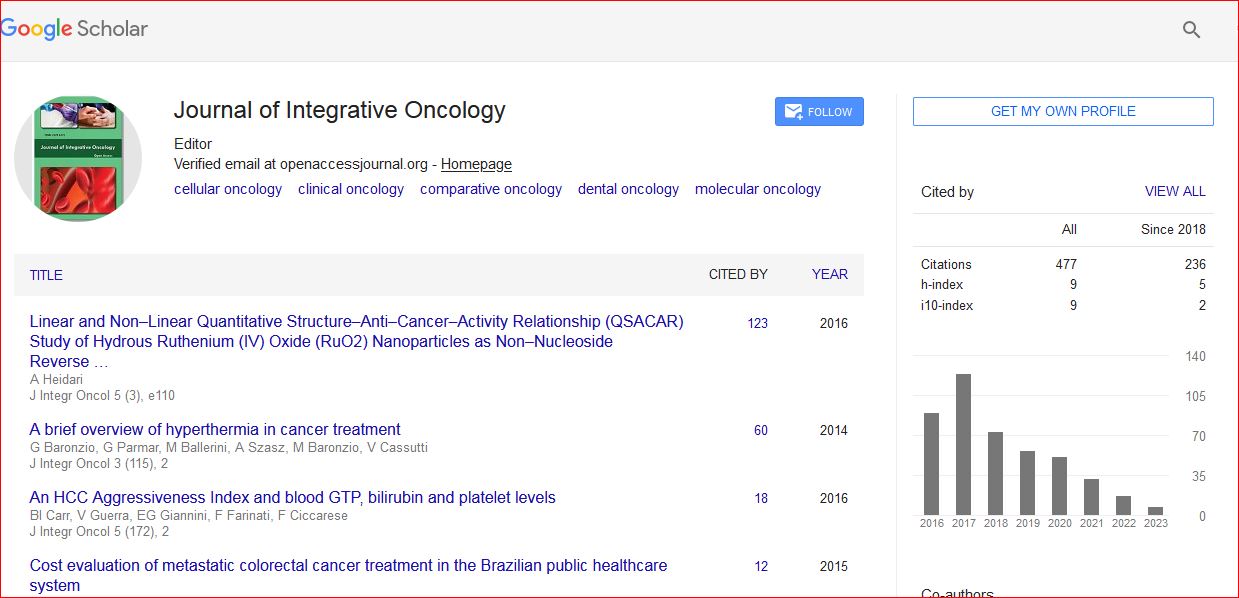
Journal of Integrative Oncology received 495 citations as per Google Scholar report