Commentary - (2025) Volume 14, Issue 3
Received: 01-May-2025, Manuscript No. jio-26-184807;
Editor assigned: 05-May-2025, Pre QC No. P-184807;
Reviewed: 19-May-2025, QC No. Q-184807;
Revised: 22-May-2025, Manuscript No. R-184807;
Published:
29-May-2025
, DOI: 10.37421/2329-6771.2025.14.558
Citation: Tanaka, Yuki. ”Integrative Oncology: Enhancing Cancer Care and Quality of Life.” J Integr Onco 14 (2025):558.
Copyright: © 2025 Tanaka Y. This is an open-access article distributed under the terms of the Creative Commons Attribution License, which permits unrestricted use, distribution and reproduction in any medium, provided the original author and source are credited.
The integration of complementary and alternative medicine (CAM) into conventional oncology care is a growing area of interest, aiming to improve patient outcomes and quality of life during cancer treatment. This approach, often termed integrative oncology, seeks to combine evidence-based CAM modalities with standard medical therapies [1].
The foundation of integrative oncology lies in a patient-centered philosophy, prioritizing the management of treatment-related symptoms and enhancing overall well-being [1].
Nutrition plays a pivotal role in this integrative framework, with tailored dietary interventions designed to support patients throughout their cancer journey. These interventions address common side effects such as nausea, fatigue, and appetite loss, while also focusing on essential micronutrients and macronutrients vital for immune function and recovery [2].
Among the various CAM modalities, acupuncture has demonstrated significant promise in alleviating specific treatment-related toxicities. Notably, it has been investigated for its efficacy in managing chemotherapy-induced peripheral neuropathy (CIPN), a common and often debilitating side effect of cancer treatment [3].
Mindfulness-based interventions (MBIs) represent another key component of integrative oncology, focusing on improving the psychological well-being of cancer patients. These interventions have been shown to reduce anxiety, depression, and fatigue, thereby enhancing coping mechanisms and fostering resilience [4].
The role of medical cannabis in supportive cancer care is also being explored, with a focus on its potential to alleviate symptoms like pain, nausea, and insomnia. While evidence is still evolving, careful patient selection and monitoring are emphasized for its safe and effective integration [5].
Exercise is recognized as a crucial element in integrative oncology, offering numerous benefits for cancer patients. Physical activity can improve treatment outcomes, reduce fatigue, and enhance both physical function and psychological well-being [6].
Mind-body therapies, encompassing practices such as meditation, yoga, and guided imagery, have shown efficacy in managing cancer pain. These therapies can significantly reduce pain intensity and improve pain-related quality of life, serving as valuable adjuncts to conventional pain management [7].
The establishment of comprehensive integrative oncology programs within healthcare systems is essential for their successful implementation. These programs typically involve multidisciplinary teams, patient education, evidence-based practices, and research integration to optimize patient care [8].
Herbal medicine, while possessing a long history of use, requires careful consideration within cancer care due to potential interactions with conventional treatments. Safety and efficacy are paramount, necessitating evidence-based recommendations and consultation with qualified practitioners [9].
Finally, ethical considerations are central to the practice of integrative oncology, particularly concerning informed consent, patient autonomy, and transparent communication about complementary therapies. Establishing ethical frameworks ensures that patients receive appropriate and evidence-informed care [10].
Integrative oncology aims to comprehensively support cancer patients by incorporating evidence-based complementary and alternative medicine (CAM) approaches alongside conventional treatments. This holistic strategy prioritizes a patient-centered philosophy, focusing on improving symptom management and enhancing overall quality of life [1].
Nutrition stands as a cornerstone of integrative oncology, with personalized dietary interventions playing a vital role in managing treatment side effects and supporting the body's recovery processes. Such interventions are crucial for addressing issues like nausea, fatigue, and appetite loss, while also ensuring adequate intake of nutrients essential for immune function [2].
Acupuncture has emerged as a significant complementary therapy, particularly for its effectiveness in alleviating chemotherapy-induced peripheral neuropathy (CIPN). Clinical trials have indicated that acupuncture can substantially reduce pain and improve the quality of life for patients suffering from this common side effect [3].
Mindfulness-based interventions (MBIs) are instrumental in addressing the psychological toll of cancer, offering tools to manage stress, anxiety, and depression. By fostering improved coping mechanisms and resilience, MBIs contribute to the overall psychological well-being of patients [4].
The application of medical cannabis in supportive cancer care is an evolving area, with research focusing on its potential to alleviate symptoms such as chronic pain, persistent nausea, and insomnia. Careful consideration of patient selection, monitoring, and dose adjustments are crucial for its safe use [5].
Exercise is widely recognized for its therapeutic benefits in oncology, contributing to improved treatment outcomes and enhanced physical and psychological health. Guidelines for exercise prescription are tailored to individual patient characteristics, cancer type, and treatment phase [6].
Mind-body therapies, including practices like meditation and yoga, have demonstrated considerable effectiveness in managing cancer pain. These approaches offer a non-pharmacological means to reduce pain intensity and improve the quality of life for patients experiencing cancer-related pain [7].
The development and implementation of structured integrative oncology programs are vital for providing coordinated and evidence-based care. Such programs necessitate the collaboration of multidisciplinary teams, robust patient education, and a commitment to research and continuous quality improvement [8].
Herbal medicine, while widely used, requires a cautious and evidence-based approach within cancer care. Thorough evaluation of safety, efficacy, and potential interactions with conventional therapies is essential to ensure patient well-being [9].
Ethical considerations are paramount in integrative oncology, particularly in ensuring that patients are fully informed about complementary therapies and can make autonomous decisions. Transparent communication and the establishment of clear ethical guidelines are necessary to uphold patient rights and optimize care [10].
This collection of research highlights the growing importance of integrative oncology, which combines conventional cancer treatments with evidence-based complementary therapies. Key areas explored include the role of nutrition in supporting patients through treatment, the efficacy of acupuncture for managing chemotherapy-induced neuropathy, and the benefits of mindfulness-based interventions for psychological well-being. Other discussed modalities include medical cannabis for symptom relief, exercise for improving outcomes, and mind-body therapies for pain management. The importance of structured integrative oncology programs, the careful use of herbal medicine, and ethical considerations in practice are also emphasized, all aiming to enhance patient care and quality of life.
None
None
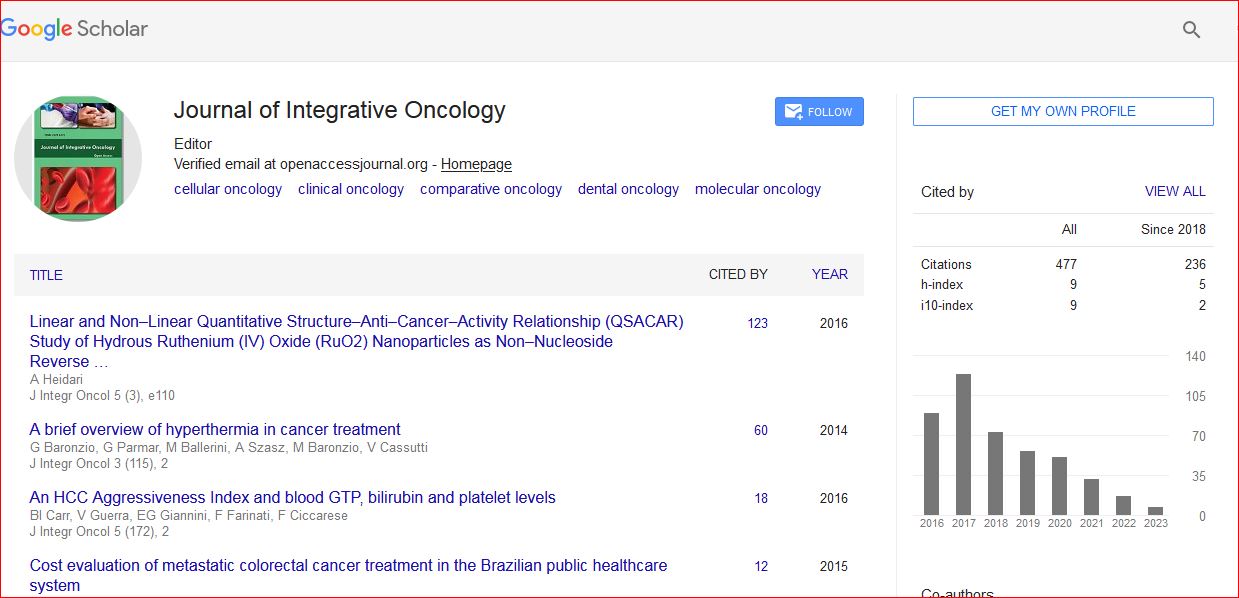
Journal of Integrative Oncology received 495 citations as per Google Scholar report