Perspective - (2025) Volume 14, Issue 6
Received: 31-Oct-2025, Manuscript No. jio-26-184839;
Editor assigned: 03-Nov-2025, Pre QC No. P-184839;
Reviewed: 17-Nov-2025, QC No. Q-184839;
Revised: 21-Nov-2025, Manuscript No. R-184839;
Published:
28-Nov-2025
, DOI: 10.37421/2329-6771.2025.14.588
Citation: Nowak, Tomasz. ”Integrative Oncology: Empowering Survivors’ Holistic Recovery.” J Integr Onco 14 (2025):588.
Copyright: © 2025 Nowak T. This is an open-access article distributed under the terms of the Creative Commons Attribution License, which permits unrestricted use, distribution and reproduction in any medium, provided the original author and source are credited.
Integrative oncology represents a crucial paradigm shift in cancer survivorship care, addressing the multifaceted needs of individuals who have completed cancer treatment. This approach emphasizes a holistic perspective, aiming to enhance the well-being of survivors by integrating evidence-based complementary therapies with conventional medical care. The objective is to effectively manage treatment-related side effects, elevate the overall quality of life, and foster long-term health and resilience. A cornerstone of this approach is the development of personalized care plans that meticulously consider the unique physical, emotional, and spiritual dimensions of each survivor's recovery journey, thereby empowering them to navigate this critical phase with greater autonomy and confidence [1].
The successful implementation of integrative oncology within survivorship care plans hinges on the establishment of robust, multidisciplinary healthcare teams. This collaborative model necessitates the coordinated efforts of oncologists, nurses, psychologists, dietitians, and practitioners of complementary therapies. Their collective expertise is leveraged to formulate comprehensive care strategies that prioritize shared decision-making, patient education, and the design of tailored interventions. These interventions are specifically aimed at alleviating common symptoms such as pain, fatigue, and nausea, ultimately enriching the survivorship experience and promoting a more positive post-treatment trajectory [2].
Within the framework of integrative oncology, mind-body interventions play a significant role in supporting the psychological well-being of cancer survivors. Practices such as mindfulness, meditation, and yoga have demonstrated considerable efficacy in mitigating psychological distress, ameliorating sleep disturbances, and bolstering emotional resilience. By systematically integrating these therapeutic modalities into survivorship care plans, healthcare providers can significantly contribute to restoring a sense of control and overall mental equilibrium for individuals navigating the challenges of survivorship [3].
Nutritional support is an indispensable component of integrative oncology survivorship care, playing a pivotal role in facilitating recovery and potentially preventing cancer recurrence. This involves the provision of personalized dietary recommendations that emphasize the consumption of whole foods, ensuring adequate protein intake, and effectively addressing treatment-induced nutritional challenges like appetite loss or altered taste perceptions. Emerging evidence strongly suggests that adopting a balanced and nutrient-rich diet can positively influence immune function and contribute to improved overall health outcomes for survivors [4].
The integration of structured physical activity into cancer survivorship care plans is paramount for restoring physical strength, enhancing cardiovascular health, and effectively managing treatment-related fatigue. Tailored exercise programs, carefully designed to accommodate the individual survivor's physical condition and treatment history, can significantly improve mobility, reduce the risk of complications such as lymphedema, and positively impact mental well-being. The overarching goal is to establish safe, sustainable, and beneficial exercise routines that support long-term recovery and health [5].
Patient-reported outcomes (PROs) serve as an essential mechanism for customizing and evaluating the effectiveness of integrative oncology survivorship care plans. By systematically gathering data directly from survivors regarding their quality of life, symptom burden, and functional status, healthcare professionals gain invaluable insights. This patient-centered approach ensures that care plans are dynamically adjusted to meet individual needs and achieve desired outcomes, thereby fostering a more responsive and effective survivorship experience [6].
Addressing and managing the long-term sequelae of cancer treatment constitutes a core objective of integrative oncology survivorship. Therapies such as acupuncture, massage, and evidence-based herbal medicine, when applied judiciously, can offer substantial relief from persistent symptoms like chronic pain, neuropathy, fatigue, and anxiety. The ultimate aim of incorporating these complementary approaches is to enhance the survivor's functional capacity and significantly improve their overall quality of life during the critical post-treatment period [7].
Survivorship care plans that are thoughtfully informed by the principles of integrative oncology are instrumental in empowering patients to actively engage in their ongoing health management. This empowerment extends to educating survivors on effective self-care strategies, encouraging beneficial lifestyle modifications, and promoting the judicious use of complementary therapies to support recovery and minimize the risk of recurrence. The overarching emphasis is on cultivating resilience and fostering a proactive mindset towards maintaining long-term health [8].
The seamless integration of survivorship care plans with comprehensive psychological support is indispensable for effectively addressing the profound mental health challenges that can accompany a cancer diagnosis and its treatment. Integrative oncology champions the utilization of therapies such as cognitive behavioral therapy, support groups, and mindfulness-based stress reduction techniques. These interventions are designed to aid survivors in coping with common psychological sequelae, including anxiety, depression, and the pervasive fear of recurrence, thereby significantly enhancing their overall psychological well-being [9].
Ultimately, a personalized and collaborative approach lies at the heart of effective integrative oncology survivorship care plans, acknowledging the inherent uniqueness of each survivor's journey. By harmoniously blending conventional medical interventions with carefully selected, evidence-based complementary therapies that are specifically tailored to individual needs, the overarching goal is to optimize physical, emotional, and spiritual well-being. This integrated strategy strives to promote a superior quality of life and provide robust support for sustained long-term health and wellness [10].
Integrative oncology plays a pivotal role in cancer survivorship care plans by focusing on the holistic needs of patients post-treatment. This approach incorporates evidence-based complementary therapies alongside conventional care to manage treatment side effects, improve quality of life, and promote long-term well-being. Key to this is personalized care that considers the patient's unique physical, emotional, and spiritual needs, empowering survivors in their recovery [1].
The implementation of integrative oncology in survivorship plans requires a multidisciplinary team approach involving oncologists, nurses, psychologists, dietitians, and complementary therapy practitioners. This collaborative effort aims to create comprehensive care strategies focused on shared decision-making, patient education, and tailored interventions for symptom management like pain, fatigue, and nausea, thereby enhancing the overall survivorship experience [2].
Mind-body interventions such as mindfulness, meditation, and yoga are integral to integrative oncology in survivorship care. These therapies have shown efficacy in reducing psychological distress, improving sleep quality, and enhancing emotional resilience among cancer survivors. Integrating these practices into survivorship care plans significantly contributes to restoring a sense of control and well-being [3].
Nutritional interventions within integrative oncology survivorship care are crucial for supporting recovery and preventing recurrence. This includes personalized dietary recommendations focusing on whole foods, adequate protein intake, and management of treatment-related nutritional challenges like appetite loss or altered taste. A balanced diet positively impacts immune function and overall health outcomes [4].
The integration of physical activity into cancer survivorship care plans is vital for restoring strength, improving cardiovascular health, and managing fatigue. Tailored exercise programs, considering the survivor's condition and treatment history, enhance mobility, reduce lymphedema risk, and improve mental well-being. The focus is on creating safe and sustainable exercise routines [5].
Patient-reported outcomes (PROs) are essential for tailoring and evaluating integrative oncology survivorship care plans. Capturing the survivor's perspective on their quality of life, symptoms, and functional status provides valuable data for personalized adjustments and outcome assessment. This patient-centered approach ensures care plans effectively address individual needs and goals [6].
Managing long-term side effects of cancer treatment is a core component of integrative oncology survivorship. Therapies such as acupuncture, massage, and evidence-based herbal medicine can offer relief from chronic pain, neuropathy, fatigue, and anxiety. The goal is to improve the survivor's functional capacity and overall quality of life during the post-treatment phase [7].
Survivorship care plans informed by integrative oncology principles empower patients to actively participate in their ongoing health management. This includes education on self-care strategies, lifestyle modifications, and the judicious use of complementary therapies to support recovery and prevent recurrence. The emphasis is on fostering resilience and promoting a proactive approach to health [8].
The integration of survivorship care plans with psychological support is crucial for addressing the mental health impact of cancer. Integrative oncology emphasizes therapies like cognitive behavioral therapy, support groups, and mindfulness-based stress reduction to help survivors cope with anxiety, depression, and fear of recurrence, thereby improving their overall psychological well-being [9].
A personalized and multidisciplinary approach to integrative oncology survivorship care plans acknowledges that each survivor's journey is unique. By combining conventional medical care with evidence-based complementary therapies tailored to individual needs, the aim is to optimize physical, emotional, and spiritual well-being, promoting a higher quality of life and supporting long-term health [10].
Integrative oncology plays a crucial role in cancer survivorship care by adopting a holistic approach that combines conventional treatments with evidence-based complementary therapies. This strategy aims to manage treatment side effects, improve the quality of life, and promote the overall well-being of cancer survivors. Key components include personalized care plans, multidisciplinary team collaboration, and the incorporation of mind-body interventions, nutrition, and physical activity. Patient-reported outcomes are essential for tailoring care, and managing long-term side effects is a priority. Ultimately, integrative oncology empowers survivors to actively participate in their health management, fostering resilience and supporting long-term recovery.
None
None
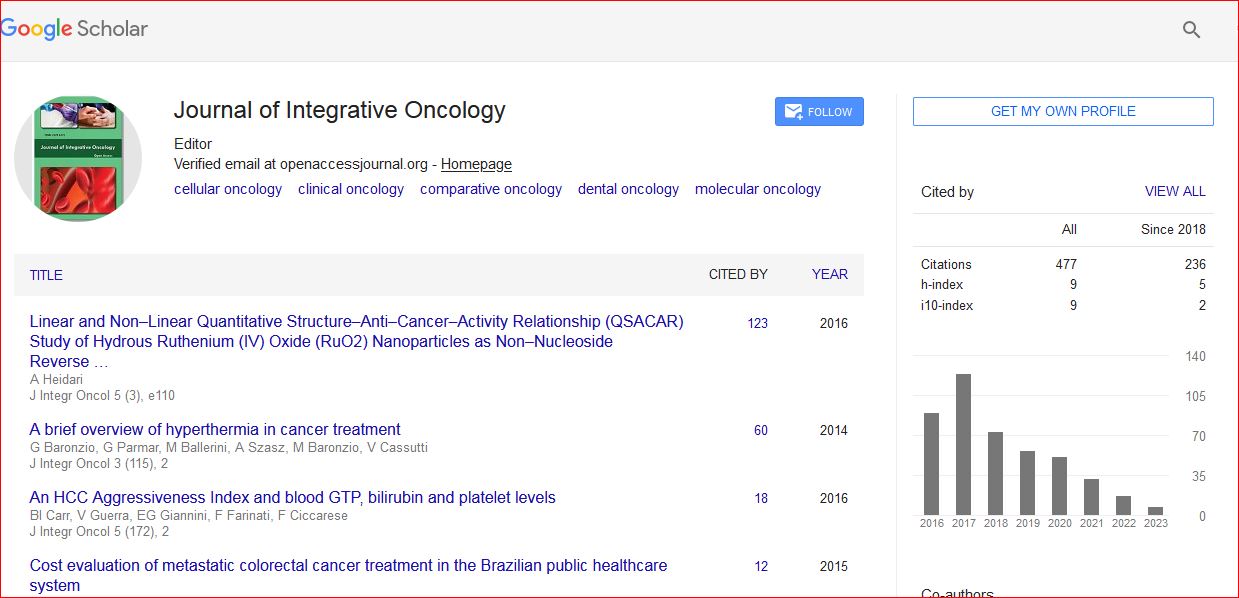
Journal of Integrative Oncology received 495 citations as per Google Scholar report