Opinion - (2025) Volume 14, Issue 3
Received: 01-May-2025, Manuscript No. mcce-26-190169;
Editor assigned: 03-May-2025, Pre QC No. P-190169;
Reviewed: 19-May-2025, QC No. Q-190169;
Revised: 22-May-2025, Manuscript No. R-190169;
Published:
29-May-2025
, DOI: 10.37421/2470-6965.2025.14.404
Citation: Okafor, Hannah. ”Integrated Vector Management: Key To Malaria Control.” Malar Contr Elimination 14 (2025):404.
Copyright: © 2025 Okafor H. This is an open-access article distributed under the terms of the Creative Commons Attribution License, which permits unrestricted use, distribution and reproduction in any medium, provided the original author and source are credited.
Integrated Vector Management (IVM) stands as a cornerstone for the successful execution of malaria control programs. This comprehensive approach involves a strategic array of interventions designed to systematically reduce mosquito populations and extend their lifespan, thereby disrupting the transmission cycle of malaria. The efficacy of IVM is rooted in the judicious and sustainable application of diverse control methods, including the widespread use of insecticide-treated nets (ITNs), indoor residual spraying (IRS), larval source management (LSM), and environmental management practices. To ensure the effectiveness of IVM, a thorough understanding of local malaria transmission dynamics, specific entomological characteristics of mosquito vectors, and robust community engagement are paramount. These elements are essential for achieving high coverage rates and consistent implementation of control measures. However, the successful deployment of IVM faces significant challenges, such as the growing prevalence of insecticide resistance in mosquito populations, persistent funding constraints, and the continuous need for monitoring and adaptation of strategies in response to evolving epidemiological and entomological landscapes [1].
The pervasive threat of insecticide resistance in Anopheles mosquitoes critically undermines malaria control efforts, particularly those heavily reliant on pyrethroid-based strategies. A detailed examination of this issue highlights the genetic underpinnings of resistance mechanisms and their rapid dissemination across the African continent, with profound implications for the sustainability of IVM. Consequently, the imperative for rigorous entomological surveillance is underscored, enabling the continuous monitoring of resistance patterns to guide the selection of appropriately effective insecticides. The ongoing development and strategic deployment of novel insecticides, alongside alternative vector control methodologies, are thus indispensable for overcoming this formidable challenge and safeguarding the gains made in malaria control [2].
Community engagement is a fundamental pillar supporting the efficacy of IVM. This article explores the multifaceted ways in which actively involving communities in the planning and execution of vector control interventions can substantially enhance the sustainability and overall effectiveness of malaria control programs. It critically emphasizes the importance of employing communication strategies that are culturally sensitive and appropriate, fostering participatory decision-making processes, and cultivating a strong sense of trust within communities. These efforts are essential for securing community buy-in and ensuring consistent adherence to vital interventions, such as the distribution of ITNs and the implementation of larval source management [3].
Indoor residual spraying (IRS) continues to be a vital component of IVM, though its optimal application necessitates careful strategic consideration. This study undertakes an evaluation of the impact of IRS on malaria transmission across a spectrum of epidemiological settings. It further discusses various factors that critically influence its effectiveness, including the judicious selection of insecticides, the achievement of high spraying coverage, and the importance of timely re-application. The article also addresses pertinent challenges such as insecticide resistance and provides an analysis of the cost-effectiveness of IRS in comparison to other available interventions, offering insights into its strategic placement within broader IVM frameworks [4].
Larval source management (LSM) offers a complementary and crucial strategy that augments the impact of indoor-based interventions within the overarching IVM framework. This research provides an in-depth exploration of the effectiveness of various LSM techniques, encompassing biological, chemical, and physical control methods, all aimed at reducing populations of Anopheles larvae. The article strongly emphasizes the critical importance of accurately identifying and systematically targeting suitable larval habitats. Furthermore, it highlights the necessity of adopting integrated approaches that synergistically combine LSM with other complementary vector control measures to achieve the maximum possible impact on malaria transmission [5].
The sustained effectiveness of insecticide-treated nets (ITNs) represents a critical element of IVM, yet its long-term impact is increasingly challenged by the twin threats of insecticide resistance and a decline in net usage. This review critically examines the current status of ITN effectiveness, elucidates the primary drivers contributing to the development of insecticide resistance, and outlines strategies designed to maintain high coverage rates and sustained impact. A key takeaway is the urgent need for ongoing entomological monitoring and the proactive development of novel insecticides specifically for the treatment of bed nets, ensuring their continued efficacy [6].
This paper undertakes a detailed examination of the inherent complexities involved in integrating a diverse range of vector control tools within a cohesive IVM framework. It explores the potential for combining interventions such as ITNs, IRS, and LSM to achieve significant synergistic effects, ultimately leading to more efficient and enduring malaria control outcomes. The authors place strong emphasis on the paramount importance of tailoring IVM strategies to the unique epidemiological and entomological characteristics of specific local contexts, ensuring relevance and maximizing impact [7].
Robust monitoring and evaluation (M&E) systems are indispensable for the adaptive management of IVM programs. This article elaborates on the essential components that constitute an effective M&E system specifically designed for vector control initiatives. These components include comprehensive entomological surveillance, diligent epidemiological data collection, and thorough impact assessment. The authors stress the critical need for timely data analysis and the effective utilization of these insights to inform necessary program adjustments and optimize the allocation of available resources [8].
The role of environmental management within IVM is frequently underestimated, yet it possesses the potential to significantly contribute to the reduction of vector breeding sites. This paper delves into practical environmental management techniques that effectively complement both chemical and biological control methods. The focus is placed on promoting sustainable practices that minimize any potential negative ecological impacts, thereby ensuring that environmental management contributes positively to overall vector control efforts [9].
The ongoing evolution and development of novel vector control tools, such as genetically modified mosquitoes and newly discovered chemical classes, present significant opportunities to further enhance the effectiveness of IVM. This review critically discusses the potential benefits and inherent challenges associated with these innovative approaches. It strongly emphasizes the necessity for rigorous scientific evaluation and seamless integration into existing IVM strategies to ensure the continued and effective combat against malaria on a global scale [10].
Integrated Vector Management (IVM) is fundamentally important to the success of malaria control initiatives worldwide. It systematically employs a variety of strategies aimed at reducing mosquito populations and shortening their lifespan, thereby preventing the transmission of malaria. This approach advocates for the responsible and sustainable use of multiple interventions, such as insecticide-treated nets (ITNs), indoor residual spraying (IRS), larval source management (LSM), and environmental management. The effectiveness of IVM hinges on a deep understanding of local malaria transmission patterns, the specific characteristics of mosquito vectors, and active community involvement to ensure widespread coverage and consistent implementation of control measures. However, IVM implementation is hampered by challenges including the increasing resistance of mosquitoes to insecticides, limitations in funding, and the ongoing necessity for continuous monitoring and strategic adaptation [1].
Insecticide resistance in Anopheles mosquitoes represents a major impediment to malaria control, particularly for strategies that depend on pyrethroids. This review examines the genetic basis of resistance, its widespread occurrence in Africa, and its significant implications for IVM programs. It highlights the critical need for robust entomological surveillance systems to track resistance patterns and inform the judicious selection of insecticides. The development and deployment of new insecticides and alternative vector control methods are essential to overcome this growing threat and maintain program efficacy [2].
Community participation is an indispensable element for the successful implementation of IVM. This article explores how the active involvement of communities in both the planning and execution phases of vector control interventions can significantly improve program sustainability and effectiveness. It underscores the importance of employing communication strategies that are culturally appropriate, fostering participatory decision-making processes, and building trust within communities to ensure their buy-in and adherence to interventions like ITN distribution and larval source management [3].
Indoor residual spraying (IRS) continues to be a critical tool within the IVM strategy, although its optimal application requires careful consideration. This study evaluates the impact of IRS on malaria transmission across diverse epidemiological settings and discusses factors influencing its effectiveness, such as insecticide selection, coverage rates, and the timeliness of re-application. It also addresses challenges related to insecticide resistance and examines the cost-effectiveness of IRS relative to other malaria control interventions [4].
Larval source management (LSM) serves as a valuable complementary strategy to indoor-based interventions within the broader IVM framework. This research investigates the effectiveness of various LSM techniques, including biological, chemical, and physical methods, in reducing populations of Anopheles larvae. The article emphasizes the importance of identifying and targeting appropriate larval habitats and the necessity of integrated approaches that combine LSM with other vector control measures for maximum impact [5].
The effectiveness of insecticide-treated nets (ITNs) is a vital component of IVM, but its sustained impact is threatened by insecticide resistance and reduced usage. This review assesses the current state of ITN effectiveness, identifies the drivers of resistance, and outlines strategies to maintain high coverage and impact. It highlights the need for continuous entomological monitoring and the development of new insecticides for net treatment to preserve their efficacy [6].
This publication delves into the complexities of integrating various vector control tools into a unified IVM strategy. It explores how combining interventions such as ITNs, IRS, and LSM can lead to synergistic effects, resulting in more efficient and sustainable malaria control. The authors stress the importance of customizing IVM strategies to suit local epidemiological and entomological conditions for optimal results [7].
Effective monitoring and evaluation (M&E) are crucial for the adaptive management of IVM programs. This article outlines the essential components of a robust M&E system for vector control, including entomological surveillance, epidemiological data collection, and impact assessment. It underscores the need for timely data analysis and utilization to guide program modifications and ensure efficient resource allocation [8].
The role of environmental management in IVM is often undervalued but can substantially contribute to reducing vector breeding sites. This paper explores practical environmental management techniques that complement chemical and biological control methods, emphasizing sustainable practices that minimize ecological impact and support long-term vector control goals [9].
The emergence of novel vector control tools, such as genetically modified mosquitoes and new chemical classes, offers promising avenues for enhancing IVM. This review discusses the potential and challenges of these innovative approaches, highlighting the need for thorough evaluation and integration into existing IVM strategies to effectively combat malaria [10].
Integrated Vector Management (IVM) is a comprehensive strategy crucial for malaria control, employing interventions like ITNs, IRS, LSM, and environmental management to reduce mosquito populations and transmission. Its effectiveness relies on understanding local dynamics and community engagement. Challenges include insecticide resistance, funding, and continuous adaptation. Insecticide resistance in Anopheles mosquitoes poses a significant threat, necessitating robust entomological surveillance and the development of new control methods. Community engagement is vital for program sustainability, requiring culturally appropriate communication and participatory decision-making. IRS remains a key tool, with its deployment influenced by factors like insecticide choice and coverage, while LSM complements indoor interventions by targeting larval habitats. The efficacy of ITNs is challenged by resistance and reduced usage, demanding ongoing monitoring and new insecticide development. Integrating various tools like ITNs, IRS, and LSM can create synergistic effects, with strategies tailored to local contexts. Effective monitoring and evaluation systems are essential for adaptive management, guiding program adjustments and resource allocation. Environmental management, though often overlooked, plays a role in reducing breeding sites through sustainable practices. Novel vector control tools, such as genetically modified mosquitoes, offer future enhancements to IVM, requiring rigorous evaluation and integration.
None
None
None
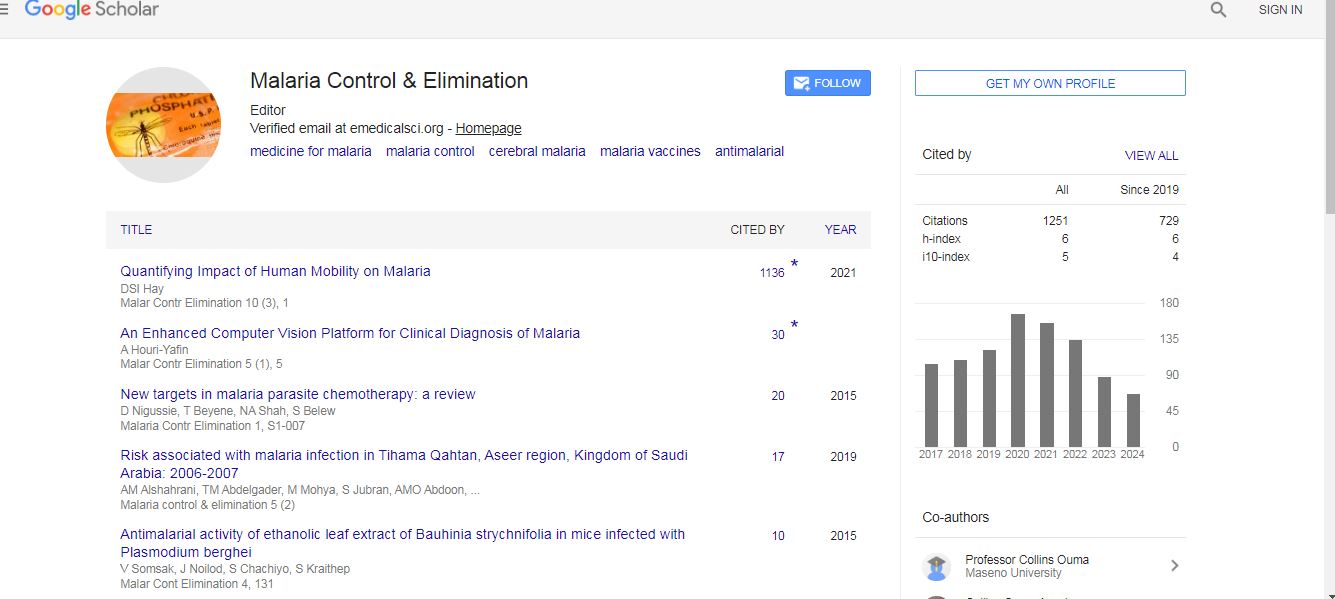
Malaria Control & Elimination received 1187 citations as per Google Scholar report