Opinion - (2025) Volume 9, Issue 3
Received: 01-Aug-2025, Manuscript No. jeh-26-179988;
Editor assigned: 04-Aug-2025, Pre QC No. P-179988;
Reviewed: 15-Aug-2025, QC No. Q-179988;
Revised: 22-Aug-2025, Manuscript No. R-179988;
Published:
29-Aug-2025
, DOI: 10.37421/2684-4923.2025.9.271
Citation: Grant, Oliver. ”Industrial Byproducts: Lingering Health and Environmental Threats.” J Environ Hazard 09 (2025):271.
Copyright: © 2025 Grant O. This is an open-access article distributed under the terms of the Creative Commons Attribution License, which permits unrestricted use, distribution
and reproduction in any medium, provided the original author and source are credited.
Industrial byproducts represent a pervasive and enduring threat to both human health and the integrity of natural ecosystems. These complex waste streams often contain a cocktail of persistent organic pollutants, heavy metals, and endocrine disruptors, substances that resist degradation and accumulate over time. The long-term consequences of such contamination are profound, manifesting in chronic diseases, developmental impairments, and reproductive issues that can affect populations for decades. Effective management and remediation strategies are therefore paramount to mitigating these persistent hazards and safeguarding future well-being [1].
The accumulation of heavy metals, such as lead, cadmium, and mercury, from industrial waste in soil and water bodies constitutes a significant toxicological challenge. These metals are not easily broken down and can readily enter the food chain, leading to severe health consequences including neurodevelopmental disorders, kidney damage, and cardiovascular diseases in humans and other organisms. The persistent nature of these contaminants necessitates rigorous remediation techniques to reduce environmental burdens and prevent chronic exposure pathways [2].
Endocrine-disrupting chemicals (EDCs) are another critical class of industrial byproducts that raise considerable concern due to their subtle yet profound long-term impacts on hormonal systems. Even at low concentrations, these compounds can interfere with fundamental biological processes such as reproductive development, metabolic regulation, and immune function. A comprehensive understanding of their environmental fate and intricate biological interactions is crucial for developing effective strategies to counter their pervasive influence on health and ecosystems [3].
Furthermore, the bioaccumulation of industrial byproducts within aquatic organisms poses a substantial risk to the stability and integrity of food webs. Persistent toxins can biomagnify as they move up trophic levels, resulting in amplified concentrations in apex predators, including humans. This cascading effect can lead to chronic health problems and significant ecological imbalances that may persist for multiple generations, disrupting biodiversity and ecosystem services [4].
Exposure to specific industrial byproducts has been definitively linked to increased long-term cancer risks. Many carcinogenic compounds present in industrial waste streams are highly stable and can contaminate soil, water, and air for extended periods. Elucidating the latency periods and the underlying mechanisms of carcinogenicity for these substances is essential for the development of effective public health interventions and robust environmental regulations aimed at prevention and control [5].
Industrial activities frequently result in the long-term contamination of soil with intricate mixtures of toxic byproducts. These contaminants, which can include polycyclic aromatic hydrocarbons (PAHs) and volatile organic compounds (VOCs), possess the capacity to leach into groundwater reserves. This contamination can compromise agricultural productivity and pose significant risks to human health through direct contact and the consumption of contaminated food products over prolonged durations, underscoring the need for vigilant soil management [6].
The release of persistent toxic substances into the atmosphere from industrial processes is a critical source of air pollution. These airborne contaminants, such as heavy metal particulates and dioxins, exhibit the capacity for long-range transport. Consequently, they can lead to chronic respiratory illnesses and a spectrum of other health problems in populations situated far from the original emission sources, impacting human health over many years [7].
The long-term effects of industrial byproducts on wildlife populations represent a significant ecological concern, threatening biodiversity and ecosystem stability. Persistent toxins can severely impair reproductive capabilities, induce developmental abnormalities, and reduce survival rates across a wide range of species. The resulting population declines and ecosystem disruptions can have cascading effects that persist for decades, impacting ecological balance [8].
Groundwater resources are particularly vulnerable to contamination from industrial byproducts that contain persistent and toxic substances, which can remain in aquifers for extended periods. The long-term ingestion of such contaminated water can result in a wide array of chronic health issues, including irreversible neurological damage and various organ dysfunctions. This highlights the critical importance of implementing comprehensive strategies for groundwater protection and monitoring [9].
Remediating sites contaminated by industrial byproducts demands a profound understanding of their long-term toxicological profiles and their inherent environmental persistence. Effective strategies must comprehensively address the slow degradation rates of many of these recalcitrant compounds. The ultimate goal of such interventions is to ensure lasting protection for both human health and ecological systems from the insidious risks of chronic exposure [10].
Industrial byproducts contribute significantly to long-term toxic risks, impacting human health and ecosystems through the release of persistent organic pollutants, heavy metals, and endocrine disruptors. These substances persist in the environment and accumulate in food chains, leading to chronic diseases, developmental issues, and reproductive problems over many years. Therefore, effective management and remediation strategies are crucial to mitigate these enduring hazards and protect public health [1].
The persistent accumulation of heavy metals from industrial waste in soil and water presents a considerable toxicological challenge. Metals such as lead, cadmium, and mercury can enter the food chain, resulting in adverse health effects like neurodevelopmental disorders, kidney damage, and cardiovascular diseases. The implementation of remediation techniques is essential to reduce environmental contamination and prevent long-term exposure [2].
Endocrine-disrupting chemicals (EDCs) originating from industrial byproducts are a major concern due to their subtle yet significant long-term effects on hormonal systems. These compounds have the potential to interfere with critical biological processes, including reproductive development, metabolic functions, and immune responses, even at very low concentrations. Understanding their environmental behavior and biological interactions is key to minimizing their pervasive influence [3].
The bioaccumulation of industrial byproducts within aquatic organisms poses a substantial risk to the integrity of food webs. Persistent toxins can ascend through trophic levels, leading to amplified concentrations in top predators, including humans. This bioamplification process results in chronic health issues and ecological imbalances that can persist for generations, impacting biodiversity and ecosystem services [4].
Long-term exposure to specific industrial byproducts has been associated with an increased risk of developing cancer. Carcinogenic compounds, often found in industrial waste streams, can remain in the environment for extended periods, contaminating soil, water, and air. A thorough understanding of their latency periods and the mechanisms of carcinogenicity is critical for developing effective public health interventions and environmental regulations [5].
Industrial processes can lead to the long-term contamination of soil with complex mixtures of toxic byproducts, such as polycyclic aromatic hydrocarbons (PAHs) and volatile organic compounds (VOCs). These contaminants can leach into groundwater and affect agricultural productivity, posing significant risks to human health through direct contact and food consumption over extended periods, highlighting the need for careful land management practices [6].
Industrial byproducts can also contribute to air pollution by releasing persistent toxic substances into the atmosphere. These airborne contaminants, including heavy metal particulates and dioxins, can travel considerable distances, leading to chronic respiratory illnesses and other health problems in populations far removed from the original source of emission over many years [7].
The long-term effects of industrial byproducts on wildlife populations are a critical ecological concern, impacting biodiversity and ecosystem health. Persistent toxins can impair reproductive functions, cause developmental abnormalities, and reduce survival rates in various species. These effects can lead to population declines and ecosystem disruptions that may persist for decades [8].
Industrial byproducts often contain persistent and toxic substances that can contaminate groundwater resources for extended periods. The long-term ingestion of contaminated water can lead to a range of chronic health issues, including neurological damage and dysfunction of various organs. This underscores the vital importance of protecting and monitoring groundwater sources [9].
The remediation of sites contaminated by industrial byproducts requires a comprehensive understanding of their long-term toxicological profiles and environmental persistence. Remediation strategies must be designed to address the slow degradation rates of many of these compounds, ensuring that interventions provide lasting protection to human health and ecosystems from the risks of chronic exposure [10].
Industrial byproducts pose significant long-term health and environmental risks due to persistent organic pollutants, heavy metals, and endocrine disruptors. These substances accumulate in ecosystems and food chains, leading to chronic diseases, developmental issues, and reproductive problems. Contamination affects soil, water, and air, impacting human health, wildlife, and overall biodiversity. Remediation efforts are crucial to mitigate these enduring hazards and ensure lasting protection.
None
None
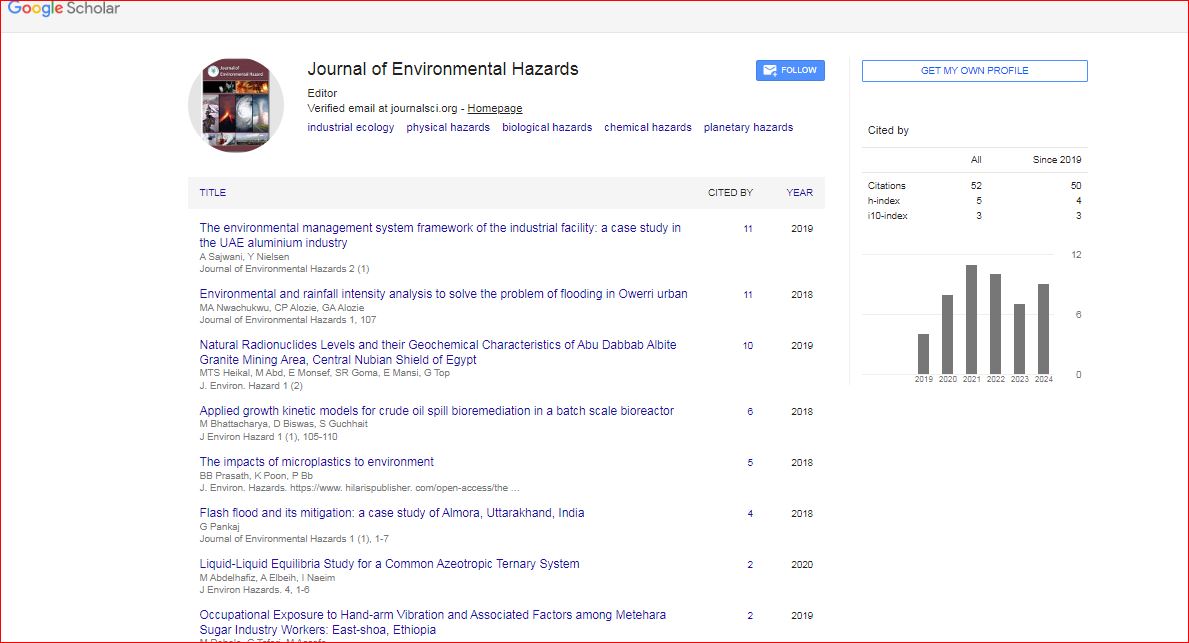
Journal of Environmental Hazards received 51 citations as per Google Scholar report