Brief Report - (2025) Volume 16, Issue 3
Received: 29-May-2025, Manuscript No. gjto-25-175425;
Editor assigned: 02-Jun-2025, Pre QC No. P-175425;
Reviewed: 16-Jun-2025, QC No. QC-175425;
Revised: 23-Jun-2025, Manuscript No. R-175425;
Published:
30-Jun-2025
, DOI: 10.37421/2229-8711.2025.16.445
Citation: Al-Karim, Hassan. ”Holistic Digital Transformation: Beyond Technology.” Global J Technol Optim 16 (2025): 445.
Copyright: © 2025 Al-Karim H. This is an open-access article distributed under the terms of the Creative Commons Attribution License, which permits unrestricted use,
distribution and reproduction in any medium, provided the original author and source are credited.
This article points out how digital transformation isn't just about internal changes; it's crucially about connecting an organization with its external world. What this really means is businesses need to leverage digital tools to understand and respond to market shifts, customer needs, and competitive pressures. It highlights the importance of aligning internal digital efforts with external demands for effective strategy[1]. This review dives into what effective leadership looks like when an organization is going through digital change. It shows that traditional leadership styles often fall short, and new competencies like agility, vision for digital, and fostering a culture of innovation become paramount. What this really means is leaders can't just manage the present; they must actively shape the digital future, guiding their teams through significant disruption[2]. This review meticulously explores how digital transformation fundamentally reshapes business models. It clarifies that digital tools aren't just for improving existing processes but for creating entirely new value propositions, revenue streams, and customer relationships. The key insight here is that true digital transformation necessitates reimagining how a business creates, delivers, and captures value in a digital economy[3].
This article emphasizes that digital transformation isn't just about technology; it's deeply tied to an organization's culture. It points out that a rigid or risk-averse culture can be a major roadblock, even with the best digital tools in place. Here's the thing: cultivating a culture that embraces experimentation, collaboration, and continuous learning is essential for successful digital initiatives, more so than any specific software or hardware[4]. This study examines how digital transformation fundamentally alters organizational structures and, critically, the skills employees need. It finds that traditional roles often evolve or disappear, making way for new demands like digital literacy, data analysis, and adaptability. What this really means is organizations must invest heavily in upskilling and reskilling programs, because without a digitally competent workforce, the transformation efforts will likely falter[5].
This systematic review delves into how digital transformation manifests in the public sector, highlighting unique challenges compared to private businesses. It points out that issues like bureaucratic inertia, data security, and ensuring equitable access for all citizens become central. Let's break it down: successful digital government isn't just about implementing new tech; it requires deep changes in policy, processes, and a citizen-centric approach to service delivery[6]. This bibliometric analysis shows the growing intersection between digital transformation and sustainability goals. It indicates that digital technologies can either hinder or accelerate environmental, social, and governance (ESG) efforts depending on their design and implementation. The main takeaway here is that businesses need to intentionally integrate sustainability considerations into their digital strategies to achieve truly holistic and responsible growth[7].
This review focuses on the unique success factors for digital transformation within small and medium-sized enterprises. It highlights that while large corporations have scale and resources, Small and Medium-sized Enterprises (SMEs) often face constraints like limited budgets, lack of specialized IT talent, and resistance to change. The crucial insight is that for SMEs, clear strategic vision, leadership commitment, and phased implementation tailored to their size are more critical than adopting the latest flashy technology[8]. This theoretical perspective delves into how big data analytics and Artificial Intelligence are not just components but fundamental drivers of digital transformation. It explains that these technologies enable organizations to move beyond mere digitization, allowing for predictive insights, automated processes, and personalized customer experiences. What this really means is that leveraging data and AI effectively transforms raw information into strategic assets, fundamentally reshaping decision-making and operational capabilities[9]. This review systematically analyzes existing digital transformation frameworks and proposes an integrative model. It highlights that many frameworks exist, but often they focus on specific aspects like technology or strategy, lacking a holistic view. Here's the thing: a successful transformation needs a comprehensive approach that considers technology, people, processes, strategy, and culture simultaneously, providing a structured roadmap rather than just isolated initiatives[10].
Digital transformation represents a fundamental shift for organizations, moving beyond mere internal technological upgrades to crucially connect with their external world. Businesses must actively leverage digital tools to understand and respond to dynamic market shifts, evolving customer needs, and competitive pressures. The goal is to align internal digital efforts with external demands for an effective overarching strategy [1]. This transformation goes deep, fundamentally reshaping business models. Digital tools are not just for improving what already exists; they unlock entirely new value propositions, revenue streams, and customer relationships. The key insight is reimagining how a business creates, delivers, and captures value in a digital economy [3].
Here's the thing: the human element is central to successful digital change. Effective leadership is paramount, as traditional styles often fall short. New competencies like agility, a clear vision for digital, and fostering a culture of innovation are becoming essential. Leaders can't just manage the present; they must actively shape the digital future, guiding their teams through significant disruption [2]. Furthermore, digital transformation is deeply tied to an organization's culture. A rigid or risk-averse environment can be a major roadblock, even when the best digital tools are available. Cultivating a culture that embraces experimentation, collaboration, and continuous learning is essential for successful initiatives, often more so than any specific software or hardware [4].
Digital transformation profoundly alters organizational structures and the critical skills employees need. Traditional roles frequently evolve or disappear, creating new demands for digital literacy, data analysis, and adaptability. What this really means is organizations must invest heavily in upskilling and reskilling programs, because without a digitally competent workforce, transformation efforts are likely to falter [5]. The public sector faces unique challenges compared to private businesses during this shift, contending with bureaucratic inertia, data security, and ensuring equitable access for all citizens. Successful digital government requires deep changes in policy, processes, and a citizen-centric approach to service delivery, not just new tech [6]. For Small and Medium-sized Enterprises (SMEs), success factors include clear strategic vision, strong leadership commitment, and phased implementation tailored to their size, which are more critical than adopting the latest flashy technology, especially given limited budgets and specialized IT talent [8].
Moreover, digital transformation increasingly intersects with sustainability goals. Digital technologies have the potential to either hinder or accelerate environmental, social, and governance (ESG) efforts depending on how they are designed and implemented. The main takeaway is that businesses need to intentionally integrate sustainability considerations into their digital strategies to achieve truly holistic and responsible growth [7]. A major driver of this transformation is the integration of Big Data analytics and Artificial Intelligence (AI). These technologies move organizations beyond simple digitization, enabling predictive insights, automated processes, and personalized customer experiences. Leveraging data and AI effectively transforms raw information into strategic assets, fundamentally reshaping decision-making and operational capabilities [9].
Given the multifaceted nature of this change, systematically analyzing existing digital transformation frameworks is crucial. Many frameworks often focus on specific aspects like technology or strategy, lacking a truly holistic view. A successful transformation requires a comprehensive approach that considers technology, people, processes, strategy, and culture simultaneously, providing a structured roadmap for initiatives [10]. This integrative view helps avoid isolated efforts and ensures that all elements work together towards a unified, transformative goal.
Digital transformation is more than just internal tech upgrades; it's about seamlessly linking an organization with its external environment to adapt to market shifts and customer demands. This journey fundamentally reshapes business models, creating new value propositions and revenue streams rather than merely improving existing processes. A critical aspect is leadership, which requires new competencies like agility and a clear digital vision, moving beyond traditional styles to actively shape the future and guide teams through significant disruption. Organizational culture plays a pivotal role, with rigid or risk-averse environments often hindering progress.
Cultivating a culture of experimentation, collaboration, and continuous learning is paramount for successful digital initiatives. Such transformation profoundly impacts organizational structures and employee skills, necessitating substantial investment in upskilling and reskilling programs to build a digitally competent workforce. In the public sector, unique challenges like bureaucratic inertia and data security demand deep changes in policy and a citizen-centric approach, distinct from private business dynamics. Here's the thing: digital transformation also intersects with sustainability goals, where technology can either advance or impede environmental, social, and governance efforts. For Small and Medium-sized Enterprises (SMEs), success hinges on clear strategic vision and leadership commitment, often requiring phased implementations tailored to their limited resources, rather than just adopting the latest flashy technology. Ultimately, Big Data analytics and Artificial Intelligence (AI) are key drivers, transforming raw information into strategic assets and fundamentally reshaping decision-making. To navigate this complexity, integrative frameworks are essential, offering a holistic roadmap that considers technology, people, processes, strategy, and culture simultaneously for truly effective transformation.
None
None
Aliaksandra I, Nataliia I, Hanna F. "Digital transformation: The missing link between the organization and external environment.".Probl Perspect Manag 19 (2021):307-318.
Indexed at, Google Scholar, Crossref
Andrea Z, Tomaž Ä?, Urša T. "Leadership in the Age of Digital Transformation: A Systematic Review.".Sustainability 13 (2021):6891.
Indexed at, Google Scholar, Crossref
Sasan R, Christian S, Maximilian MS. "Digital transformation and business model innovation: A systematic literature review.".J Bus Res 174 (2024):114526.
Indexed at, Google Scholar, Crossref
Nargiza AI, Gulzhien AZ, Dana RA. "The role of organizational culture in digital transformation.".J Adv Res Dyn Control Syst 12 (2020):1047-1053.
Indexed at, Google Scholar, Crossref
Zahra R, Saeed A, Shuo Z. "Digital Transformation and Its Impact on Organizational Structures and Employees’ Skills: A Qualitative Study in an Australian SME.".Sustainability 15 (2023):11846.
Indexed at, Google Scholar, Crossref
Luis CG, Sandra GB, José PA. "Digital Transformation in the Public Sector: A Systematic Literature Review.".J Open Innov Technol Mark Complex 9 (2023):1000673.
Indexed at, Google Scholar, Crossref
Nuno CB, Susana S, João SN. "Digital Transformation for Sustainability: A Bibliometric Analysis of 25 Years of Research.".Sustainability 14 (2022):12903.
Indexed at, Google Scholar, Crossref
Anjana J, V. HWA, B. ABSB. "Critical Success Factors for Digital Transformation in Small and Medium-Sized Enterprises: A Systematic Literature Review.".Information (Basel) 13 (2022):282.
Indexed at, Google Scholar, Crossref
Naman S, Shivam S, Ruchi S. "Digital transformation driven by big data analytics and artificial intelligence: A theoretical perspective.".J Enterp Inf Manag 36 (2023):1165-1191.
Indexed at, Google Scholar, Crossref
Muhammad UN, Rabia S, Muhammad A. "Digital Transformation Frameworks: A Systematic Literature Review and a New Proposed Integrative Framework.".Information (Basel) 14 (2023):180.
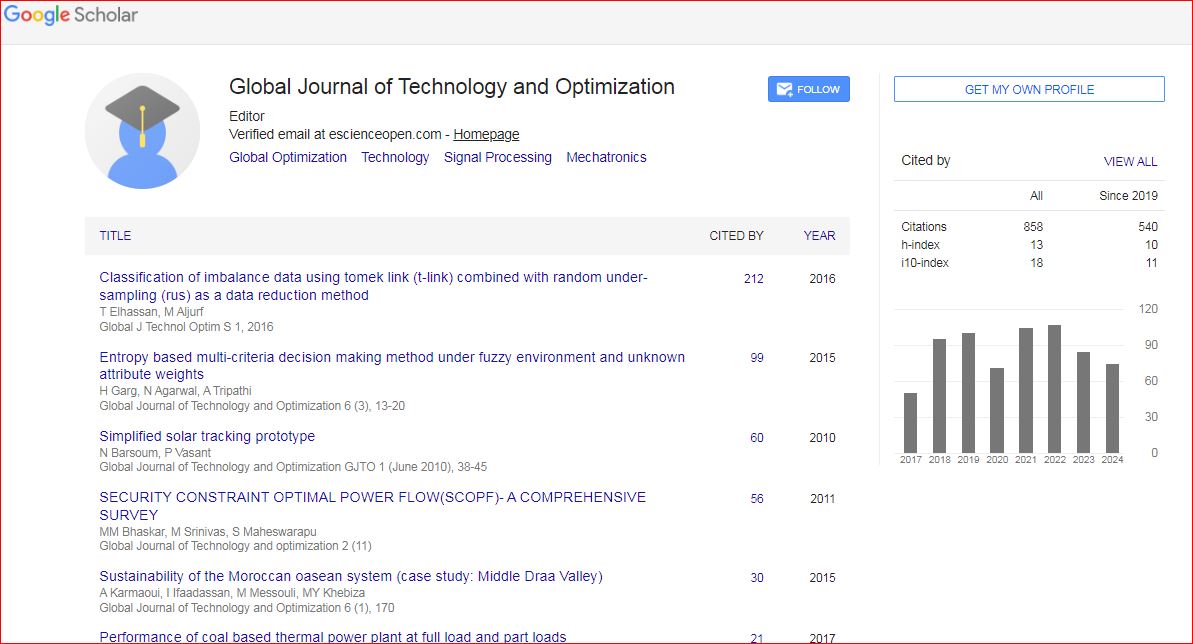
Global Journal of Technology and Optimization received 847 citations as per Google Scholar report