Opinion - (2025) Volume 14, Issue 5
Received: 02-Oct-2025, Manuscript No. jsp-26-182275;
Editor assigned: 06-Oct-2025, Pre QC No. P-182275;
Reviewed: 20-Oct-2025, QC No. Q-182275;
Revised: 23-Oct-2025, Manuscript No. R-182275;
Published:
30-Oct-2025
, DOI: 10.37421/2165-7939.2025.14.743
Citation: Perera, Ruwan T.. ”Holistic Approach To Chronic Neck Pain Management.” J Spine 14 (2025):743.
Copyright: © 2025 Perera T. Ruwan This is an open-access article distributed under the terms of the Creative Commons Attribution License, which permits unrestricted use, distribution and reproduction in any medium, provided the original author and source are credited.
Chronic neck pain is a widespread musculoskeletal ailment stemming from a multifaceted origin, involving degenerative alterations, disc-related issues, muscular stress, and postural deficits. The primary objectives in managing this condition are pain alleviation, functional recovery, and the prevention of future occurrences. A comprehensive strategy that integrates physical therapy, pharmacological treatments, and lifestyle adjustments is often considered the most efficacious approach. Recent scientific investigations have illuminated the significance of precisely designed exercise regimens and novel pain management methodologies [1].
Degenerative cervical disc disease stands out as a principal instigator of persistent neck discomfort. This process entails the deterioration of the intervertebral discs, culminating in pain, stiffness, and a diminished range of motion. Management protocols commonly emphasize conservative, non-surgical avenues such as physical therapy, analgesic medications, and ergonomic modifications. Surgical interventions are typically reserved for instances where neurological compromise is evident and the condition is severe [2].
Myofascial pain syndrome frequently contributes to chronic neck pain, characterized by the presence of trigger points within muscles that can radiate pain to other anatomical regions. Therapeutic interventions generally encompass manual therapy, stretching exercises, and modalities like dry needling or ultrasound. Addressing underlying contributing factors such as inadequate posture and elevated stress levels is also paramount for effective management [3].
Whiplash-associated disorders (WAD) represent a common consequence of motor vehicle accidents, frequently leading to the development of chronic neck pain. The management of WAD necessitates a multidisciplinary strategy that prioritizes early mobilization, effective pain control, and psychological support to mitigate fear-avoidance behaviors and enhance functional outcomes. Clear communication regarding the prognosis is also a vital component of the treatment plan [4].
The efficacy of physical therapy in the management of chronic neck pain is extensively documented. Standard therapeutic interventions include exercises, manual therapy techniques, and modalities such as thermotherapy, cryotherapy, and electrical stimulation. Personalized exercise programs specifically adapted to an individual's unique impairments have been shown to significantly improve pain levels, increase range of motion, and restore overall function [5].
Pharmacological interventions for chronic neck pain often involve the use of non-steroidal anti-inflammatory drugs (NSAIDs), muscle relaxants, and general analgesics. In cases of persistent pain, neuropathic pain agents or even short-term opioid regimens may be contemplated, albeit with considerable caution due to the potential for adverse effects and the risk of addiction. A multimodal approach to pain management is generally favored [6].
Psychological dimensions, including depression, anxiety, and pain catastrophizing, exert a substantial influence on the subjective experience and the overall management of chronic neck pain. Cognitive Behavioral Therapy (CBT) and Mindfulness-Based Stress Reduction (MBSR) serve as valuable adjuncts to conventional treatments, empowering patients to better cope with their pain and thereby improving their quality of life [7].
Posture and ergonomic considerations play a pivotal role in both the initiation and the exacerbation of chronic neck pain. Extended periods of maintaining poor posture, particularly during activities involving screen use, can lead to muscular imbalances and undue strain. Educating individuals on proper posture, optimizing workstation setups, and encouraging regular movement breaks are fundamental strategies for both prevention and ongoing management [8].
Emerging therapeutic modalities for chronic neck pain are increasingly being explored, including regenerative medicine techniques such as platelet-rich plasma (PRP) injections and stem cell therapy, although robust clinical evidence is still accumulating. Acupuncture and other complementary therapies have also demonstrated potential for providing symptom relief in certain individuals, warranting further investigation [9].
Surgical intervention for chronic neck pain is generally reserved for situations involving significant structural abnormalities that result in instability or neurological compression, particularly when conservative treatments have proven insufficient. Surgical procedures may encompass cervical fusion or decompression techniques. The decision to proceed with surgery is contingent upon a comprehensive evaluation of the patient's specific condition, along with a careful consideration of the associated risks and potential benefits [10].
Chronic neck pain, a pervasive musculoskeletal disorder, originates from a complex nexus of factors. These include the natural aging process leading to degenerative changes in the spine, pathologies affecting the intervertebral discs, acute or chronic muscle strain, and persistent issues related to posture. The therapeutic strategies employed are designed to achieve several key outcomes: namely, the reduction of pain intensity, the restoration of normal bodily function, and the prevention of the condition's recurrence. It is widely recognized that a multimodal treatment approach, which synergistically combines physical therapy, appropriate pharmacological interventions, and necessary lifestyle modifications, typically yields the most favorable results. Furthermore, recent scientific advancements have highlighted the crucial role of precisely tailored exercise programs and the exploration of innovative pain management techniques in managing this complex condition [1].
A primary anatomical contributor to the manifestation of chronic neck pain is degenerative cervical disc disease. This pathological process involves the progressive breakdown and wear-and-tear of the intervertebral discs located in the neck region. The consequences of this degeneration are typically pain, considerable stiffness in the neck, and a significant reduction in the overall mobility of the cervical spine. The management of this condition predominantly focuses on non-surgical treatment options. These often include guided physical therapy, the judicious use of pain-relieving medications, and systematic adjustments to ergonomic factors. Nevertheless, surgical interventions are carefully considered and reserved for those severe cases where there is evidence of neurological compromise [2].
Myofascial pain syndrome is another common etiology identified in individuals experiencing chronic neck pain. This condition is distinctively characterized by the presence of localized 'trigger points' within the muscle tissue. These trigger points have the capacity to refer pain sensations to other, often distant, areas of the body. The standard treatment regimen for this syndrome typically involves various forms of manual therapy, specific stretching exercises, and the application of therapeutic modalities such as dry needling or ultrasound therapy. Crucially, addressing and rectifying underlying contributing factors, such as persistent poor posture and chronic stress, is an indispensable aspect of effective management [3].
Whiplash-associated disorders (WAD) represent a frequent and often debilitating consequence following motor vehicle accidents. These injuries commonly result in the development of chronic neck pain. The comprehensive management of WAD requires a coordinated, multidisciplinary approach. This strategy emphasizes the importance of early patient mobilization, effective pain management techniques, and robust psychological support. The psychological component is vital for addressing fear-avoidance behaviors, which can significantly impede recovery, and ultimately for improving functional outcomes. Providing clear and accurate education about the expected prognosis is also an essential element of care [4].
The significant role and effectiveness of physical therapy in the comprehensive management of chronic neck pain are well-established in clinical practice and research. Core components of physical therapy interventions include targeted therapeutic exercises, various manual therapy techniques, and the application of modalities such as heat, cold therapy, and electrical stimulation. A critical aspect of successful physical therapy is the development of a personalized exercise program that is meticulously tailored to address the specific impairments identified in each individual patient. Such tailored programs have been demonstrated to substantially improve pain levels, enhance the range of motion, and positively impact overall functional capacity [5].
The pharmacological management of chronic neck pain typically involves a stepwise approach utilizing a range of medications. Commonly prescribed drugs include non-steroidal anti-inflammatory drugs (NSAIDs) to reduce inflammation and pain, muscle relaxants to alleviate spasms, and general analgesics for pain relief. For patients experiencing persistent or intractable pain, the consideration of neuropathic pain agents or even short-term courses of opioid analgesics may be necessary. However, the use of opioids requires extreme caution due to their potential for significant side effects and the considerable risk of developing addiction. Therefore, a preference for multimodal pain management strategies remains paramount [6].
Psychological factors play a profoundly influential role in shaping both the individual's perception of chronic neck pain and the effectiveness of its management. Conditions such as depression, anxiety disorders, and the tendency towards pain catastrophizing can significantly alter the patient's experience and response to treatment. Therapeutic interventions like Cognitive Behavioral Therapy (CBT) and Mindfulness-Based Stress Reduction (MBSR) are recognized as highly effective complementary approaches to traditional medical treatments. These psychological therapies equip patients with essential coping mechanisms, helping them to better manage their pain and consequently improve their overall quality of life [7].
Posture and the principles of ergonomics are critically important factors that contribute significantly to the development and subsequent exacerbation of chronic neck pain. Maintaining prolonged periods of incorrect or poor posture, especially during extended periods of computer or mobile device usage, can lead to detrimental muscle imbalances and considerable strain on the neck structures. Therefore, a fundamental aspect of both prevention and management involves comprehensive education for individuals regarding the adoption of proper posture, the correct setup of their workstations, and the importance of incorporating regular breaks to move and stretch [8].
Within the evolving landscape of pain management, novel and emerging therapeutic modalities are continually being investigated for chronic neck pain. These include promising regenerative medicine approaches, such as the injection of platelet-rich plasma (PRP) and the application of stem cell therapies, although the clinical evidence supporting their widespread use is still in its developmental stages. Additionally, therapies like acupuncture and various other complementary and alternative medicine (CAM) approaches have shown potential for providing significant symptom relief in specific patient populations, suggesting a need for continued research and exploration [9].
Surgical management for chronic neck pain is generally considered a last resort and is typically reserved for cases where there is substantial structural pathology that leads to spinal instability or significant neurological compression. This is particularly true for patients whose conditions have not responded adequately to conservative treatment modalities. The surgical procedures may involve techniques such as cervical fusion, which aims to stabilize the spine, or decompression surgeries, designed to relieve pressure on nerves. The ultimate decision to pursue surgical intervention is made only after a thorough and comprehensive evaluation of the individual patient's specific condition, carefully weighing the potential risks against the anticipated benefits [10].
Chronic neck pain arises from a complex interplay of degenerative changes, disc issues, muscle strain, and postural problems. Management typically involves a multimodal approach including physical therapy, medication, and lifestyle changes. Degenerative cervical disc disease and myofascial pain syndrome are common causes, treated with conservative measures and manual therapies, respectively. Whiplash-associated disorders, often resulting from accidents, require a multidisciplinary approach emphasizing early mobilization and psychological support. Physical therapy, utilizing exercises and modalities, is crucial for improving pain and function. Pharmacological options include NSAIDs, muscle relaxants, and analgesics, with cautious use of stronger medications. Psychological factors like anxiety and depression significantly impact pain perception and can be managed with CBT and MBSR. Proper posture and ergonomics are vital for prevention and management. Emerging treatments like PRP injections and acupuncture show promise, while surgery is reserved for severe cases with structural pathology or neurological compromise. Key contributing factors include posture, ergonomics, and psychological well-being, necessitating a holistic approach to care.
None
None
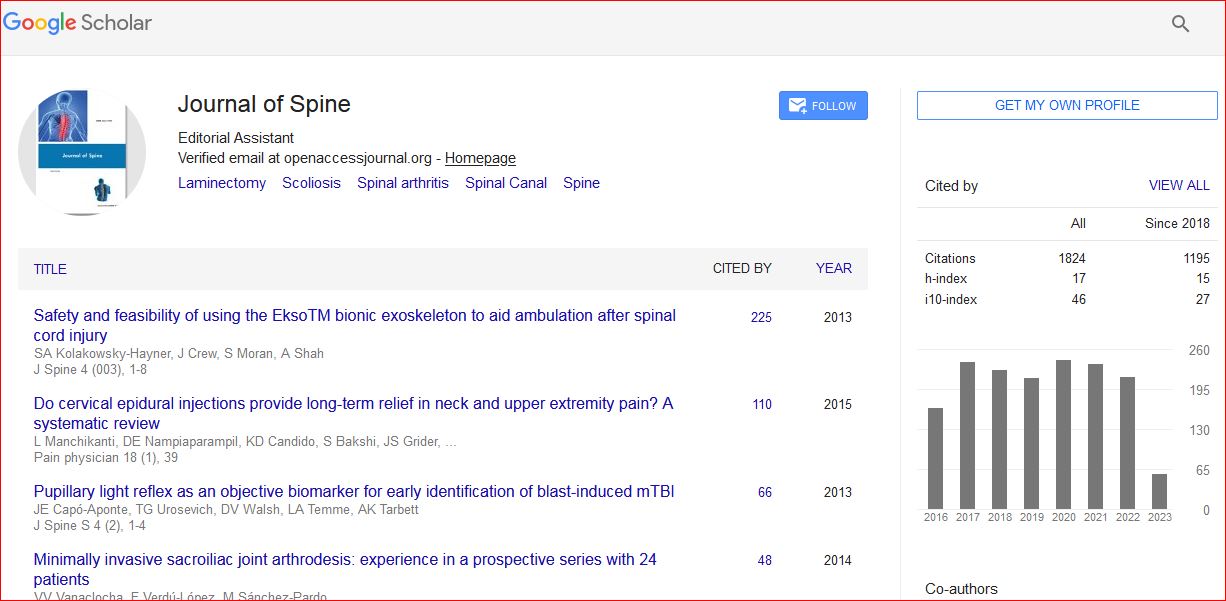
Journal of Spine received 2022 citations as per Google Scholar report