Brief Report - (2025) Volume 9, Issue 4
Received: 01-Dec-2025, Manuscript No. rrms-25-175073;
Editor assigned: 03-Dec-2025, Pre QC No. P-175073;
Reviewed: 17-Dec-2025, QC No. Q-175073;
Revised: 22-Dec-2025, Manuscript No. R-175073;
Published:
29-Dec-2025
, DOI: 10.37421/2952-8127.2025.9.235
Citation: Stein, Noah. ”Global Health: Addressing Equity, Climate, Systemic Vulnerabilities.” Res Rep Med Sci 09 (2025):235.
Copyright: © 2025 Stein N. This is an open-access article distributed under the terms of the Creative Commons Attribution License, which permits unrestricted use, distribution and reproduction in any medium, provided the original author and source are credited.
This article really highlights that achieving global health equity is still a work in progress, especially looking at how the COVID-19 pandemic revealed and worsened existing disparities. It's a clear call to action, reminding us that there's a lot more to do to build a healthier, fairer world for everyone. The pandemic showed us where our global health systems truly fell short[1].
This piece argues that achieving real health equity, particularly within the context of the Sustainable Development Goals, means nursing needs to step up. It's about empowering nurses globally to take on leadership roles and advocating for policies that tackle social determinants of health head-on. Nurses are on the front lines, so their involvement is critical[2].
Here's the thing: climate change isn't just an environmental issue; it's a profound threat to global health. This article makes it plain that rising temperatures, extreme weather, and altered ecosystems are directly impacting human well-being, from respiratory illnesses to mental health challenges. We're facing a real emergency that demands immediate health sector attention[3].
What this really means is that our changing climate is already having tangible, negative impacts on health worldwide. This report, a regular update, lays out compelling evidence on how climate change is affecting everything from food security to infectious disease patterns, stressing the urgency for global leaders to act on climate mitigation and adaptation strategies[4].
This paper explores how the COVID-19 pandemic really put global health security to the test. It moves beyond just talking about theories, showing how practical applications of international health regulations and collaborative efforts are crucial, but also highlighting where these systems failed to protect populations effectively during a real-world crisis[5].
When infectious diseases spread globally, the resilience of our health systems is absolutely key. This piece unpacks strategies that can help health systems better prepare for, respond to, and recover from widespread outbreaks. Itâ??s about building stronger, more adaptable defenses, because outbreaks aren't going away, they're a constant threat[6].
The reality is, mental health care isn't a luxury; it's a fundamental part of global health. This article argues passionately for universal access to mental health services, emphasizing that neglect in this area has widespread consequences, impacting individuals, communities, and national development. It's time mental health got the attention it deserves on the global stage[7].
COVID-19 didn't just cause physical illness; it created a massive global mental health crisis. This review consolidates evidence on the pandemic's psychological toll and offers practical implications for mental health services. It highlights the need for robust, accessible mental health support systems, recognizing the lasting impact of such events on population well-being[8].
Global health funding faces significant hurdles, yet it's absolutely vital for achieving universal health coverage. This article points out the financial gaps and proposes opportunities for better resource mobilization and allocation. Essentially, if we want everyone to have access to healthcare, we need smart, sustainable ways to pay for it[9].
Universal health coverage is a global aspiration, and this paper draws valuable lessons from low- and middle-income countries that have made progress toward it. Itâ??s about understanding what works and what doesn't in diverse contexts, offering insights into policies, reforms, and community engagement strategies that can help more countries move closer to healthcare for all[10].
Global health equity continues to be a primary concern, with the COVID-19 pandemic serving as a stark reminder of persistent disparities and the shortcomings within global health systems. It's a clear call for sustained action to construct a healthier and more equitable world for everyone involved [1]. Furthermore, achieving true health equity, especially in line with the Sustainable Development Goals, necessitates empowering nurses globally. This means enabling them to assume leadership positions and championing policies that directly address social determinants of health. Nurses, being on the front lines, play an undeniably critical role in this endeavor [2].
Here's the thing: climate change transcends being merely an environmental concern; it poses a significant and immediate threat to global health. Rising temperatures, extreme weather events, and disrupted ecosystems directly harm human well-being, leading to a spectrum of issues from respiratory illnesses to mental health challenges. This situation represents a critical emergency demanding prompt attention from the health sector [3]. What this really means is that our changing climate is already having observable, negative effects on health across the globe. Regular reports provide compelling evidence on how climate change influences everything from food security to patterns of infectious diseases. This underscores the urgent need for global leaders to implement climate mitigation and adaptation strategies effectively [4].
The COVID-19 pandemic truly put global health security to the ultimate test. This period moved discussions beyond theoretical frameworks, demonstrating the crucial importance of international health regulations and collaborative actions. It also unmasked the areas where these existing systems failed to adequately protect populations during a real-world crisis [5]. When infectious diseases begin to spread worldwide, the resilience of our health systems becomes absolutely paramount. Building stronger, more adaptable defenses is not just an option but a necessity, as outbreaks are a persistent threat. This involves unpacking and implementing strategies that enable health systems to better prepare for, respond to, and recover from widespread outbreaks [6].
The reality is, mental health care isn't a luxury; it's a fundamental and indispensable part of global health. There is an urgent and passionate argument for universal access to mental health services. Neglecting this area has far-reaching consequences, affecting individuals, communities, and national development [7]. The COVID-19 pandemic did not just result in physical illness; it concurrently unleashed a massive global mental health crisis. Evidence consolidates the pandemic's significant psychological toll and provides practical implications for mental health services. This highlights the vital need for robust, easily accessible mental health support systems, acknowledging the enduring impact of such crises on the well-being of populations [8].
Finally, global health funding faces substantial obstacles, yet it remains absolutely crucial for realizing universal health coverage. There are significant financial gaps that need addressing, and opportunities exist for improved resource mobilization and allocation. Essentially, if the goal is for everyone to have access to healthcare, then intelligent and sustainable funding mechanisms are absolutely necessary [9]. Universal health coverage stands as a global aspiration. Valuable lessons can be drawn from low- and middle-income countries that have already made considerable strides towards achieving it. Understanding what succeeds and what doesn't in diverse contexts provides critical insights into effective policies, necessary reforms, and successful community engagement strategies that can help more nations move closer to providing healthcare for all their citizens [10].
The discourse on global health underscores critical challenges and ongoing efforts to foster a healthier, fairer world. Achieving health equity remains a significant hurdle, exacerbated by events like the COVID-19 pandemic, which laid bare systemic disparities and deficiencies in global health systems [1]. Nurses are recognized as essential for advancing health equity, particularly by taking leadership roles and advocating for policies addressing social determinants of health within the Sustainable Development Goals framework [2]. Beyond equity, the climate crisis emerges as a profound threat, directly impacting human well-being through rising temperatures, extreme weather, and altered ecosystems [3]. Comprehensive reports consistently highlight the tangible negative effects of climate change on health, from food security to infectious disease patterns, demanding urgent global action on mitigation and adaptation [4]. The COVID-19 pandemic also exposed vulnerabilities in global health security, demonstrating the need for practical application of international health regulations and resilient health systems to manage infectious disease outbreaks [5, 6]. Building robust, adaptable defenses is paramount given the constant threat of widespread outbreaks. Mental health, often overlooked, is identified as a fundamental component of global health, necessitating universal access to care due to its widespread consequences on individuals and communities [7]. The pandemic further intensified this need, sparking a global mental health crisis and highlighting the imperative for accessible support systems [8]. Finally, the aspiration for universal health coverage is hampered by significant funding challenges, requiring innovative strategies for resource mobilization and allocation [9]. Lessons from low- and middle-income countries offer valuable insights into effective policies and community engagement needed to advance healthcare for all [10]. These interconnected challenges collectively demand integrated, collaborative, and well-funded global health initiatives.
None
None
Patricia JG, Devi S, Salim SAK. "Global health equity in the balance: The unfinished business of COVID-19 and the path ahead".Lancet 401 (2023):226-235.
Indexed at, Google Scholar, Crossref
Nancy G, Rachel HW, Deborah CL. "Achieving health equity in the era of sustainable development goals: a call for action for global health nursing".Nurs Outlook 68 (2020):760-769.
Indexed at, Google Scholar, Crossref
Kristie LE, Jeremy JH, Jonathan AP. "The climate crisis and global health: a code red for humanity".Annu Rev Public Health 42 (2021):99-119.
Indexed at, Google Scholar, Crossref
Nick W, Marcus H, Eleanor M. "Climate change and health: the latest Lancet Countdown report".Lancet 398 (2021):2268-2283.
Indexed at, Google Scholar, Crossref
Benjamin FT, Alexandra LP, Jeffrey SS. "Global Health Security: From Theory to Practice during the COVID-19 Pandemic".Health Secur 19 (2021):1-10.
Indexed at, Google Scholar, Crossref
Devi S, Andrew WB, Catherine JO. "Global infectious disease outbreaks: strategies for health system resilience".Lancet Infect Dis 20 (2020):e236-e242.
Indexed at, Google Scholar, Crossref
Vikram P, Peter MP, Richard H. "The urgent need for universal mental health care in global health".Lancet Psychiatry 6 (2019):181-182.
Indexed at, Google Scholar, Crossref
Rory CO, David RW, Stephen L. "COVID-19 and global mental health: a review of current evidence and implications for practice".Psychol Med 51 (2021):1-19.
Indexed at, Google Scholar, Crossref
Peter S, Olusoji A, Sujith C. "Global health financing challenges and opportunities: a call for action for universal health coverage".Lancet Glob Health 11 (2023):e1-e2.
Indexed at, Google Scholar, Crossref
Rifat A, Sara ED, Alastair JJS. "Achieving universal health coverage: lessons from low- and middle-income countries".BMJ Glob Health 5 (2020):e003050.
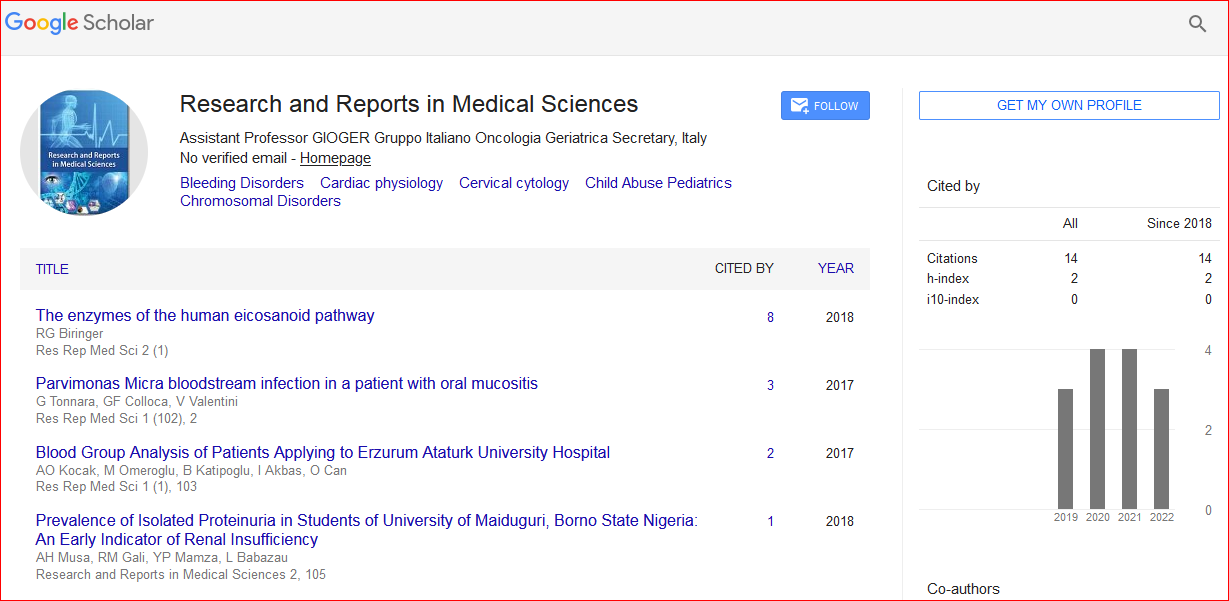
Research and Reports in Medical Sciences received 13 citations as per Google Scholar report